- JEDDAH: Eid celebrations in Saudi Arabia generally are characterized by joy at successfully fulfilling religious and spiritual obligations for a whole month.
They are also a clear expression of social solidarity and tolerance, and are occasions for family reunion where people renew their brotherly bonds.
Jeddah, the Red Sea coastal city, brings to the fore its Hijazi traditions from the moment moon sighting is announced until the end of celebrations that usually last for six days.
On the last night of Ramadan, the Hijazi housewives clean their homes and use incense to create a pleasant aroma in their homes before the festival. The kitchens bubble with the cooking of traditional Hijazi dishes for the family to eat at breakfast on the morning of the Eid day.
The main dish is Al-Dibyaza, which is made of dry fruits, sugar and water. Traditional sweets, such as Hareesa, Labna and Allado, are added to the table along with cheese and olive.
The breakfast is served after people are back from Eid prayer that is usually held in the open. Wearing new dresses specially tailored for the occasion, men, women and children are keen to attend these prayers which signal the end of a whole month of fasting from food, water and sensual pleasures from dawn to dusk.
Before they set out for the Eid congregational prayer, people will eat an odd number of dates following the Prophet’s Sunnah.
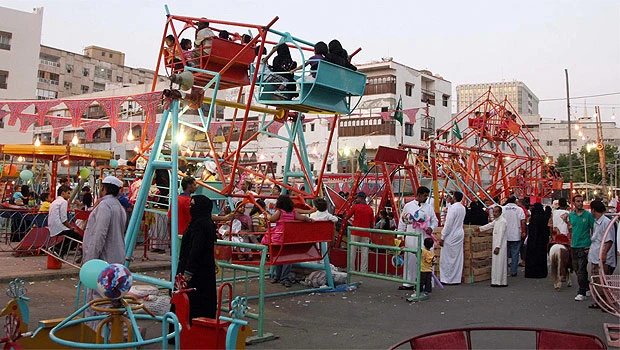
The Eid represents a special event for the children. They go out in their new dresses to the playgrounds scattered all over the city. They climb traditional seesaws made of wood to play Al-Tadriyah or Al-Madraiha. The children also receive their Eid presents, which are sums of money they gladly receive from parents, brothers and neighbors.
It is a tradition in Jeddah that families and friends visit each other to convey congratulations on the happy occasion. They will be served sweets, chocolates and cakes. The Eid greetings will continue during the second and third days.
It is also a Hijazi tradition to have breakfast at the "big house" of the grandfathers and grandmothers. Many family members will stay on for lunch and dinner.
Jeddah residents also go out to the Corniche to watch the fireworks and other programs.
Some of them would rent rest houses to spend the Eid holidays. Because of the school holidays, the residents of Jeddah were this year joined in their celebrations by people coming from other areas of the Kingdom who raised the occupancy of hotels and furnished apartments to nearly 100 percent, according to CEO of the Saudi Commission for Tourism and Antiquities (SCTA) in Makkah province Muhammad bin Abdullah Al-Amri.
He said the SCTA, the Jeddah Chamber of Commerce and Industry and the Jeddah municipality have worked together to organize special festivities for the Eid with the Jeddah Summer Festival, which started on July 1.
Al-Amri said there were three teams from the SCTA checking prices of the hotels and furnished apartments to put an end to any unjustified rise.
Government officials made it a point to visit patients confined at various hospitals to convey to them their felicitations on the Eid.