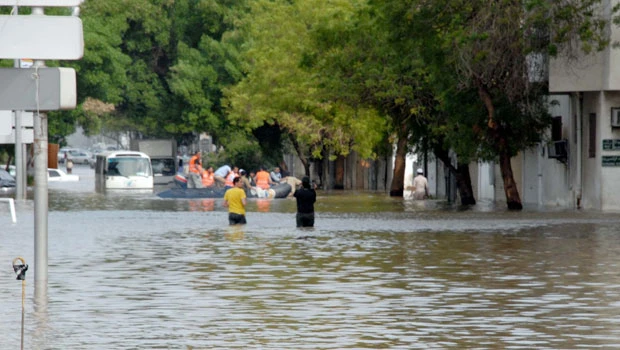
- JEDDAH: The defense counsel of a former municipal official under trial in connection with the man-made calamity following the November 2009 Jeddah floods said Sunday it was improper to put a suspect on trial at different courts on the same charges.
The counsel, speaking at the first hearing in the trial of the former official at the Jeddah Criminal Court, was referring to the fact that his client was also to be tried at the Court of Grievances.
While the criminal court is trying the official on the charge of negligence in executing projects aimed at countering the floods, the Court of Grievances is examining other charges, which include forgery, misuse of authority, ignoring of standing government instructions and wasteful spending of public money.
However, the public prosecutor sought harsh punishment for the suspect whose alleged negligence resulted in many deaths and irreparable losses.
The charge sheet specifically stated that the official moved some vital floodwater projects from their designated locations to less strategic areas besides changing courses of sewage pipes. He was also accused of cutting down on the quantity of asphalt used in some road projects, which resulted in extensive damage to the roads during the rains.
He was also allegedly responsible for the transfer of a project intended to increase the length of drainage pipes to 1,600 meters at Rawabi to another location on the Makkah Road.
The defense counsel said in his argument that there was no substance in the charges against his client prepared by the prosecution.
“To prove the innocence of my client I should be allowed to read all the documents related to the case, including the results of the investigations made by various official agencies,” the counsel said, adding that he needed some more time to prepare for the defense.
The counsel wondered how a logical defense of his client could be made when the prosecution and the defense stood in uneven grounds. “While the prosecution had access to all documents related to the case the defense only got the charge sheet,” the counsel argued, stressing his right to see all the investigation reports in the case.