- RAMALLAH: The Israeli Army will not ease the siege it imposed on Gaza Strip after the release of Israeli soldier Gilad Shalit in exchange for 1,027 Palestinian prisoners.
The Israeli Army Radio quoted army’s officials as saying that the siege will remain in place “to prevent the smuggling of weapons into Gaza Strip.”
According to the report, the issue of the siege was not raised during the approval of the deal.
The development comes a day after Palestinian President Mahmoud Abbas urged Israel to lift the siege. “The siege must be lifted and it should have been lifted even before the issue of the soldier ended,”Abbas told journalists aboard the plane taking him to Jordan from Paris.
Abbas added that the Israeli siege “is a collective punishment and it is illegal in the international law.”
A senior Palestinian official said Abbas would receive the released prisoners on Tuesday despite heightened tensions between Fatah and Hamas over the deal.
Issa Qaraqi’, the minister of detainees and ex-detainees, said the prisoners would be greeted by Abbas in a formal ceremony at the presidential headquarters Al-Muqata’a in Ramallah.
He added that representatives of the Palestine Liberation Organization, Palestinian Authority, notables and leaders of various national and Islamic political factions would be present.
Qaraqi’ added that he would accompany the prisoners from the Ofer prison to Al-Muqata’a where they will lay a wreath on the grave of the late leader Yasser Arafat.
The minister added that Abbas ordered all Palestinian governors to “greet the prisoners and organize official ceremonies for them.”
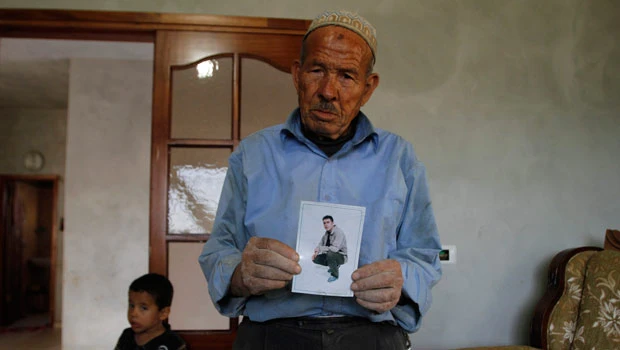
Meanwhile, some 200 family members of prisoners who will not be released as part of the deal are protesting in Ramallah. The families are demanding a clear stance on the fate of their loved ones.
Meanwhile, a top Palestinian militant serving a 30-year sentence in an Israeli jail was on Monday rushed to hospital after collapsing following 21 days without food, his deputy said.
Ahmed Saadat, secretary-general of the Popular Front for the Liberation of Palestine began an open-ended hunger strike on Sept. 27 to protest being held in solitary confinement for the last four years.