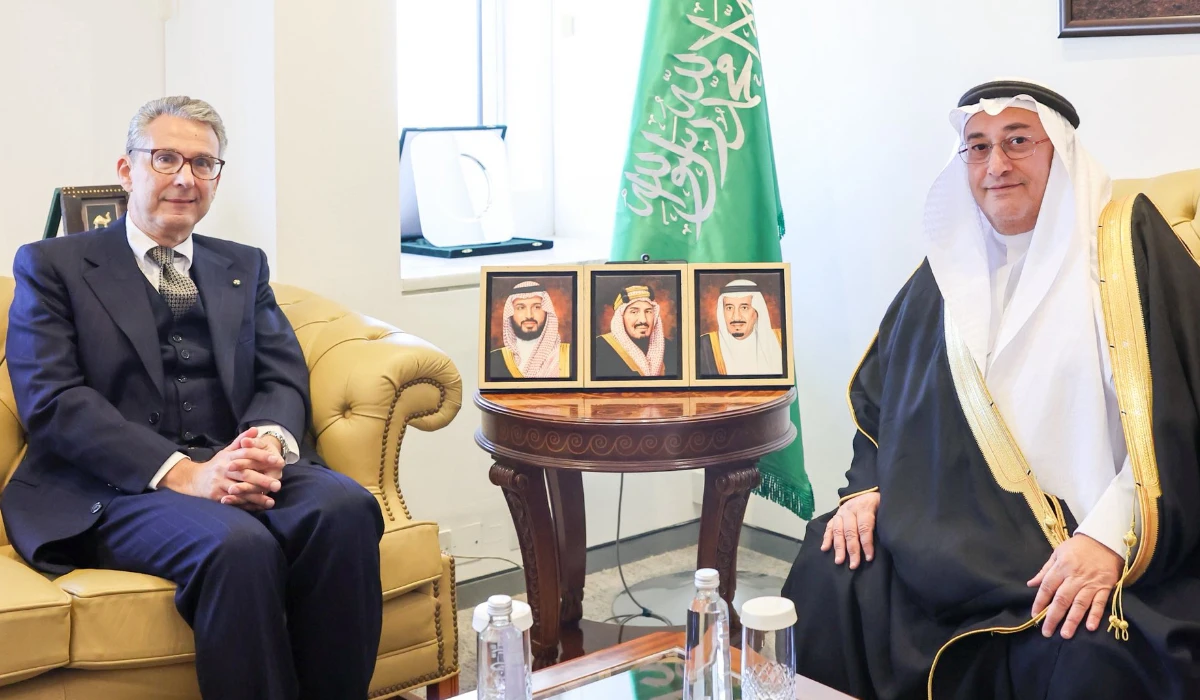
- RIYADH: Health Minister Dr.
- Abdullah Al-Rabeeah said on Monday that so far there are no health problems and no trace of epidemics among pilgrims during the current Haj season.
The minister was addressing health officials at a meeting of the Haj Preparatory Committee held at the ministry headquarters in Riyadh.
He said Interior Minister Prince Naif, second deputy premier, has sought the cooperation of all departments in the public sector for a successful Haj during this season. Prince Naif is the chairman of the Supreme Haj Committee.
Al-Rabeeah said it is the prime duty of all health officials to serve the guests of Allah in a fitting manner.
He added that his ministry has recruited more than 20,000 people from various medical, technical and administrative fields for this Haj season. He said manpower from the Kingdom and abroad stood at 441 people in rare medical disciplines, including intensive care.
The Health Ministry, he said, has taken preventive measures against all epidemic diseases that could be brought into the Kingdom by pilgrims.
It has deployed officials at all 14 entry points to monitor the health of pilgrims coming for Haj. He added that these officials would ensure pilgrims have taken the necessary vaccinations. “Those who have not taken the vaccinations will be given the relevant doses at the ports of entry so that they are protected against contagious diseases,” he noted.
The ministry through overseas Saudi missions has already instructed incoming pilgrims to produce vaccination certificates against yellow fever, meningitis, polio and influenza depending on their countries of origin.
Most of the pilgrims from the African and South American continents have been advised to take vaccinations against yellow fever, which is endemic to those countries, and vaccinations against meningitis have been made compulsory for all since it is contagious, especially in large crowds of people.
Children between the ages of two and 15 years were asked to take an oral dose of the polio vaccine before their departure to the Kingdom.
Vaccinations against meningitis are valid for three years and the pilgrims have been advised to take the injection at least 10 days before their departure to the holy cities.
Haj visas are issued at Saudi missions only on production of the vaccination certificates.
The minister said health officials in the holy city of Madinah have been increased to ensure regular health services to the pilgrims who visit the Prophet's Mosque. He said SR50 million has been spent on modernizing health facilities and services in the holy cities.
There are 80 primary health care centers in the holy sites: 28 in Mina, 46 in Arafat and six in Muzdalifah. Besides these clinics, he said, there are seven hospitals — three in Arafat and four in Mina.
There are some 4,000 hospital beds in the holy cities of Makkah and Madinah. Around 100 ambulances are also deployed to ferry emergency cases to the nearest clinics.