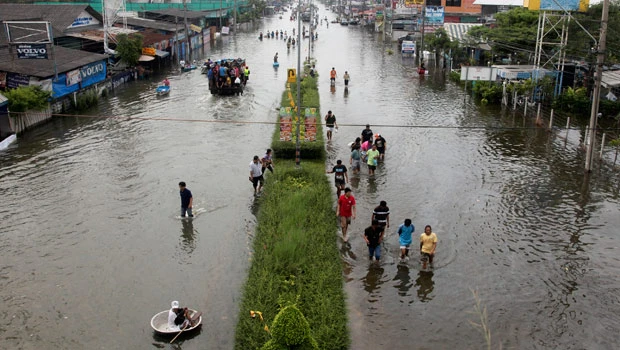
- BANGKOK: Thailand’s prime minister acknowledged Thursday that efforts to block floodwaters from entering the Thai capital are failing and authorities will instead risk potential overflow with a controlled release of water through the city’s canals.
Prime Minister Yingluck Shinawatra told reporters that every means to slow the water from entering Bangkok had been tried, so at least some must be allowed to drain through the city.
The authorities had been making desperate attempts to keep floodgates closed and boost barriers along waterways carrying a deluge of water downstream from the north. The evident result was massive flooding inundating homes and factories in areas north of the city.
“We must allow the water to flow through. Very little has been driven to the sea,” Yingluck said.
There were no clear indications of what sections of Bangkok would experience flooding, or how badly.
Yingluck’s government has come under sharp criticism for a confusing and inadequate response to the flooding, with began in August with heavy rains in northern Thailand.
By Thursday, the death toll in nationwide flooding had risen to 320, mostly from drowning, with nearly 9 million people affected and 27 of the country’s 77 provinces still inundated. Initial estimates of the economic cost of destroyed shops, paralyzed factories and swamped farmland were $3 billion, but have since been rising.
Yingluck said the amount of water still flowing down from the north was many times that which was flowing out to the sea.
“There’s no way to drain out water because we are blocking it. Sometimes blocking the water caused the barriers to deteriorate, because we didn’t design them to act as dams,” she said. “Today we have exhausted every resource we have to slow down the water, be they damming or water retention areas.”
She said Bangkok’s city government had agreed to cooperate in the new plan to drain water.