- TUNIS: Tunisia woke up Friday to official confirmation what everyone had known since Sunday night, that the moderate Islamist Ennahda party had won the lion’s share of votes in the landmark election to the constituent assembly with 90 seats.
- The final results were announced late Thursday night.
The country also woke up to violent protests against the results in the town that started the revolution, Sidi Bouzid.
Neither seemed to excite the slightest attention in the streets of the capital, Tunis.
The riots followed the decision by the electoral commission ISIE to disqualify the populist Alridha Chaabiya party (The Popular Petition) in four constituencies, including Sidi Bouzid, over undisclosed financial irregularities and hand the seven seats it would have won to other parties, Ennahda and the center left Congress for the Republic (CPR) being the main beneficiaries.
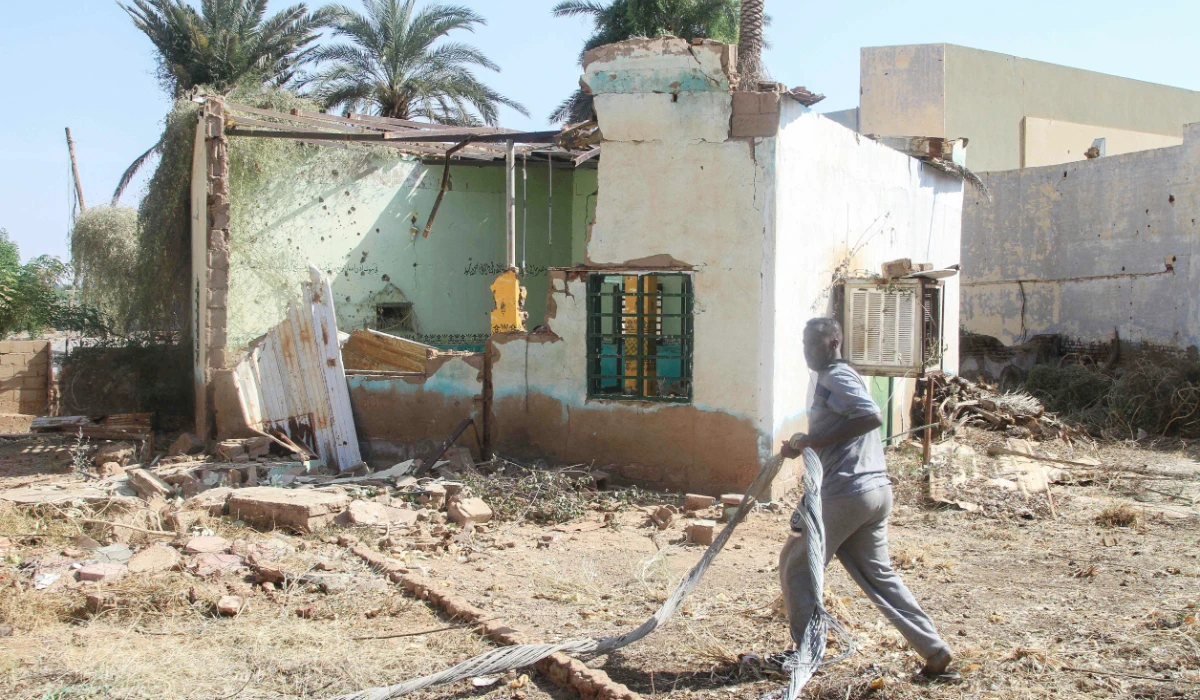
In Sidi Bouzid, where Alridha had come top of the poll, some 4,000 angry residents attacked Ennahda’s headquarters and set fire to the town hall. Police resorted to tear gas but on Friday morning the protestors were back on the streets. The municipal police station was reportedly left a smoldering wreck. Schools and public buildings had to be closed and a curfew imposed from 7 p.m. until 5 a.m. Saturday morning. By mid-afternoon, however, the town was said to be calm after other citizens broke up the protests.
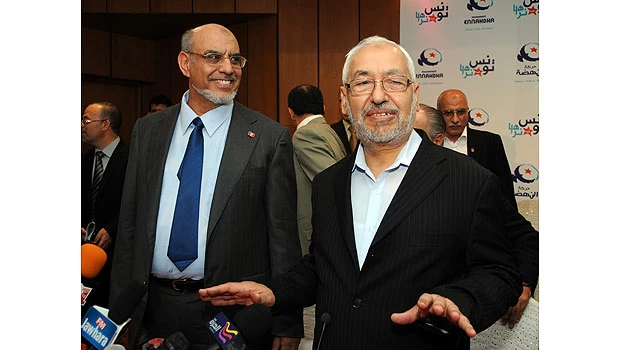
Sidi Bouzid, where Tunisia’s revolution started in December when vegetable seller Mohamed Bouazizi set himself on fire because of police harassment, was the only constituency in the country where Ennahda failed to come first. Ennahda’s leader, Rachid Ghannouchi, called for calm in the town on Friday, promising it priority in the new Tunisian government’s development plans. However, he also blamed the violence on supporters of ousted president Zine El Abidine Ben Ali.
As well as disqualifying Alridha there and in Tataouine, Sfax I, and Kasserine constituencies, ISIE also disqualified Alridha’s candidate in one of the overseas constituencies over alleged links to the outlawed RCD party of the former president.
In response to the ISIE decision, Alridha’s leader, London-based TV mogul Mohamed Hachimi Hamidi, who was a member of Ennahda until 1982 but is said to then have had links with Ben Ali, announced that he was pulling all Aridha’s remaining 17 elected members out of the constituent assembly.
ISIE’s decision to strip the party was greeted at the press center in the Tunis’ Palais de Congress on Thursday evening by spontaneous applause from the assembled Tunisian journalists and media people. There was clapping and cheering; many started singing the national anthem.
The behavior appeared to endorse accusations from Alridha that the Tunisian media was not impartial and had deliberately ignored the party with the intention of damaging it.
“This could cause serious problems, especially in Sidi Bouzid,” a French reporter said of the ISIE decision. “The people there are going to feel cheated.”
There was already strong alienation in the town, in the center of Tunisia, and a sense of being ignored by the political elite in the capital. It is not without some foundation. “Those people from Sidi Bouzid think they are special because of the revolution,” said a restaurant waiter in Tunis on Friday with evident contempt for them.
In Tunis on Friday, little attention was paid to the protests in Sidi Bouzid. There was little coverage in the press. The main focus was on who would join the coalition.
Several parties have ruled out doing so, including the centrist Progressive Democrats and their pre-election allies, Afek Tounes and the Democratic Pole. However, they won only 26 seats between them and their numbers are not needed if Ennahda forms a coalition with the second and third largest parties in the constituent assembly: CPR (30 seats) and Ettakatol (21).
However, both parties are said to be bargaining hard and the situation is complicated by the fact that the leaders of both have their eyes on the presidency.
Ennahda’s problem is that despite having won the lion’s share of the vote, it cannot go it alone. It needs the other parties more than they need it — not just for the numbers but also to give the new government a broad appeal and allay fears that it would have an Islamist agenda. CPR and Ettakatol are largely secularist.
Indications are that an Ennahda-CPR-Ettakatol coalition will happen. The Tunisian press on Friday spoke of a coalition “crystalizing.” According to Ghannouchi, it would be a government that will favor a firmly free market economy, with the Tunisian dinar becoming fully convertible.
Ousted president Ben Ali also favored a liberal, free-market economy.
Not all Ettakatol’s supporters are happy at the idea of a coalition. “I don’t trust Ennahda at all,” said Ayman, an Ettakatol party activist from Nabeul near Hammamet on Friday. He hoped that his party would steer clear of the winning party. The only reason he believed it wanted Ettakatol and others to join it was because it was afraid of a backlash in a year’s time when legislative elections take place. The conditions would not improve so soon and the electorate would punish whoever was in charge. “I hope Ettakatol will not make a mistake by joining Ennahda,” he said.
The coalition negotiations are expected to take some time, although Ghannouchi has predicted they should be over within a month.