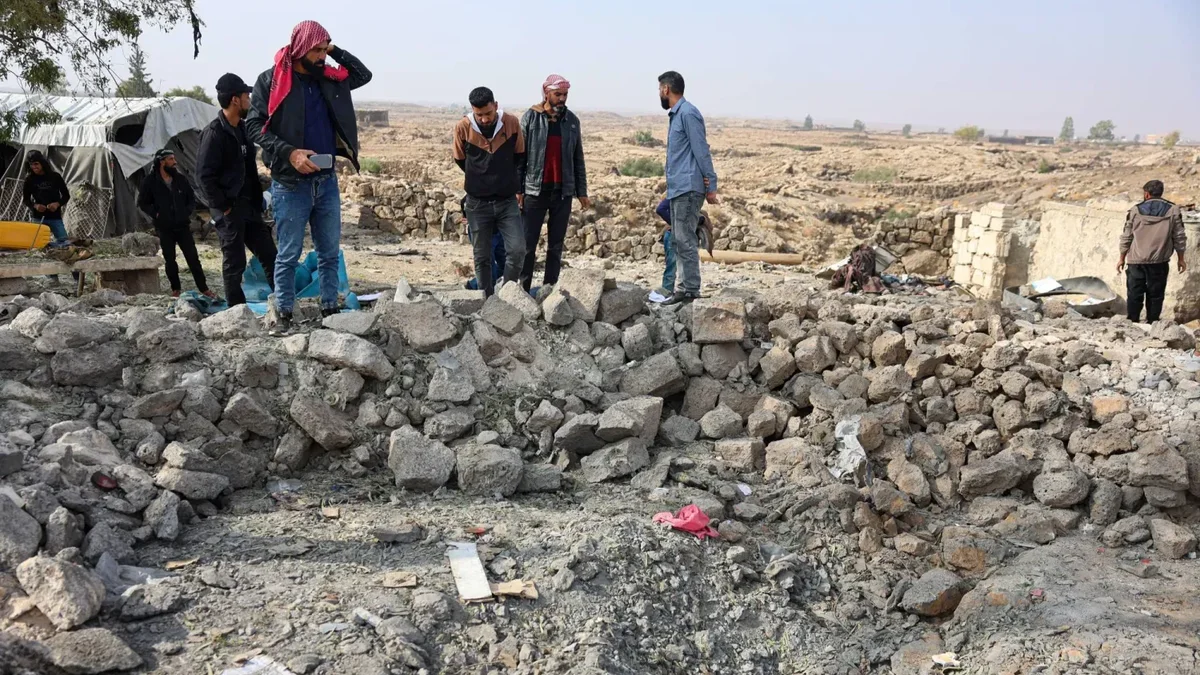
- AL-NUKHAIB, Iraq: An administrative spat between Iraq’s Kerbala and Anbar provinces over a disputed tract of western desert could refuel sectarian conflict as Iraq emerges from years of war.
A deadly ambush of people from Kerbala as they headed through the desert in September reignited a long-simmering feud between Kerbala and Anbar over a vast expanse of sand known as Al-Nukhaib, a route to western neighbors Syria and Saudi Arabia.
Iraq’s disputed territories are potential flash points as US troops depart, more than eight years after the invasion that unseated Saddam Hussein. The areas that usually stir greatest concern are in the north, around oil-rich Kirkuk.
Little known is the decades-old argument over Nukhaib — once part of Kerbala but handed over to Anbar by dictator Saddam Hussein — which erupted anew when 22 Kerbalans were marched off a bus and shot dead on Sept. 12.
“The Al-Nukhaib crime has succeeded in a way even greater than planned, and delivered this (dispute) to the level of an explosion,” said a senior official in the Kerbala government who asked not to be named because of the sensitivity of the issue.
“Just one other small incident similar to what happened in Nukhaib and everything may blow up,” the official said.
Graffiti and black banners adorn the exterior walls of government buildings in the holy city of Kerbala, mourning the victims of Nukhaib and demanding revenge.
On dozens of posters, bearing pictures of the victims’ coffins on a stark black background, the message reads: “The simplest thing that we offer to the martyrs of Al-Nukhaib is to restore it to Kerbala.”
Shortly after the Sept. 12 attack, Kerbala authorities traveled to neighboring Anbar and arrested a number of suspects, further fueling tension.
About a third of Anbar’s territory, Nukhaib covers about 4,000 square km (1,500 sq miles) of desert punctuated by valleys and hills. The area is dotted with huge caves ideal for use as hideouts by armed groups.
“The Al-Nukhaib area belonged to the holy city of Kerbala until 1977, when the dissolved Revolution Command Council decided to (annex it to Anbar),” said Naseif J. Mohammad, deputy head of the Kerbala Provincial Council.
“The goal was to prevent Kerbala from owning access to the international border.”
Nukhaib’s importance lies in its strategic location as the transit area for pilgrims to Saudi Arabia, and it lies near “160 Kilo,” a major hub of restaurants and fuel stations along the highway to Jordan and Syria.
Sectarian tensions have eased since the bloodletting of 2006-07, when thousands of people were killed. Iraq is governed by a fragile cross-sectarian coalition led by the Maliki.
The constitution, drawn up after the US-led invasion that ousted Saddam, outlines procedures including a census and public referendum to resolve territorial disputes.
Official maps show Nukhaib as a part of Kerbala in several years during the 1970s, but a 1966 map indicates it was part of Anbar. A map of Iraq woven into a 1939 carpet on display at a British museum shows Kerbala stretching to the Saudi border.
Many Anbar officials have taken the position that there is no dispute.
“This issue is settled,” Anbar Governor Qassim Mohammed told Reuters. “There are no disputed territories (in Anbar).”
“Whoever speaks about this issue can drink from the sea,” Mohammed said, using an Arabic expression whose English equivalent might be “go jump in the lake.”