- MINA: Makkah Gov.
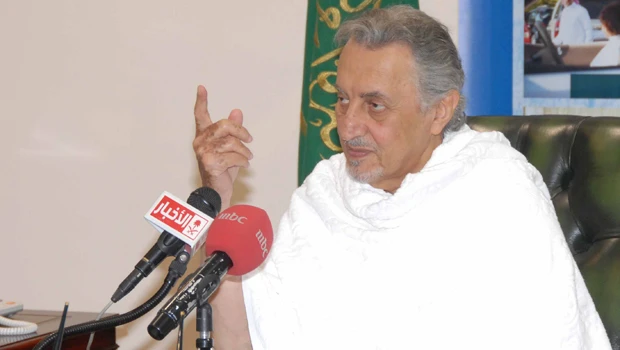
- Prince Khaled Al-Faisal, who is also chairman of the Central Haj Committee, warned on Friday that any attempt to exploit the occasion of Haj for political or any other purposes would be seriously dealt with.
Prince Khaled issued the warning while speaking at a press conference convened in Mina after the completion of the first day of Haj 2011 on Friday.
“Until this moment nothing has been brought to my notice. In fact, if there is any attempt to exploit the pilgrimage for purposes other than worship and Haj rites, we will deal with the matter seriously as we used to do in the past,” the prince said at his office in Mina.
The prince declared the huge task of transporting pilgrims from Makkah to the holy sites a success.
“This day the journey of the Haj pilgrims to Mina has been completed and thanks to Allah, no accidents have been reported. This is a blessing of Allah the Almighty,” the prince said. “More than 1.83 million foreign pilgrims arrived for Haj this year.”
The prince also conveyed the greetings of Custodian of the Two Holy Mosques King Abdullah and Crown Prince Naif, deputy premier and interior minister and chairman of the Supreme Haj Committee, to all pilgrims.
On the effectiveness of the ban on small vehicles entering the locations of Haj and enforcing the permit system for domestic pilgrims, the prince said: “People are beginning to respect instructions. While 36,000 cars were turned back for violating the regulations on the ban on entering the holy sites last year, this year only 6,000 cars were turned back,” the prince said.
Around 100,000 people who were attempting to go for Haj without permits or illegally were also sent back, the prince said.
Replying to a question on building permanent buildings (instead of tents) in Mina, the prince said that matter was under study and a final decision issued after the completion of studies and approval of the king.
Replying to a question on the number of domestic pilgrims in the current Haj, the prince said he did not have any specific number at hand, but generally Saudis and expatriates, including some illegal pilgrims used to exceed the number of pilgrims from abroad.
The prince described the issue of (illegal camping by pilgrims on roads and other public places) as a complicated topic. He attributed the aggravation of the issue in the past to factors such as the violation of residence permits, unwillingness to take out Haj permits and ignorance of regulations.
“Besides, there are people who believe that Haj should be performed in a strenuous manner walking all the way and not accepting any services to make the pilgrimage easier,” the prince said, adding that the issue has however been less and less noticeable in recent years.
The prince said he was performing Haj legally carrying a Haj permit. He did not entertain the idea that security men should learn various languages to interact with pilgrims from other countries.
“In fact it is the responsibility of Haj establishments and companies to make pilgrims aware of the regulations and other necessary matters. It is not the duty of the security men to learn various languages,” the prince said.