
- Once a resplendent residence of the high-profile Travancore Chief Secretary, the Park View building in Kerala’s capital city will now host the museum of the southern state's history and heritage.
- This is another “must-see” place on a visit to the southern Indian state described by its tourism brochures as God's Own Country.
The modern and high-tech Keralam — Museum of History and Heritage — gives a peek into the evolution of Kerala and its stunning cultural artifacts. The regal structure — dotted with quaint hallways, majestic pillars and arched gates — will preserve for posterities the fascinating 3,000-year-old history of Kerala in words, visuals and videos.
A collaborative effort of the Departments of Tourism and Culture, the museum is ideally located near the Napier Museum Art Gallery and has been set up in this heritage structure, which had been the headquarters of the Tourism Department for a long time.
“More than making it an arena to exhibit the historical artifacts, the museum has been conceived to help with the research and studies in history. First, to welcome the visitor is the screening of a short film on the Kerala history. There is a brief note attached to each exhibit, apart from kiosks, to give additional information,’’ said Kerala Tourism Secretary Venu V.
The visitors can have access to comprehensive information as well as pictures related to the exhibits on touch-screens. Well-trained guides will also be around to help the inquisitive visitors. State-of-the-art modern lighting systems and display techniques of international standards make it a niche museum, added Venu.
“Many of the artifacts on display had earlier been kept away from public gaze because of the lack of facilities. The replicas of artifacts belonging to the Paleolithic, Neolithic, Megalithic and Mesolithic periods are placed here. Researchers and students will benefit immensely as it tells the Kerala history in a comprehensive way,’’ said Venu.
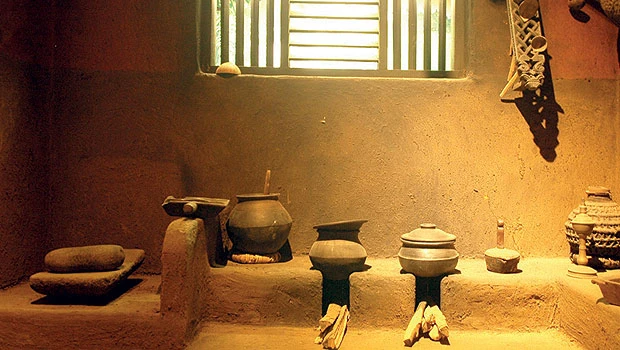
Spread over 7,000 sq ft, the museum houses a rich array of rock paintings, engravings, sculptures, idols and tools in stone, metal and wood, ancient frescoes, murals and different art forms, unfolding the 3,000-year-old history of Kerala in a distinctive style. A wealth of narrative documentaries, aesthetically designed galleries and maps and charts, together with a theater, a library and a museum shop, ensure the uniqueness of the museum for both visitors and researchers.
A royal horse drawn coach and two ancient cannons are displayed at the museum entrance. Burial accompaniments belonging to the Iron Age and collected from rock cut caves of Kuruvettur of Kozhikode, as well as Roman Dinar silver coins, prehistoric and historic monuments, 17th century murals, 14th century wood carvings of Brahma, artifacts of Celts dating back to 3,000 BC and articles used in Stone and Iron ages take visitors through the different phases of Kerala’s evolution.
Visitors to Keralam can be assured of having a brush with history of Kerala shown through a captivating tapestry of its cultural artifacts, especially its fabulous mix of traditional and colonial architecture. The world-class museum is the first of its kind in terms of display and communication.
"What we have made here is an attempt to revitalize Kerala. The museum is made as a template, resource point and reference point. Keralam is a boutique museum — small, stylish and world class. Museums are not known for their size but for their theme and for interpreting history. This museum showcases the antiquity of the land and its tradition and heritage in murals, architecture, etc.,” explained Venu.
Don't miss Keralam when you visit Kerala next time!