- JEDDAH: Professional and public visitors to the first Saudi architectural heritage exhibition appear impressed with both the principles behind the event and the professional presentation.
Overwhelmingly the emphasis was on the value of history and the preservation of Saudi culture for future generations and its part in creating a physical as well as metaphysical national identity.
“I believe Prince Sultan (bin Salman, president of the Saudi Commission for Tourism and Antiquities) has a very serious intention to give a facelift to Saudi tourism and take care of some very significant places in the Kingdom that will be a focus for tourists,” said Hassan Al-Qahtani, a visiting construction consultant. “He’s exactly the right guy for this period because he is doing it in a very professional way. He always follows up on tourism projects and really wants to see something solid on the ground, not just promises.”
Al-Qahtani was impressed with the focus on rebuilding old structures with original materials. He felt that concrete and cement had their place in the Kingdom’s infrastructure, but that there was value in preserving and restoring heritage buildings.
“It is impressive that old people are contributing their knowledge of past techniques to the restorers,” he said. He noted that in some cases the buildings are being strengthened with modern materials and are having services — perhaps electricity and water — added to make them habitable for tourists.
“The result of this drive to preserve the architecture of our culture for the future is that it gives the young the opportunity to say ‘this is our culture, where we come from.’ It helps them take their place in the world with a definite identity and pride.”
“I’m 100 percent behind this,” he concluded.
Mamdouh Yusef is a public relations professional and evaluated the exhibition in terms of a PR campaign. “This was very well organized and a tremendous opportunity to see how Jeddah will be presented as a city to the pilgrims who use it as a gateway to Makkah and to commercial visitors who want to do business here,” he said.
Yusef said it was the first time he had felt that there was genuine and serious activity to tackle issues here and to build credibility of the architectural culture of Saudi Arabia. “The preservation and restoration of the architecture of Balad and old Jeddah is a valuable contribution to the culture and credibility of the city.”
He was also impressed with the emphasis on the interactive nature of the forum, which moved away in style from the set speech pattern of some conferences. He also felt that the accompanying exhibition gave visitors to see and have good interaction with traditional local companies and several new and visiting foreign companies.
“Preserving your history is vital; it is where you start from. If you protect your heritage it gives you a motive to develop your civilization and to communicate with other nations, because you have an identity and can say, ‘Hey, this is us and where we come from’.”
He pointed out that visitors to London or Paris for example wanted to see the history and therefore the roots of the culture of the country. “That applies here just as much, so preserving it and showing it at its best has to be a positive thing. If a visitor sees a downtown area and it is not well kept, he will begin to wonder about the state of the nation and the culture.”
Yusef was particularly keen on Prince Sultan’s idea of taking history out of the books and putting it into the lives of the young.
“Young people are very connected nowadays through the Internet and social media. Having a strong and central idea of their own history and the contributions to the world of their culture will allow them to evaluate others and harmonize with them.”
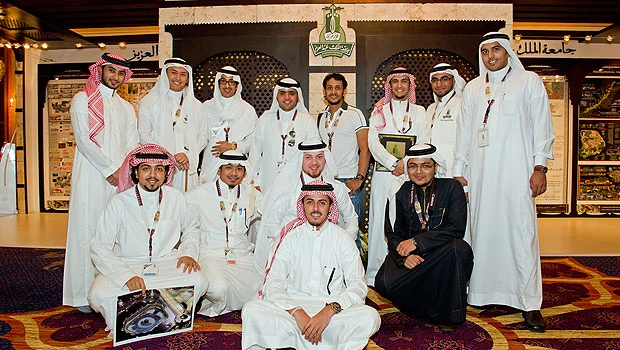
It was the young who demonstrated their commitment to the preservation and development of the Kingdom’s heritage. King Abdulaziz University presented projects and plans for the Balad district of Jeddah, all the work of current architecture students.
Mohammed Al-Dosari at the faculty of environmental design proudly showed off the students’ plans for a restoration of Balad that would keep the essential architectural character of the historic area but make it much more accessible, user-friendly and attractive to tourists. It would however retain is function as a working commercial area.
This is no idle academic exercise; all the plans and innovative thinking has been submitted to Makkah Gov. Prince Khaled Al-Faisal for serious consideration. This really does place history into the lives of the young, and they took it on and applied some fresh thinking to it. “It’s their vision of a new but historical Jeddah and involves about 1,600 buildings and will take into account all aspects of social life,” he said.
Al-Dosari said that in the students’ plans some buildings that were beyond restoration and “a lost cause” would have to go, but the focus was very much on restoration. “The idea is to keep as much of the original as we can, but make it easier to live in.”
The last word on the purpose and value of the architectural heritage forum goes to Yusef. “Remember,” he said, “the Dark Ages were only dark for Europe; Islamic culture was at its height in science, medicine, literature and architecture. Knowing your history gives you national self-respect.”