
- NEW YORK: The euro gained on Friday on hopes that the European Central Bank may get involved in a plan to help struggling euro zone countries, but world stocks fell as many investors continued to fear a spread of the region’s debt crisis into core European economies.
Key US stock indices were mixed early in the afternoon, though supported by reports that the ECB is considering lending to the International Monetary Fund to bail out troubled euro zone economies.
US Treasury prices fell as the borrowing costs of troubled European countries declined slightly, reducing the appeal for safe-haven assets.
Speculation that the ECB could also step up purchases of European sovereign debt helped shore up investor sentiment.
Either ECB approach would be satisfactory, said Andrew Busch, senior currency strategist at BMO Capital Markets in Chicago.
“The broader point is that the ECB is finding a way to stabilize the European debt crisis,” he said.
Economists say only the ECB would have enough fire power to quell a confidence crisis spreading throughout the euro zone.
But EU law forbids the bank to finance government borrowing directly, thus the possible arrangement with the IMF.
“This third-party lending arrangement not only works around ECB laws, but also provides an avenue for the ECB to create enough funding to stabilize the crisis while maintaining its appearance of independence,” Busch added.
The euro zone common currency rose 0.4 percent to $1.3509, pulling away from a five-week low of $1.3420 struck on Thursday.
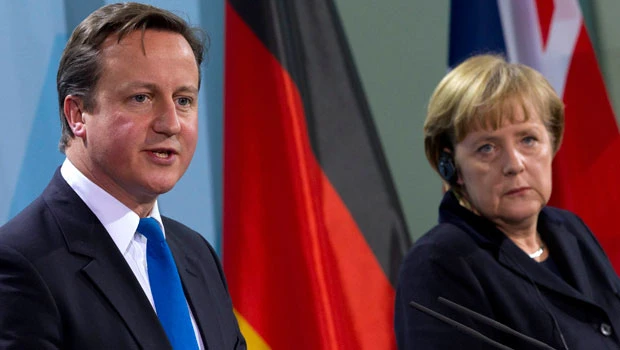
Apparent disagreement between Germany and the UK about how to solve the European debt crisis kept investors on the edge, however.
At a news conference in Berlin, the leaders of both countries sent out conflicting messages to markets, with British Prime Minister David Cameron calling for “decisive action” to stabilize the euro zone and German Chancellor Angela Merkel favoring a “step-by-step” approach.
Wall Street indexes were mixed, with the S&P 500 holding above a key resistance level around 1,200.
The Dow Jones industrial average rose 41.89 points, or 0.36 percent, at 11,812.62. The Standard & Poor’s 500 Index was up 1.62 points, or 0.13 percent, at 1,217.75. The Nasdaq Composite Index was down 11.22 points, or 0.43 percent, at 2,576.77.
In Europe, the FTSEurofirst 300 finished 0.7 percent lower.
World stocks, measured by the MSCI All-Country World Index, declined 0.4 percent.
“The (market’s) skepticism comes from the realization that there is no magic bullet in place to solve this crisis,” said Giancarlo Perasso, chief economist at Redux-Matrix.
US crude oil prices slid $1.36 to $97.57 per barrel.
Trade in the front-month December contract was light ahead of expiry later Friday as volumes moved into the January contract.
Benchmark 10-year US Treasury notes fell 14/32, sending their yield up to 2.012 percent, as a decline in Italian
government bond yields reduced their safe-haven bid.
Yields on Italian 10-year bonds eased to 6.7 percent but stayed near levels investors consider unsustainable.
Spanish 10-year bond yields fell to 6.4 percent from Thursday’s 6.5 percent before weekend elections in which the
center-right People’s Party is expected to win a resounding mandate to slash public spending.