
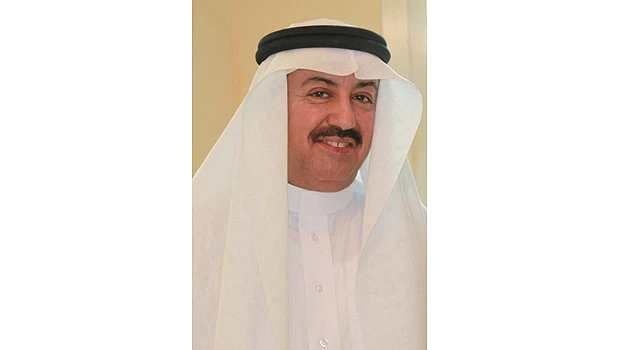
- RIYADH: Ali Al-Mousa, a businessman and an international economy expert, says he expects huge pressure on the Chinese currency yuan in the upcoming years.
“My deep-rooted economic experience as a businessman has enabled me to follow up the global political fluctuations and their impact on the economic arena,” he said, adding that capitalism has remarkably flourished in the aftermath of the collapse of the socialist system, paving the way for free trade and privatization theories.
But these turns of events faced some obstacles when many countries realized that pursuing such policies might infringe on a significant part of their sovereignty, he added.
Following the endorsement of the European Union and approval of unified currency (euro), prices shot up remarkably, a development that forced regional markets to reduce their involvement in Europe and shift toward Asia and China, Al-Mousa noted.
“The Europeans did not realize that a higher rate of the euro will negatively affect imports and exports while Chinese markets made unprecedented, well-studied, well-defined economic moves to attract major international companies and factories,” Al-Mousa said.
He praised the well-designed commercial norms and values initiated by China which, he believes, at first were negatively exploited by some traders.
Al-Mousa pointed out that China has eventually excluded such unscrupulous dealers from its markets to keep them open and clean. Such fair practices are non-existent in both European and American markets, he pointed out.
Al-Mousa emphasized the fact that Europe seized the opportunity and transferred all stock commodities to Moscow following the announcement of the Russian federation, a step that raised the value of the Russian currency and these developments made Europeans to feel that their economies are fairly good and strong.
But he said the European suffering and depression re-appeared when the Russian markets became fully saturated. These changes came when Chinese products had already started to compete for dominance in global markets, thanks to well-organized marketing strategies that identified the real demand of overseas markets.
These commercial developments sent some shockwaves among leading market players.
Al-Mousa said Washington started to feel the danger and exerted tremendous pressure on China to raise its currency rate by 40 percent, a request that has been repeatedly rejected and resisted by the Chinese government.
China resisted such proposals because a higher yuan rate would hurt its exports.
Beijing has managed to control foreign markets within eight years because of its ability to maintain a strong relationship with businessmen who are keen to deal with China.
Moreover, Al-Mousa said China successfully overcame various obstacles, which might deter businessmen. It also lent a favorable ear to their proposals, he said.
Al-Mousa said he had attended many conferences and trade exhibitions, which focused on catering to buyers’ needs.
“The Chinese have managed to understand cultures and civilizations and their reflection on their various products,” he said, adding that Chinese products are now available in all parts of the globe.
He highlighted the great patience and wisdom characterizing the Chinese people and said such qualities have won the respect and recognition of the world.
“The Chinese people are so respectable and generous. They are hard workers who want their country to be at the helm,” he said. A Chinese worker is ready to work for 18 hours a day with only a few hours of break, he pointed out.
Another interesting aspect of the Chinese business highlighted by Al-Mousa is that the Chinese economic complexes are located in close proximity to each other. These entities offer tax exemption and other administrative facilities to attract foreign investors, Al-Mousa said.
Under these circumstances, he believes, that Washington may never succeed in its efforts to make China bow down to pressure even if the yuan’s value is raised. This is because China has become an international economic giant with huge investments worldwide include the US, he said.
Al-Mousa cited the current Chinese efforts to support the European economy as another indication of its solid position.
He said Chinese businessmen are always willing to reinforce ties with their foreign counterparts.
The Saudi businessman lauded the farsighted economic vision of China and said he believes that all businessmen should take note of the great knowledge and new thinking of the Chinese mind.
Al-Mousa also believes that the American bilateral economic role has now come to an end and the world is witnessing a change in international balance of power, which is now gauged by giant economic establishments and their impact worldwide.
He said the secret behind the tremendous achievements of the Chinese is the quality of individuals, besides the Chinese determination to defend their values and traditions.
He cited the influence of the ancient Muslim merchants, who used to trade with China and said the Chinese were impressed with that kind of trade transactions.
He praised the rational and quiet Chinese foreign policy and their non-interference in the domestic affairs of other countries. Chinese policy respects the privacy and culture of other countries, so the smooth power of China has won the respect of entire countries and communities despite some unfortunate efforts to militarize that county.
Al-Mousa termed the protest movements currently being witnessed in the US, Europe and the Arab world as an uprising against corruption, monopoly and wealth control. These events have forced some prominent US businessmen to donate some of their wealth, a development that reflects the disorder and uncertainty engulfing global social and economic models.
He said political non-tolerance and double standards had triggered violence and extremism in the Arab world.
People of the region are expressing dismay and resentment over the lack of real development, fake elections and corruption of establishments, he said.
Al-Mousa concluded with optimism that the prevailing developments in the region would eventually reinforce relations with Asian and Latin American states along with moderate cooperation with the West.