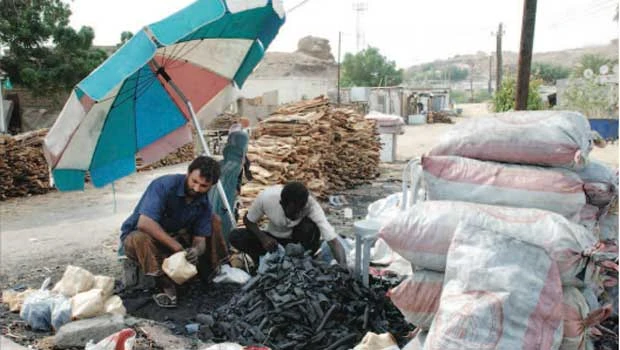
- JEDDAH: The Ministry of Agriculture has launched a campaign to curb the felling of trees for firewood in various provinces in the Kingdom.
To stop the indiscriminate felling of trees and bushes for firewood, the Kingdom has banned trade in wood produced domestically and encouraged imports with customs duty exemption in 2009. However, the destruction of plant life continues unabated in various part of the country, especially in the winter season.
A source at the ministry said people living in rural areas were ignorant about the environmental risks of such activities.
Another factor is the rising demand for local firewood, which is superior in quality compared to imports.
The ministry imposes a fine of SR2,000 for each ton of seized firewood or charcoal that are locally manufactured.
The ministry’s branch in Taif has contracted a security company to guard forests from poachers as well as intensified its inspections in timber markets to enforce the ban.
Arab News learned that despite the ban, five exclusive markets for firewood and charcoal thrive in the city of Bisha.
There are also open markets in Qassim and Hail where a pickup load of firewood is sold currently at the rate of SR1,600, double the normal market price in other seasons. One small bundle fetches SR5, compared to just SR3 last year.
However, the price hikes are seen as inflated because market supply is substantial while manufacturing and marketing costs are low. The cost of production is low due to the cheap wages associated with employing illegal migrant workers.
The market is also not affected by economic or political crises in other parts of the world.
Abdul Rahman Al-Ewadi, a firewood consumer, said firewood from willow, tamarisk, spurge and acacia trees is in high demand in the Kingdom.
“Trees are felled at night by illegal foreigners in the southern part of the Kingdom and sold to traders in central and northern provinces,” he said.
Al-Ewadi believes that people should be educated on the vital need to preserve the local ecology to stop further destruction to plant life, especially in desert areas.