
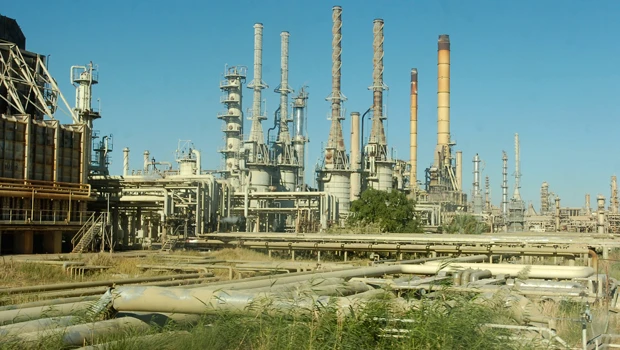
- After that contentious, the “worst-ever meeting” way back in June, OPEC would be in session again this Wednesday in Vienna, amidst growing signs of crumbling demand and rising supply.
- All eyes are set on the outcome of this outing in Vienna.
Early on Friday, oil prices were seen wavering between small gains and losses as the European Union appeared inching closer to a broad agreement on its lingering debt crisis. Benchmark crude rose 15 cents to $98.49 per barrel in early afternoon trading in New York. Brent, however, lost 33 cents in London. And a couple of days earlier, on Wednesday to be exact, crude futures fell back, weighed down by an unexpected increase in US stockpiles. Markets are in flux — not deciding which way to go.
And thus as the OPEC ministers sit down in Vienna later this week, contemplating their next move on the global energy chess board, Saudi Arabia was reported to be pumping oil at the highest rate for decades. The Kingdom produced 10.047 million barrels per day of crude oil excluding condensate in November, Reuters reported, quoting a senior Saudi oil official. All this must be clouding the minds of the OPEC energy leaders when they meet to decide.
Markets are curious and anxious, awaiting the outcome of the meeting. The issue is the output quota. While some say, the outing could again prove be as acrimonious as was the June one, yet most seem to conclude that OPEC now looks set to agree to a higher output in line with its current output of around 30 million barrels a day.
The notion received further endorsement when OPEC hawk, Iran, appeared to have given up its campaign to cut back OPEC output. Iranian Oil Minister Rostam Qasemi told Reuters on Monday that Tehran would be guided by the recommendations of OPEC Secretariat. “All OPEC members should really follow those recommendations because the secretariat is the expert,” said Qasemi in an interview in Doha. Delegates say OPEC’s Secretariat is to recommend a 30 million bpd output regimen in the first half of 2012.
The secretariat is forecasting demand for OPEC crude at 29.9 million bpd in the first quarter and 28.7 million bpd in the second quarter, the annual period of slowest global fuel demand. While the second quarter figure is well short of OPEC’s current output, yet the current level of inventories, having fallen sharply this year, would need to be replenished in the second quarter, the OPEC Secretariat is expected to argue.
“This meeting, there will be an agreement, I think. We don’t have big differences, really,” said the Iranian minister. Interestingly, he also met the UAE Oil Minister Mohamed Al-Hamli in Doha on Wednesday — apparently to ease out differences on the issue — analysts feel.
As per OPEC, the average call on its crude 2012 is projected to be 30 million bpd, close to the 29.8 million bpd from the US Energy Information Administration and 30.4 million bpd from the Paris-based International Energy Agency.
Some analysts, however, are looking at things from an interestingly different angle too. Rather than opting for an output level, OPEC oil ministers may opt to support crude prices at around $100 a barrel when they meet in Vienna later this week, they suggest.
OPEC ministers will avoid, rather contentious talks on new quotas, until Libyan production is fully restored and Saudi output is trimmed back following its unilateral increases after the last failed meeting in June, Samba said in its monthly bulletin.
“As such, the effectively irrelevant quotas agreed back in 2008 will remain in place,” it suggested, noting that Saudi Arabia had boosted output above nine million barrels per day to offset disruption in conflict-hit Libya. The report underlined, Saudi Arabia will look to balance its output against increasing Libyan supply while monitoring prices carefully.
“Should market fundamentals and prices weaken significantly during the first half of 2012, then a response from OPEC is possible at its June (2013) meeting,” Samba said.
"This would likely involve a cut in output led by Saudi Arabia, although if necessary, the Kingdom could join hands with other GCC members to cut production without broader OPEC cooperation.”
“Looking through this fog of uncertainty, our tendency is to expect that weaker market fundamentals will exert downward pressure on prices,” Samba said.
"Downside risks on the demand side loom large while supply developments appear biased on the upside. However tempering any decline will be the fact that the marginal cost of production and price level needed to encourage necessary investment has risen, and probably now stands at around $90... US shale oil is particularly expensive to produce.”
And in the run up to the ministerial, OPEC stalwarts continue to echo satisfaction on the state of markets. On Tuesday, Venezuelan President Hugo Chavez expressed comfort at the existing scenario, terming the current oil prices fair, insisting his government would push to keep them at current levels. “Look how it (the oil price) has stabilized in recent months at $100-120/ barrel and that’s where its fair price is — hopefully it will even out there,” Chavez said in Caracas.
OPEC Secretary-General Abdalla Salem El-Badri also told reporters late in November that crude-oil markets were “balanced” and current prices (of around $100 a barrel) were at a “comfortable” level.
However, the IEA continued to exert pressure on the OPEC. The agency said it hoped OPEC would make a “responsible decision” on oil production at its next meeting in Vienna.
“Producers need clients with healthy economies and I hope my colleagues from producing countries will make responsible decisions considering those facts,” IEA Chief Economist Fatih Birol said while in Warsaw. Interesting however, he didn't specify whether the IEA hopes OPEC will limit or boost output.
This is brinkmanship, dear Fatih!
With softening markets, collapsing economy and emerging new energy frontiers, OPEC cannot and should not be expected to open the taps further, making the markets collapse even earlier than due. That is hara-kiri and in these difficult times, when demand security is simply missing, OPEC shouldn’t be pushed to commit to that end.