- A literary platform for Egypt’s unknown voices
As the literary marketplace is increasingly focusing on a smaller group of books that sell well, the number of titles that sell modest quantities are in constant decline.
It is, indeed, getting more and more difficult for publishers to sell literary fiction, especially first novels by unknown writers, but that did not prevent Sara Abou Bakr and her sisters from setting up Saray Publishing a year ago in Cairo.
“Publishing has always been a dream for me and my sisters, bookworms that we are. Books have continuously been part of the family upbringing with our parents prodding us to read since early childhood. My own background is in journalism, and writing and publishing seemed like the natural second step, especially now that in Egypt there is a hunger for reading material that actually matters, that tickles the brain rather than skim through the surface of things,” explains Abou Bakr.
The recent events in Egypt have revealed a generation exposed to the Internet and the satellite dish. This new generation of middle-class Egyptians, politically aware with a strong sense of patriotism, wants to contribute to the economic, social and cultural revival of the country. These young people are having an impact on the literary scene; more vital and less consumption-oriented than their parents, they take pride in voicing their opinion.
“Egypt is changing and this generation is different, as it wants to make a change, a mark on history. This also affects the literary scene in Egypt. You have young people who want to write and be heard. Publishers are starting to grow and are interested in what this generation has to say. What is making Egypt special right now are the unknown voices,” says Abou Bakr who insists that she is not interested in well-established authors: “Writers who want to be heard and are trying to get published is our specialty, which we hope will be the company’s mantra for years to come.”
“To Each Her Own” is Saray’s first publication. The author, Inji Amr, an economist working as a business consultant, began her writing career like Ghada Abd El-Aal, the Egyptian writer who started a diary-cum-blog that eventually turned into the book “I Want to Get Married,” which was also made into a successful serial with the Cairo-based Tunisian film star Hind Sabri.
Amr’s book, however, is not about dating and wanting to get married. She is seen as the “lost voice of middle-class women in Egypt.” She describes her novella as a glimpse at middle-class Egypt, a look at a group of individuals who have been completely overlooked by Egyptian literature, television and cinema.
Abou Bakr agrees: “We noticed how Egyptian women in our media are almost always portrayed as religiously confused, floozies, marriage-hunters, but never as ‘regular’ Egyptian women, who are in my opinion more interesting. Amr’s book brought this insight, and it clicked with many young ladies and even some men. “To Each Her Own” hit a nerve and hence it became a bestseller.”
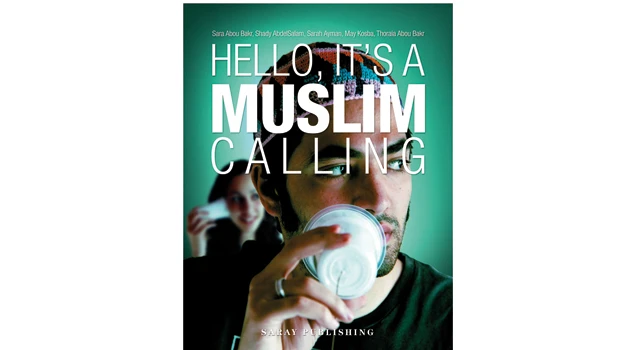
Saray’s second publication, “Hello, It’s a Muslim Calling,” is poised to attract an even wider readership. After reading an article in the Christian Science Monitor, “Why is Islamophobia less thinly veiled in Europe,” Abou Bakr wondered about the absent voices of moderate Muslims: the regular Muslims who go to work every day, provide for their families and worry about the future.
“Hello, It’s a Muslim Calling” attempts to explain what it is like to be a middle-class, well-educated Muslim living in a predominantly Muslim country in the Middle East and North Africa. It was published after the White Revolution, which brought together in Tahrir Square, the heart of Cairo, Christians and Muslims from all walks of life, united in their call for justice. The so-called spirit of Tahrir inspired rare feelings of generosity, equality and love among all the protestors gathered in the square.
“Maybe there is another side of the coin to the well-propagated media hype of ‘barbaric’ Muslims,” says Abou Bakr who describes the book as an “honest voicing of Muslims” who believe they should be heard.
Although Saray Publishing is a platform for new authors, the publishers are very choosy. Authors have to be creative and offer a new insight to things they discuss, and most important, they have to be in love with the business of writing.
Despite the current problems in Egypt — a weak economy, a staggering drop of tourists — Abou Bakr is confident that Egypt will find its bearings. She is also hopeful that after Jan. 25, the hunger for knowledge will intensify and people will look for good reads.
Amr is also positive about the youth-driven revolution: “For the first time in my life, I felt empowered, I had a choice, I could make a difference.” She also credits the rise of a so-called youth literature for reigniting the desire to read among Egyptians.
Abou Bakr acknowledges that in the aftermath of the revolution, Egyptians need to work hard, a non-negotiable sacrifice, and concludes: “Publishing is a difficult business and a challenging one, which is part of the fun. It needs patience, but most importantly, one has to believe in what he or she publishes, or else it becomes a burden.”