- MAKKAH: The Holy City is among the few cities, if not the only one, in Saudi Arabia with the largest number of illegal foreign residents.
It is more or less the main haven for illegal foreigners, mostly African nationals. The reason for this is because foreigners who come to the Kingdom for Umrah or Haj tend to just stay here.
There are at least nine underdeveloped districts in Makkah. Each district is made up of at least 10 quarters. Africans of the same nationality would choose one of the districts and make it their permanent home in Makkah. They even change the names of the old districts, giving them African-sounding names.
The most popular of these areas for illegal African overstayers is the Al-Mansour district, which has been known by this name for more than half a century.
The district is about 1.5 km away from the Grand Mosque. It is occupied by thousands of African men, women and children.
The most famous Harat (residential quarter) in this district is Souk Al-Jumaa (Friday market). It obtained this name after a number of illegal Africans would gather in it every Friday after Fajr (early morning) prayer to sell their goods in the open air until after Maghreb (early evening) prayer.
Though this quarter is considered fairly new as it surfaced about 15 years ago, it has become one of the most popular residential quarters in the holy city. The Africans used to do business there only on Thursdays and Fridays but now they do it throughout the week.
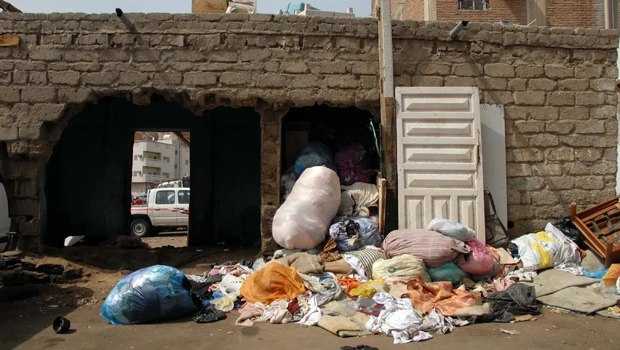
The goods on sale here consist of old clothes and shoes that are stitched and cleaned before they are offered for sale to interested buyers.
The market is also known for selling unauthorized weapons including knifes and daggers. Rifles and pistols are also secretly sold.
Though the market is not easily accessible, it is always crowded with people who often obstruct traffic.
The traders would send their wives and children to go from door to door begging for old clothes. They also go to charity organizations for the same reason. They would tell the residents that it would be better to give them their old clothes instead of dumping them in the garbage.
When the wives and children bring back whatever they can find, it will be sent to certain locations where a number of their compatriots will be waiting to receive the used goods. They will select whatever is useable, clean it and make it ready for sale.
The second important Harat in Al-Mansour district is Housh (courtyard) Bakr that is about 2 km away from the Grand Mosque. This Harat, surrounded by mountains and plateaus, has existed for more than 45 years. It is one of the oldest markets for the African community.
Housh Bakr obtained its name after a Nigerian who was one of the first residents there. He was the mayor of the Harat, which became a famous place for recycling scrap steel and selling stolen goods. Doors and windows would be repaired and painted before they are offered for sale.
The residents of Housh Bakr were also famous scavengers. They would go to the Haram expansion area to loot buildings that have been confiscated and demolished to make way for the project.
It is not an unusual scene to see the police raiding this area looking for criminals. It is considered one of the most dangerous areas in Makkah.
Harat Goden Gadda is close to Housh Bakr and is famous for “magicians” who would take money from Saudis and foreigners after convincing them that they could perform miracles for them. Most of their victims were women who were either looking to get pregnant or to ensure their husbands stay with them forever.
This Harat is also known for its abortions. People performing the procedures would charge thousands of riyals, especially to women who were illegally pregnant and wanted to get rid of the child.
Another famous residential quarter in the Al-Mansour district is Harat Mashizo. It was named after a ferocious Nigerian who was known for his physical strength and violent nature. This Harat is also famous for selling Guro (a green fruit which comes from Africa). This fruit is sold for SR10 a piece and is commonly believed to increase men’s libido.
The African residents also sell herbal medicines and tablets for the treatment of various diseases including headaches, cold and even sexual impotency. They also sell various kinds of expired foodstuffs at low prices including milk, chicken, chocolates and others.
The Zahareen Harat in Al-Rusaifah district is also one of the famous random quarters in Makkah. It is also known as “the million child district” as it is replete with black children who do a lot of jobs which includes theft, begging and prostitution.
Girls would lure men looking for sex to the district where African gangs would be waiting for them to beat them up and rob them of their money.
Saudi residents of Makkah commonly believed that the Al-Mansour district is a real threat to the security of the holy city. They said the area was a haven for crime and unethical practices. The Makkawis were unanimous that the area needed to be redeveloped.
Commenting on this issue, police spokesman Lt. Col Abdul Mohsen Al-Miman said such areas were constantly under surveillance by police, security patrols and passport and traffic police.
He said a number of raids were organized during which many criminals and illegal overstayers were arrested.