
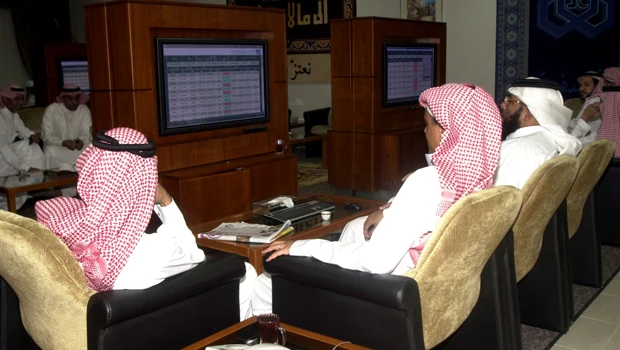
- AMMAN: Middle East stock markets reflected a mixed performance last week as investors monitored clues for annual corporate earnings, financial analysts said Friday.
They expected regional markets, particularly in the Gulf area, to rally in the last week of 2011, buoyed by the relief on global markets that followed upbeat data about the US economic recovery and attempts by European policy makers to find solutions for their sovereign debt crisis.
“I think investors will be focusing attention in the coming few weeks on the fourth quarter profits, while keeping an eye on geopolitics, particularly the fallout of Arab Spring uprisings,” Wajdi Makhamreh, CEO of the Amman-based Noor Investments, told Arab News.
He said that regional markets would come under additional pressure from the standoff in Iraq that followed the withdrawal of US troops.
Makhamreh considered high oil prices and lavish spending by the Arab Gulf states as key factors that would spur Arab stock exchanges in the coming weeks.
“I believe crude prices is a crucial factor in deciding the volume of public spending and, consequently, the direction of markets,” he said.
However, he expected any rally at Arab stock markets at the beginning of the new year to be “short-lived” in the absence of a successful handling of the euro zone debt ordeal.
Saudi shares rallied last week, buoyed by the nearing revelation of the country’s public budget, the approaching year-end and oil prices above $100 a barrel, analysts said.
“I believe these factors have given rise to an atmosphere of optimism at the Saudi market,” said analyst Mohammad Emran, chairman of the Riyadh-based Gulf Centre for Financial Consultancy.
The Tadawul All-Share Index (TASI) gained 1.5 percent on weekly basis, to close at 6,330.01 points.
Emran believed that the rally on global markets over the past couple of days had left a positive impact on the Saudi market.
However, he noticed that the bulk of liquidity was channeled to ”speculative sectors” at the Saudi market.
Kuwaiti stocks extended losses last week due to political turmoil that involved the dissolution of parliament and plans to hold early general elections.
Kuwait’s KSE all-share index shed 0.5 per cent last week, to close at 5,794 points.
The benchmarks of the United Arab Emirates stock exchanges of Dubai and Abu Dhabi also closed 2 percent and 2.6 percent in the red with weekly closures respectively at 1,339 points and 2,351 points.
Qatar’s all-share index gained 0.3 per cent on weekly basis closing at 8,780 points, while Bahrain’s benchmark fell 1.4 percent to close week at 1,143 points.
Jordanian shares lost fresh ground last week due to expectations of retreating annual profits of listed firms and the negative fallout on Jordanian exports from the Syrian uprising, Makhamreh said.
The all-share index of the Amman Stock Exchange (ASE) shed 0.92 percent last week, to close at 1,977 points.
Egyptian shares suffered deeply last week due to a downgrade of Egyptian sovereign bond ratings by Moody’s rating agency and the call for a huge rally on Friday to press for the departure of the country’s ruling military council, analysts said.
Egypt’s AGX 30 index, which measures the performance of the market’s 30 most active stocks, plummeted 7.7 percent on weekly basis, closing at 3,616 points.