- MAKKAH: An increasing number of people with severe psychiatric illnesses and abandoned elderly have made the streets of the holy city of Makkah their habitat.
- While citizens cry out to express their dismay, authorities remain silent.
The outcasts of society in Makkah have found shelter on sidewalks and camp under bridges. Their living conditions are abysmal. This threatens the sanctity of the holy city and gives local residents and pilgrims a headache. Women and children are afraid to walk the streets alone, for fear of these homeless people, who may turn hostile at any moment.
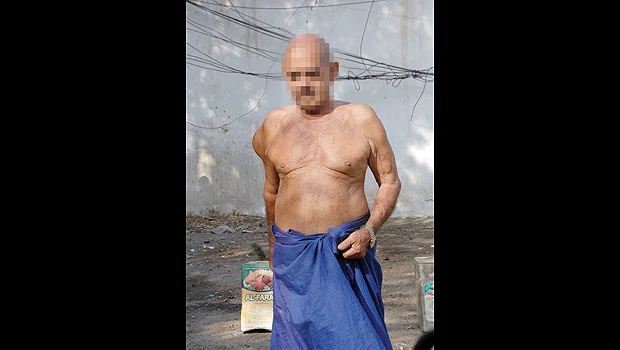
The very sight of these wretched people can be a terrifying experience. Most of them are in bad shape, wearing ragged clothes that do not cover them properly. Some walk around aimlessly, gesturing and talking to themselves. Others are aggressive, abusive, destructive, and quarrelsome with passersby. They fight for food near garbage dumps or they sleep beside stray animals on the streets.
The concerned authorities have yet to take concrete measures to put an end to this phenomenon. Already the homeless have done severe damage to the image of the holy city. A number of experts and specialists blame government agencies for this situation. They point to the Ministry of Social Affairs, the Ministry of Health, the police and the families of these people.
About 99 percent of the mentally-disturbed, old people are Saudi citizens. They should therefore, have all the rights enjoyed by other nationals. Who is responsible for their condition? This question was put to the Ministry of Health, the Ministry of Social Affairs and National Society for Human Rights (NSHR).
The Health Ministry replied to the query that there were 21 psychiatric hospitals currently operating in the Kingdom. The ministry said 14 of them were currently being refurbished while two new ones were being constructed in Riyadh.
It said the current 3,000-bed capacity of these hospitals would be increased to 5,000 beds when these projects are completed and this should help take the pressure off the hospitals in helping these patients.
Arab News tried to get the opinion of the Ministry of Social Affairs on the issue. The newspaper contacted the director of the branch of the ministry in Makkah Abdullah Al-Tawi, who said he was entering the governorate at the time to attend a meeting and asked us to contact him later. When we called him after Maghreb prayer, his mobile phone was switched off. We tried again next day but there was no answer.
Muslim scholar Sheikh Muhammad Al-Suhali, director of Islamic Studies at the College of Shariah of Umm Al-Qura University, who is a member of the NSHR, said: The psychological patients and mentally disturbed people left on their own in the streets was the responsibility of all. He cited a Hadith of Prophet Muhammad (peace be upon him) that everyone was responsible for his subjects. He also quoted Caliph Omar ibn Al-Khattab who said if a mule stumbled in Iraq he would be responsible for it.
“These madmen aimlessly roaming the streets of Makkah are human beings. They are also our brothers. We should take good care of them,” he said.
Al-Suhali noted that in press statements, the concerned ministries were trying to disown responsibility for this category of people.
“The Ministry of Social Affairs is claiming that it has no hand in the issue. The same is being said by the Ministry of Health and the security forces. Who then is responsible,” he questioned. He held all the three parties to be equally responsible for the fate of the old psychological patients.
Al-Suhali said it was the Saudi society and their relatives who actually feel the pain every time they see these old people on the streets.
“As these patients may cause harm to themselves and to others, it is the responsibility of the security forces to catch them and hand them over to the health department for treatment. If they are begging due to poor financial condition, then the Ministry of Social Affairs should step in to help,” he said.
Al-Suhali appealed to the governorate to find a quick solution to this problem.
The experts drew attention to the fact that the number of homeless people — elderly, mentally deranged or otherwise — has been rising day by day.
The mentally deranged homeless have sometimes been psychiatrically hospitalized, while others have never been treated. Some patients have suicidal tendencies and attempted to commit suicide earlier. Drug dealers have been known to misuse mentally deranged persons are their traffickers.
Arab News toured the holy city and met a few of the homeless.
The 65-year-old Saleh has settled in Aziziyah district. He moves from street to street, taking his personal belongings with him. These include a gas stove, a water cooler, a mat, and a small radio to listen to the news and songs by his favorite singer Umm Kulthum. He is always keen to get his clothes washed at a local launderette.
After setting up a makeshift shelter on the street, Saleh spends most of his time sitting or laying on his mat, puffing on a cigarette and listening to his radio. He asks passersby for one riyal and then buys foodstuffs from the alms. He prepares tea and food but does not want to share these with anyone. Local residents said that this man was never aggressive.
This is not the case with another homeless man in Aziziyah district. He erects small tents with cartons or paper on the street. Nobody knows how he manages to take a rest inside these shelters, as they are too small to accommodate him. The very sight of the 68-year-old man frightens local residents and visitors alike. He never allows anyone to come nearby his ‘palace.’ Anybody who tried to approach him, had to suffer the brunt of his rude behavior. Sometimes, he drives local residents away by stoning them.
Not all homeless people cause trouble. One man, who lives under a bridge in Al-Mualla in the Central Haram Area, does not suffer from any mental disorders. He is quite familiar with the local people who give him cash, food and clothes.
Another man gathered his personal belongings under the same bridge. These include an old cot, cooking utensils and basic furniture. He is a well-known cook, who specializes in preparing Bukhari rice, a local dish. Many local residents enjoy his company and hospitality. Even though he belongs to an affluent family, he prefers to stay under the bridge for unknown reasons.
Many residents in the holy city, including citizens and foreigners, expressed their dismay to Arab News over the rising tide of this phenomenon in the holy city. They drew attention to several incidents in which passersby came under attack from homeless people with psychiatric disorders. They urged the concerned authorities to take action and put an end to this undesirable and uncivilized situation.
Rajab Barisali, a consultant psychiatrist at Hera General Hospital, said: “It is the responsibility of the Ministry of Social Affairs to give shelter to these people and to ensure their social and medical rehabilitation. The Ministry of Health should swing into action to provide them better treatment after admitting them to hospitals and health centers.”
He said there is only one mental health hospital in Makkah Region, located in Taif. There are only 690 beds at this hospital, where more than 500 inpatients are chronically sick.
“This means the hospital can accommodate only a limited number of other patients,” he said, while urging authorities to set up more mental health clinics and hospitals.
Barisali stressed that the families of vagrants have to shoulder a great responsibility in dealing with this problem. They should exert all possible efforts to give them proper treatment to avoid having them out on the streets.
Lastly, Barisali said, the police have to play a vital role in putting an end to this practice. They should act coordinately with village chiefs, health centers and the concerned security agencies within their jurisdiction.
When mentally sick people develop suicidal tendencies, Barisali said their families and the Ministry of Health should extend them proper health care and rehabilitation after admitting them to specialized hospitals or clinics. The media make the public more aware of ways to handle such cases, said Barisali.
Bakar BaNaima, an academic, underlined the need to establish sanatoriums for mentally sick people with suicidal tendencies. “The Ministry of Health should establish specialized hospitals with highly qualified specialist doctors and paramedical staff to treat these patients,” he said, adding there are several people who suffer from mental disorders and who do not want their relatives to take them to a hospital. “So they remain at home until their condition deteriorates. Some of these people leave their homes to take shelter on the streets, thus posing a danger to other members of the society as well,” he said.
Maj. Abdul Mohsen Al-Mayman, spokesman of Makkah Police, said the police refers suicide cases, regardless of the person involved, to the Public Prosecution and Investigation Commission.
“Those who attempt suicide will either be sent to jail or admitted to a mental health hospital. A decision in this regard will be taken after looking into the nature of the case,” Al-Mayman added.