
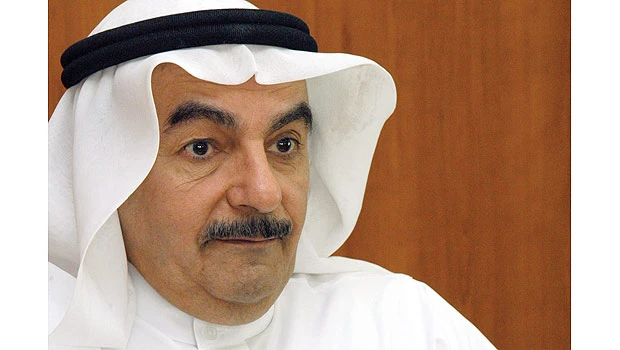
- JEDDAH: Saudi Electricity Company President and CEO Ali S.
- Al-Barrak estimates that more than SR450 billion ($120 billion) of capital investment will be required over the next 10 years.
Ali S. Al-Barrak has been with the company for the last three decades having joined it in 1980. He is highly qualified having done his masters in electrical engineering from the University of Colorado in the United States. He has held several management positions in the company before rising to the top post. From 1981 to 1986, he worked as the Qassim area manager. He was responsible for restructuring the company by merging 12 electricity companies and 18 electric projects which had till then functioned independently. In July 2002, he was appointed as executive vice president for distribution and customer services. Since 2006, he is in his current position, and has guided the company onto the right and successful direction.
Following are excerpts from the interview:
Q: Saudi Arabia is struggling to keep up with rising power demand of 7 to 8 percent because of the growing population. What steps SEC is taking to meet this challenge?
A: As any electric power utility company, our main mission is to provide an adequate, reliable and continuous electric energy supply at a reasonable cost. SEC is moving very strongly and rapidly to reinforce its generation, transmission and distribution facilities in order to meet the high demand growth. SEC has approved a capital budget of more than SR55 billion for 2012. An average of SR45 billion is expected annually for the next 10 years.
Q: The company has an installed capacity of 50,000 megawatts and plans to take it to around 80,000 megawatts by 2020. Can you please shed more light on this?
A: The planned additional power generation for the next 10 years to be carried out by SEC is around 16,000 megawatts. The government (Saline Water Conversion Corporation and Saudi Aramco) and the private sector are expected to add around 16,000 megawatts.
Q: You recently visited the landmark Independent Power Project in Rabigh. Is SEC planning to have more IPPs like this one to meet future demand?
A: SEC is planning to have two more IPP projects. The first one is Rabigh-2 with a capacity of 1,800 megawatts, and the second one is Dhuba with a capacity of 1,800 megawatts during the period 2016-2017. This is in addition to the IPP projects under construction: Rabigh-1 (1,200 megawatts), Riyadh PP11 (1,730 megawatts), and Qurayyah (4,000 megawatts).
Q: The first phase of the Rabigh IPP will start producing 604 megawatts in July this year. The final project, to be completed by April 2013, will generate a total of 1,204 megawatts. Will this ease power demand pressure considerably?
A: Rabigh-1 IPP project will help in meeting only about 15 percent of the total increase in the demand in 2013/2014. However, the total generation of committed projects planned to be energized in the period 2012-2018 is more than 31,000 megawatts.
Q: SEC plans to split up into six companies, and after restructuring, it will become a holding company, retaining full ownership of the six companies. By which time will this entire process be completed? Will this restructuring help promote competition in the Kingdom?
A: In January this year, the independent transmission company "National Grid - NG" has been formed. While four generation companies and a single distribution company formation is in progress, they will be in operation by Jan. 1, 2013. SEC will be the holding company which will own the six companies. The holding company will be the "single buyer" of electricity in the Kingdom till the Saudi electricity market is ready to be opened. This is expected to take 10-15 years till all regions are fully interconnected and the generation reserve is at least 15 percent for the country.
Q: Will SEC float shares of the newly established companies on the Saudi bourse (Tadawul)? Or, will it seek strategic partners in the near future?
A: Both these decisions are the responsibilities of the majority shareholders of the SEC (i.e. the government).
Q: The Saudi budget for 2012 has allocated SR55 billion to carry out a number of electricity projects. How will these projects contribute in providing new connections to newer consumers?
A: An average of about 350,000 new consumers will be connected annually for the different customer categories (residential, industrial, commercial, governmental and others).
Q: SEC plans to invest more than $80 billion in generation, transmission, and distribution projects in the next 10 years. What are the specifics of these projects? Can you share them with our readers?
A: SEC estimates that more than $120 billion of capital investment is required over the next 2012-2021 period - $35 billion for generation projects; $50 billion for transmission projects; and $36 billion for distribution projects.
Q: Saudi Arabia has announced a massive plan to develop renewable energy resources to reduce dependence on oil and gas. The Kingdom intends to spend more than $100 billion to establish 16 nuclear energy plants in different parts of the country. What role will SEC be playing on this front?
A: All researches and policies regarding renewable and nuclear energy in the Kingdom are being studied by King Abdullah City for Atomic and Renewable Energy (KACARE). SEC is now clearly following the researches carried by institutes in the Kingdom. And we will benefit from the outcome in the near future.
Q: SEC is studying the use of solar energy and has experimented with this source of alternative energy at a substation in Jazan. How is that solar energy project progressing?
A: SEC in association with Showa Shell of Japan has established a 500 KW solar power plant in Fursan in the Southern Province and is considering extending that power plant.