
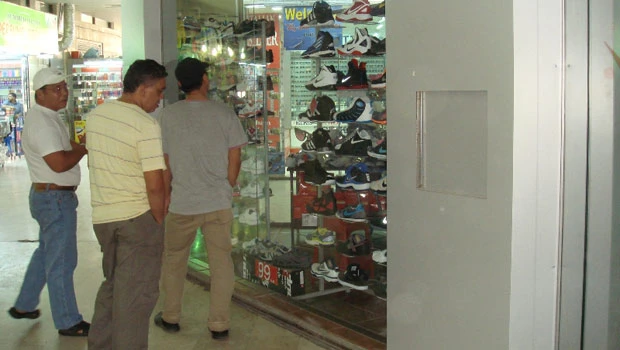
- JEDDAH: The Ministries of Commerce and Finance have decided to ban shoes without certificates of origin from entering the Kingdom, starting Feb.
- 23, an official source said Tuesday.
Secretary-General of the Jeddah Chamber of Commerce and Industry Adnan Mandoura said the two ministries took the decision after noticing that some of the imported shoes contained high levels of chemicals and other poisonous material, which might cause serious illness.
He asked the authorities concerned to set specifications and standards for shoes in line with other imported or locally made items.
The ministries also noted a growing number of shoes with fake international brands. In the absence of a specialized lab to check these shoes, the importers were asked to present certificates of origin, otherwise they would not be allowed to import shoes.
Saudi Arabia imports shoes from China, Italy, Spain, France, Turkey, Lebanon and Egypt.
According to an importer, who did not want to be identified, about 60 percent of the imported shoes in the Kingdom come from China.
Mandoura said there are about 38 shoe factories and 100 workshops making shoes in the Kingdom. Annually these produce about two million pairs of shoes against 50 million pairs of imports. "The annual volume of the shoe business in the Kingdom is about SR3 billion," he added.
Mandorua said the government was keen to upgrade this industry, which represents a good source of income.
An importer, according to a local daily, claimed the local production was not able to match the quality of imported shoes due to the high costs of manufacturing and the manufacturers’ inability to come up with attractive and innovative designs that could compete with imported shoes.
He said the price of imported shoes went up by about 20 percent last year, because of the high costs of raw material and the costly shipping fares.
According to a report by the Ministry of Commerce and Industry, 73 licenses for the establishment of shoe factories were granted over the past 20 years.
However, a field survey by the Saudi Industrial Development Fund (SIDF) showed there were no more than seven active shoe factories in the Kingdom.
Since its establishment in 1974, the fund extended only ten loans, amounting to SR40.8 million to finance the expansion of nine shoe factories with investments not exceeding SR36 million.
The report said the local production was not at the expected level and that the locally made shoes were not of the same quality as the imported ones.
The shoe industry in the Kingdom is facing many problems, including the high costs of tanning and the scarcity of qualified shoemakers.
Abdul Fattah Al-Qadi, owner of Gulf Man Shoe Factory, hailed the ministries’ decision and said it was to the advantage of local industry.