
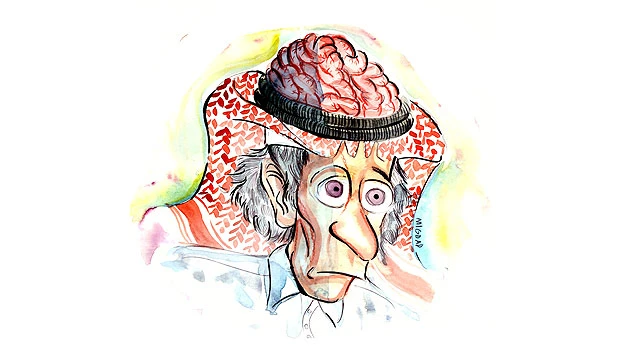
- Last week, I discussed certain aspects and symptoms of Alzheimer’s disease, a disorder that devastates the entire brain.
- Merciless sticky substances (proteins) systemically ravage brain centers, leaving the patient totally helpless and lost.
According to Wikipedia, “Tau proteins are proteins that stabilize microtubules. They are abundant in neurons of the central nervous system and are less common elsewhere […]. When tau proteins are defective, and no longer stabilize microtubules properly, they can result in dementias such as Alzheimer's disease.” It is not understood what causes such proteins to go out of control.
I mentioned in Part 1 the link between mercury and aluminum deposits found in the brains of Alzheimer’s patients and the disease. Nutrient deficiencies have also contributed to developing the condition.
Alzheimer’s and other age-related mental decline may have similarities in certain symptoms, but each disorder leaves a different imprint on the brain. While glue-like proteins ravage the Alzheimer’s brain, other disorders result in shriveled neurons and brain centers with less blood flow. Neuropsychiatrists can differentiate between Alzheimer’s symptoms and other cognitive impairments.
With the disease, the patient becomes incapable of performing simple daily chores. The disease progresses by causing acute memory decline. Some of the symptoms are mental confusion and physical and mental disorientation. Hallucinations, aggression, difficulty to make sense, and sudden mood swings for no reason also occur. Some patients can become aggressive and physically dangerous; others become passive and submissive.
Today, I shall continue exposing other factors that lead to the disease as well as natural ways that protect from developing it or losing mental capacity.
Immune system proteins, complement proteins, have been found in the scene of the Alzheimer’s brain. They were located around the amyloid plaque and neurofiber entanglement of dissected brains. It is possible that complement proteins are released by the immune system in response to amyloid buildup, similar to the effect of head injury and elevated blood pressure.
High levels of homocysteine, a harmful amino acid, in blood serum indicate inflammation, a suspected trigger to Alzheimer’s, dementia, diabetes, heart disease, and cancer. When inflammation-fighting antioxidants are low, homocysteine levels rise. Nutrients like vitamins A, Bs, C, E, and D and minerals like zinc, selenium, and magnesium are all essential antioxidants to fight free radicals and inflammation.
Allergens in a diet and chemicals can trigger the disease, as they cause cerebral inflammation.
Older women with very low levels of estrogen are more susceptible to the disease than their healthier counterparts. Balanced hormones are crucial to brain and body health and functions.
Finally, the genetic factor also contributes to the development of Alzheimer’s disease, but not as significantly as previously thought. According to Professor Etienne-Emile Baulieu of l’Institut Baulieu of Paris for research on Alzheimer’s disease, family history of the disorder and the genetic factor account only for five percent of the risk of developing the condition. It is much less than projected earlier.
Heavy metal buildup (mercury, aluminum), nutrient deficiencies, and unhealthy lifestyle habits take a bigger toll on the brain than anything else. Recent research points to the importance of a nutritious diet and healthy lifestyle, which could delay or slow down the process of the disease.
An accurate diagnosis of the condition requires a complete medical checkup with psychiatric, neurological, and physical examinations, blood tests, urine analysis, electro encephalography (EEG), magnetic resonance imaging (MRI), and computerized tomography scan (CT scan). An early diagnosis can rule out dementia, tumors, hypothyroidism, or anemia and help slow down the progress of Alzheimer’s.
Here are recommendations to prevent or delay the onset of the disease in case of fear of environmental toxins or family history from Phyllis Bach’s book of Prescription for Nutritional Healing:
• A well-balanced nutrient-dense diet, rich in soluble and insoluble fiber (oat and rice bran, okra) found in fresh organic fruits and vegetables, is paramount for both body and brain;
• Drink plenty of steam-distilled or purified water while avoiding tap water due to the possibility of containing aluminum and lead, dangerous to the brain and health;
• Keep away from alcohol, smoking, trans fats, and processed and refined foods to reduce the risk of developing Alzheimer’s disease;
• The following supplements should be prescribed by a naturopath and with the knowledge of your physician: multi-vitamin and -mineral supplements, containing vitamins A, Bs, C, D, and E; minerals potassium, boron, folic acid, iron, selenium, and zinc; omega-3 fatty acids; and coenzyme Q10.
According to epidemiologist Gene Bowman of Oregon Health & Science University, “People who had higher blood levels of vitamins B, C, D and E and omega-3 fatty acids scored higher on the mental function tests, including attention tasks and visual and spatial skills, than those with lower levels of these nutrients.” Whereas, those “who had higher levels of trans fats in their blood, by contrast, scored lower on these tests; they took more time overall to complete the tests and had more trouble with memory and language skills.” MRI scans also showed “differences in the size of certain brain structures related to Alzheimer’s.”
Recent research at Oxford University showed that an intense treatment with high B vitamins limited the brain’s shrinking areas in elderly Alzheimer’s patients with mild cognitive loss by more than 30 percent. The B vitamins also lowered elevated homocysteine blood levels, inflammation indicators, which are implicated in causing Alzheimer’s, cardiovascular disease and others. The patients with higher homocysteine levels improved the most from the vitamins, by 50 percent, showing less brain shrinkage and cognitive skill loss.
Unfortunately, most necessary nutrients are missing in processed and refined foods. What fight inflammation are deep-colored fresh organic fruits and vegetables, seaweed, spices (turmeric, ginger, cloves, cardamom, cinnamon) and herbal infusions (green tea, rooibos, rosemary, lemongrass, etc.), which offer phytochemicals to neutralize inflammation-causing free radicals and boost cognitive skills. Fish oils are other brain boosters; vitamin E delays the disease. Vitamin B12 injections for the elderly protect nerve tissue and prevent dementia and anemia triggered by B12 deficiency.
I shall stop now, although the subject needs more discussion. There is a need to address it seriously, as the consequences can be very devastating to Alzheimer’s patients and their loved ones as well as those nursing them. More information and recommendations will come in Part 3 after two weeks, inshallah.
N.B.: Individuals with medical conditions or on medication should consult their physicians when they decide to introduce anything new in their diet even if it is natural.
The previous Health Solutions articles are located at www.arabnews.com.