
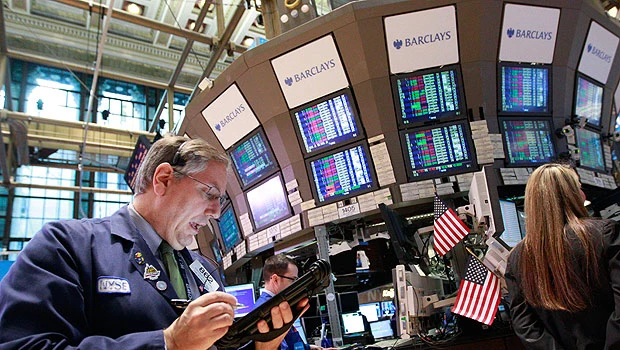
- NEW YORK: World stock and oil prices fell on Friday after China reported disappointing growth for the first quarter, stoking worries about the strength of the global economy, while the euro slipped as a rise in Spain's borrowing costs revived worries about the debt-plagued euro zone.
A sharp re-emergence of fears over contagion of the euro zone debt crisis took a steep toll on bank shares in both Europe and the United States, as well as dragging down the euro against the dollar for the first time in three days.
The yield on Spain's 10-year government bonds came close to testing 2012 highs, and the cost to insure against a Spanish default jumped to record high.
"The underlying problem is the renewed concern that Europe hasn't fixed its problem," said John De Clue, global market strategist at US Bank's wealth management group in Minneapolis. "People are not comfortable going into the weekend with a dark cloud."
Reduced optimism about global growth spurred hedge funds and other investors to shift cash into safe-haven US and German government debt ahead of the weekend, analysts and traders said.
Oil and other commodities fell on Friday on concerns about slowing demand, while equity markets sold off on the fears over Europe.
In late morning trading, the Dow Jones Industrial Average was down 84.73 points, or 0.65 percent, at 12,901.85. The Standard & Poor's 500 Index was down 11.58 points, or 0.83 percent, at 1,375.99. The Nasdaq Composite Index was down 34.97 points, or 1.14 percent, at 3,020.58. "We are seeing some really serious stuff in the European credit markets," said James Dailey, portfolio manager at the TEAM Asset Strategy Fund in Harrisburg, Pennsylvania.
"The concern is now on global recession. The data out of China and our consumer sentiment data point to a recession, which the market has been in denial for awhile."
US data on Friday showed a modest decline in consumer sentiment in early April.
Banks were the biggest losers. The S&P financial sector index fell 1.7 percent despite earnings from J.P. Morgan Chase & Co and Wells Fargo & Co that beat Wall Street's expectations. J.P. Morgan shares slid 2.1 percent, and Wells Fargo shares fell 2.2 percent.
The FTSEurofirst 300 index of top European shares provisionally closed down 16.97 points, or 1.6 percent, at 1,027.22. The index was down 2.4 percent for the week for a fourth consecutive weekly loss.
Euro zone banking stocks slid, led by Italian lender UniCredit, down 6.0 percent. Both Spanish and
Italian indexes were down more than 3 percent, lagging core-Europe peers.
The MSCI world stock index tumbled almost 1 percent.
Gold prices fell, paring their biggest one-week rise since late February.
In Europe, Spain's government bond yields rose and the cost of insuring its debt hit an all-time high as its banks borrowed a record amount from the European Central Bank, underscoring fears about the finances of the euro zone's fourth biggest economy. Spain tests market appetite for its debt next week.
The yield on 10-year Spanish sovereign debt flirted with 6 percent, a 4-1/2-month high. The cost of insure against a Spanish default jumped to 500 basis points for the first time, according to data firm Markit.
The euro was down 0.8 percent against the dollar at $1.3075. The common currency was not expected to break out of the lower end of the $1.30-$1.35 range it has traded in since
January.
Meanwhile the dollar gained versus other major currencies.
The dollar index rose 0.7 percent at 79.867.
Brent crude futures in London lost 37 cents to $121.34 a barrel. The front-month Brent contract is poised for a fourth straight weekly decline, matching a similar losing streak in late September. US oil fell 47 cents to $103.17 per barrel.
In other commodities, spot gold prices fell 0.63 percent at $1,664.50 an ounce with losses capped on expectations for further monetary easing from Beijing after the weaker first-quarter growth data. Copper prices also fell, shedding 2 percent over worries about demand from China, the world's top metals consumer.
In the bond market, benchmark 10-year US Treasury notes last traded up 20/32 in price with a yield at 1.99 percent.
German Bund futures were up 66 basis points at 140.31, retracing the losses from the prior two days.