- KABUL: A gunman shot dead a top member of the Afghan peace council Sunday at a traffic intersection in the nation’s capital, police said.
- The assassination strikes another blow to efforts to negotiate a political resolution to the decade-long war.
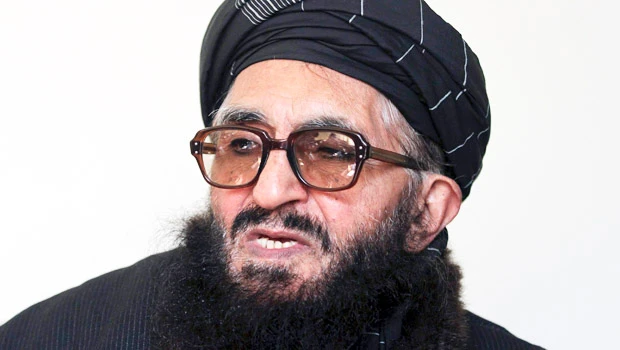
Arsala Rahmani, a former Taleban official turned Afghan peace negotiator, was in his vehicle when he was killed by an unknown attacker in another vehicle in western Kabul, according to Mohammad Zahir, head of the city police’s criminal investigation division.
The Taleban denied responsibility for the killing, although they had earlier indicated that they would target peace negotiators.
Rahmani was one of about 70 influential Afghans and former Taleban appointed by President Hamid Karzai to try to convince insurgent leaders to reconcile with the government.
The US has backed the council’s efforts to pull the Taleban into political discussions with Kabul as part of its strategy for reducing violence and turning over responsibility to Afghan forces so international combat troops can go home or move into support roles by the end of 2014.
But this effort suffered a major setback in September 2011 when former Afghan President Burhanuddin Rabbani, who was head of the peace council, was assassinated by a suicide bomber posing as a peace emissary from the Taleban.
The US has its own contacts with the Taleban, but in March the militant organization said they were suspending contacts with the United States over what they said was a lack of progress in releasing Taleban prisoners from US detention in Guantanamo.
The last substantive discussions between US officials and Taleban representatives were in January, and both initiatives to build trust and move toward real peace talks are in limbo.
A year ago, US Secretary of State Hillary Rodham Clinton said the United States was launching a “diplomatic surge to move this conflict toward a political outcome.”
The alternative to a political resolution is a protracted conflict that neither the war-weary Afghans, Americans or Europeans want or can afford.
On Twitter, the US Embassy in Kabul called the assassination of another peace council member “a tragedy.”
Rahmani served as minister of higher education during the Taleban regime, which ruled Afghanistan for five years and sheltered Al-Qaeda before being driven out of power in the US-led invasion in late 2001. He reconciled with the government established in Kabul after the Taleban’s fall and subsequently served in parliament.
Rahmani was one of several former members of the Taleban who were removed from a UN blacklist in July 2011. The decision by a UN committee eliminated a travel ban and an assets freeze against Rahmani and the others — a move seen as key to promoting the peace effort.
Taleban spokesman Zabiullah Mujahid said in a statement that his group had nothing to do with Rahmani’s assassination.
When they announced the start of their annual “spring offensive” earlier this month, the Taleban said that members of the peace council — who they view as government collaborators — would be among their primary targets.
The offensive, which comes every year as the weather warms, normally leads to an increase in attacks as the insurgents seek to intimidate the government and retake territory lost over the winter.
Publicly, the leadership of the Taleban has said that it will not talk to the Afghan government, which it calls a puppet regime of the US and its international partners. Privately, however, some representatives of the Taleban who are open to negotiating a settlement have met with US, Afghan and other international officials.
Rahmani, along with other members of the peace council, was trying to forge relations with those Taleban amenable to peace talks.