- Text-based installation offered residents ‘a silent, anonymous way of protesting’ after the devastating port explosion
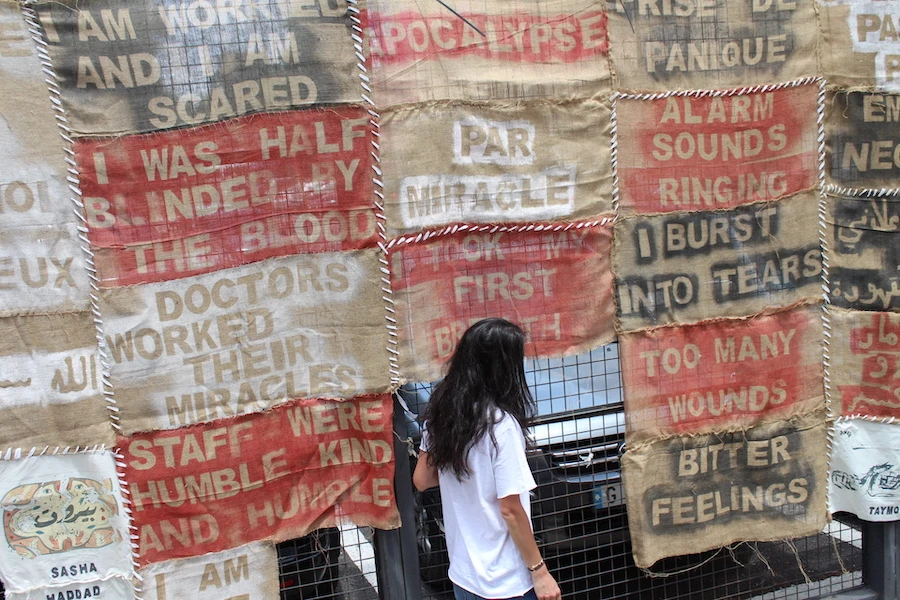
DUBAI: “I burst into tears.” “I was shaking.” “My chair flew me right above ground.” “No right to dream.” “Bitter feelings.” “Apocalypse.”
These are some of the brief-but-harrowing testimonials from survivors of the catastrophic Beirut Port explosion of August 4, 2020, which are now being publicly displayed on the streets of the Lebanese capital as part of the text-based installation “Beirut Narratives.” The installation was conceived by Lebanese sisters, architects and co-founders of Architecture et Mécanismes, Celine and Tatiana Stephan.
From the banking crisis to price inflation and fuel shortage, it has been a surreal year of lows for most Lebanese civilians. On the day we had arranged to discuss the sisters’ latest project, Prime Minister-designate Saad Hariri resigned after failing to form a new government.
“Each one of us is thinking: ‘How can people still be so adapted to such a situation, in terms of the economic crisis and the socio-political situation?’ Everything is happening all at the same time,” Celine told Arab News. “People are, I believe, tired and frustrated. What we’re trying to do, as architects, with this urban installation is to rethink the city.”
Unlike many young professionals who are hoping to migrate or have already left the country for better opportunities abroad, Celine and Tatiana have decided to stay for now, for better or for worse, in their home country. “Beirut is like a parent to us,” said Tatiana. “When your parents are getting old, you just don’t leave them behind and go. You help them, support them and push them to be better.”
Continuing the theme of family, Celine added: “I have two daughters. I would like them to live in Lebanon and see change happening and be part of that change. Despite its misery, chaos, and lack of infrastructure, it’s a city that inspires us at all levels.”
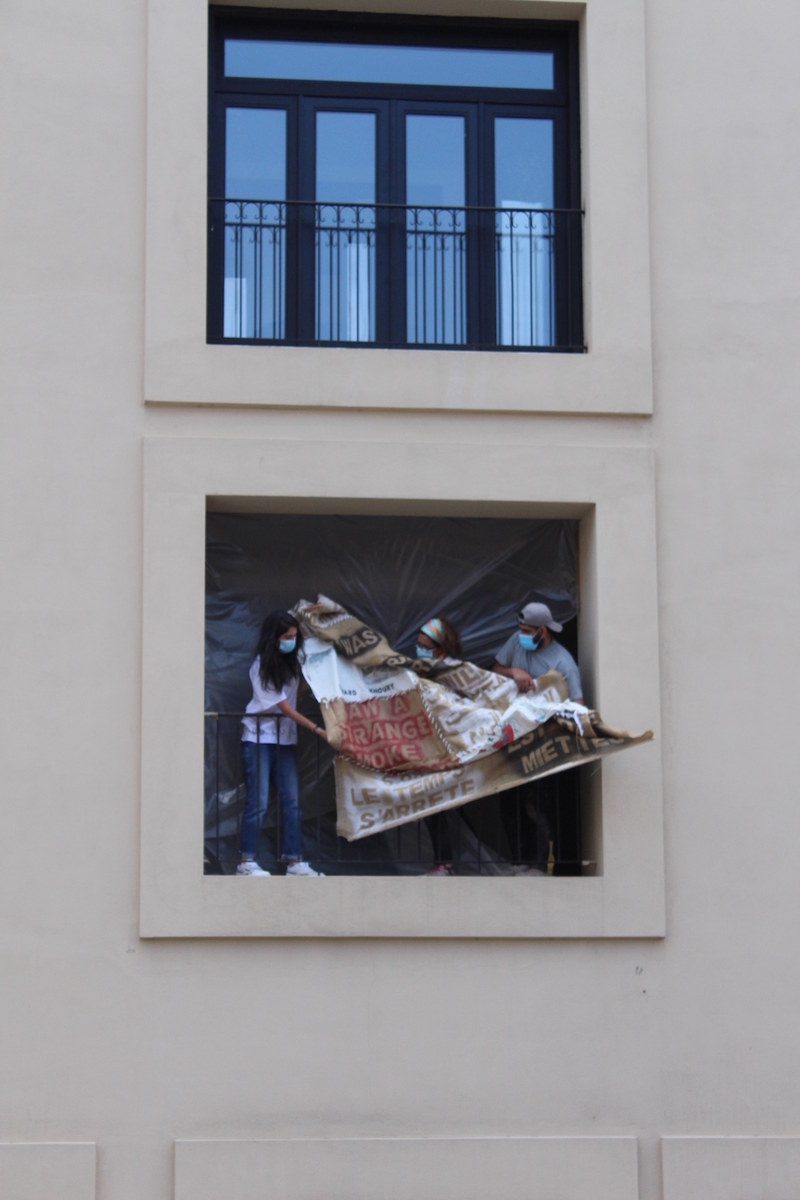
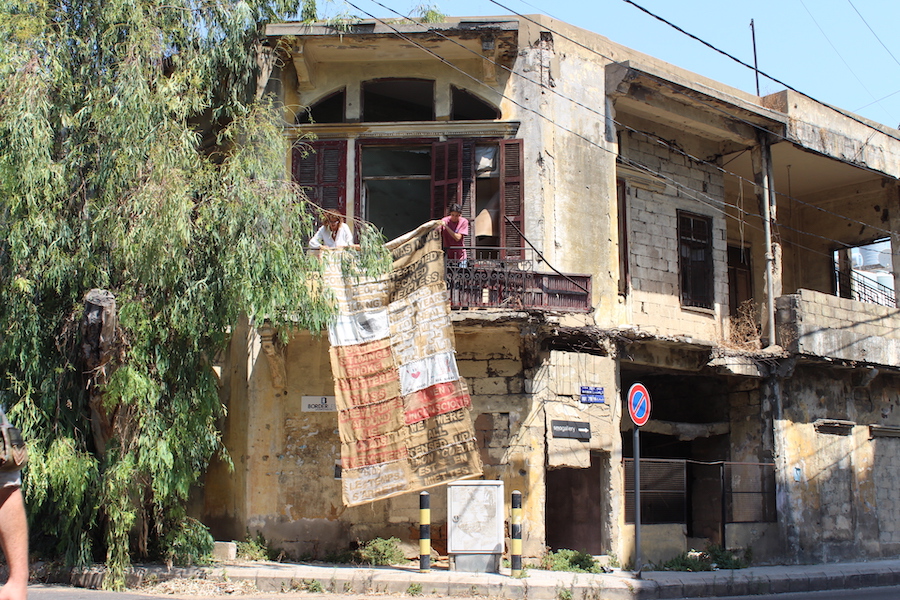
In recent months, the pair turned their attention towards buildings and spaces in the neighborhoods of Gemmayze, Karantina and Mar Mikhael, which have been damaged and stand empty in the aftermath of the blast. In a commemorative manner, these silent and neglected buildings are given their own voice.
“We wanted to make those buildings talk, because it’s somehow like a new way of manifestation,” explained Celine. “It’s a silent, anonymous way of protesting,” added Tatiana.
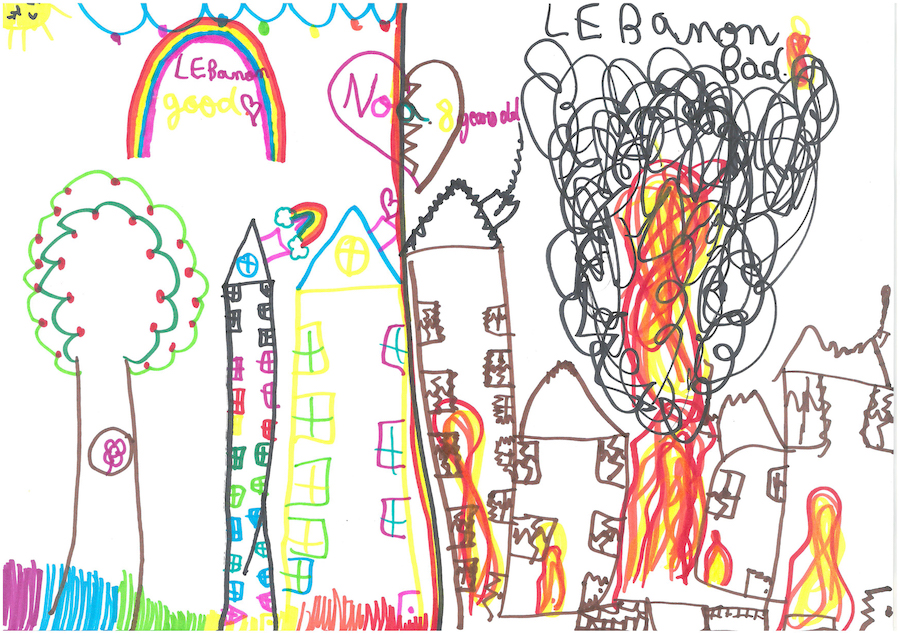
The Stephan sisters gathered testimonials from a diverse group of people, including friends and family, firefighters and healthcare workers, all of whom were releasing pent-up anger and sadness and were willing to share their experiences of that horrific day. Children also contributed drawings to the project.
For the Stephans, it was all an emotional and healing experience. “We sat with those people, we talked to them, we cried, we heard every single story. I still have goosebumps now,” said Celine.
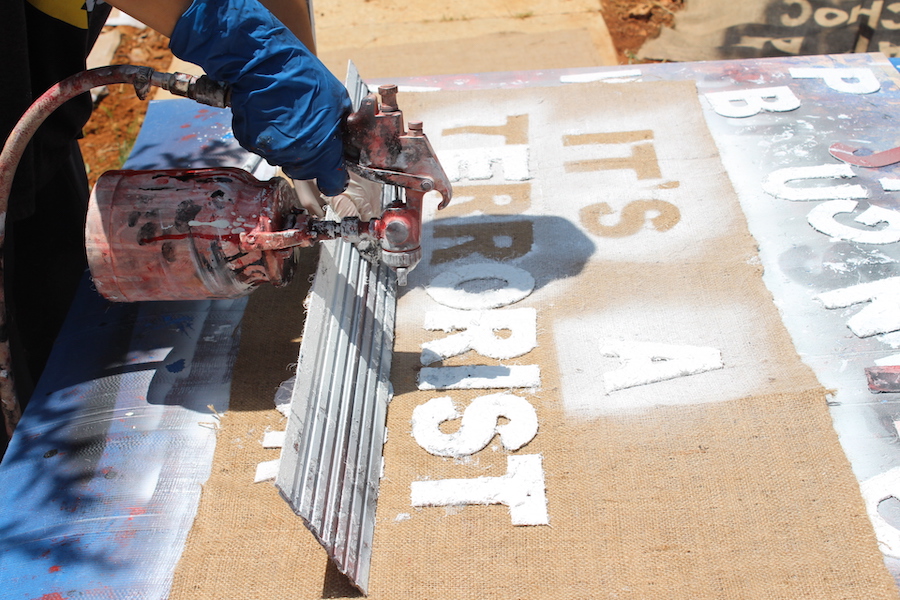
Divided into three categories — descriptions, emotions, and reflections — the testimonials were written out with red, black and white spray paint onto pieces of brown jute, later transformed by stitching into bold tapestries or “fragments.” According to the Stephans, who did the spraying and stitching, the use of jute was intentional, as it is accessible and serves as a reminder of the durable material used to transfer wheat into the silos at the Port of Beirut.
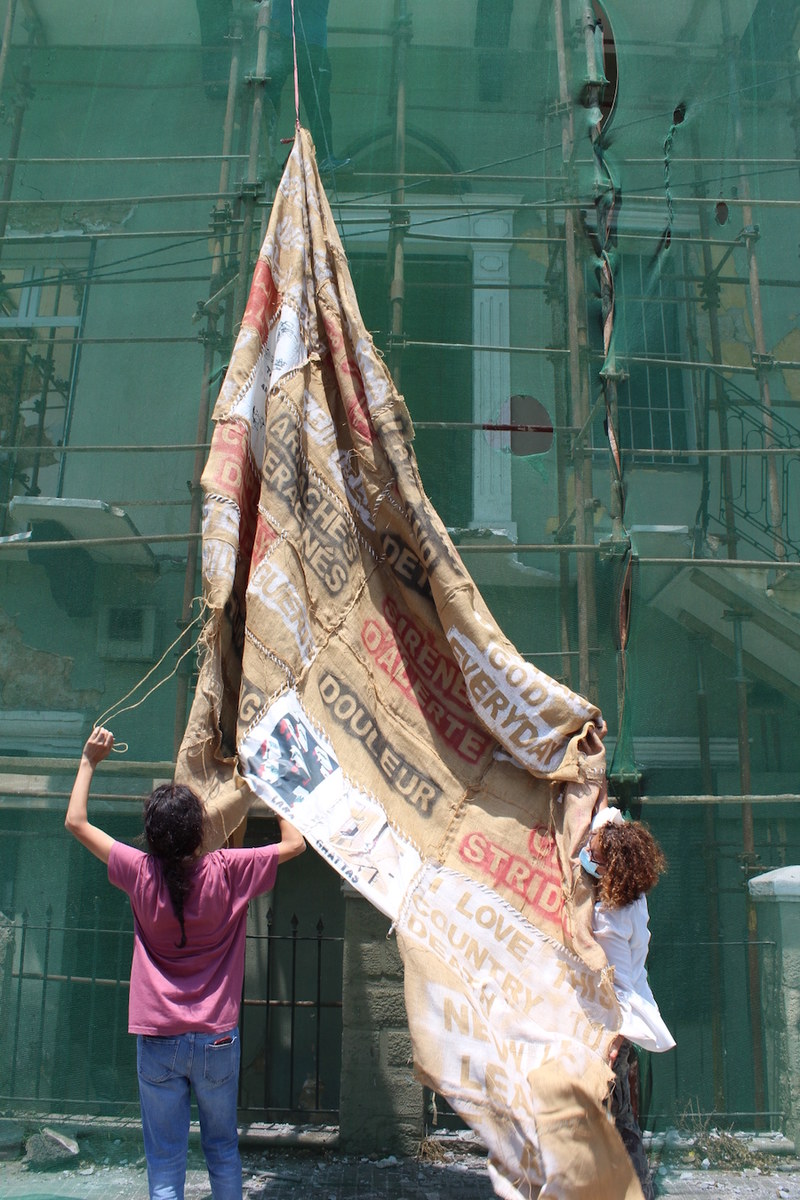
The sisters and their collaborator, the Lebanese-Danish creative consultant Mira Hawa, went to different sites, personally hanging the fragments, which is in itself a risky task. “We had to go to the edge of a high building, on the 11th floor, and the wind was extremely strong. We had to improvise, we didn’t know how to install it because it was huge and there was a lot of wind,” Tatiana said of one of their challenging experiences near the port.
Seeing the women lead the installation process on site was surprising for some. “Men were coming out in their sleeveless vests, with their big muscles, hanging over their balconies to see who these three girls were,” said Hawa. “One of the first comments we got was: ‘Who’s going to help you? Where are the guys?’”
Despite encountering difficulties in accessing some buildings, they persisted and installed the work on 13 buildings. For some, the fragments proved to be too intense — akin to rubbing salt into a wound.
“Some people were very disturbed when they saw the piece,” said Celine. “I remember one time we were not even installing; we were trying to talk to an NGO to discuss the possibility of installing. The owner of a building was there and he was really destabilized and he started crying. We felt really bad and asked ourselves so many questions: Are we making the right choice?”
Tatiana echoed Celine’s sentiments, highlighting how sensitive this whole project has been. “I felt that for some who were engaged in the piece, you feel in their eyes as if you put a knife into a wound,” she said. But overall, the project was positively viewed and embraced by locals. It brought out a sense of community, with many assisting the women during the arduous installation process.
“We were touched by everyone who wanted to help, who offered us coffee, or water. They barely have anything to eat and drink,” remarked Celine.
“Beirut Narratives” ticks a number of boxes, acting as a form of cultural activism, supporting the Lebanese people and offering them a sense of justice. The Stephans and Hawa hope that one day these fragments can also travel abroad, igniting empathy with the Lebanese diaspora. The project also tackles the notion of speaking up in an environment that often suppresses inner thoughts and feelings related to trauma.
“We have a very painful habit in the Middle East, that every time something (bad) happens we just get on with it. I think it’s about time we stopped and made some noise,” said Hawa. “When you see the pieces on the street, it’s very bold, it’s very raw and prominent. You cannot ignore it.”