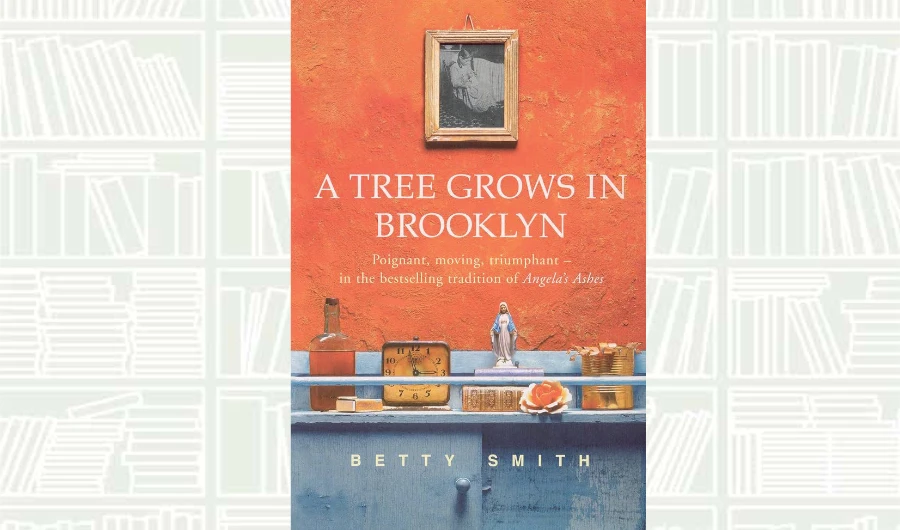
- The main metaphor alluded in the book’s title is the “Ailanthus altissima,” otherwise known as the Tree of Heaven, named so for its ability to flourish even in the harshest of conditions
Author: Betty Smith
Eighty-three years after its debut on bookshelves, “A Tree Grows in Brooklyn” is as relevant as ever.
Brooklyn-born Elisabeth Lillian Wehner used Betty Smith as her author name (Smith was her first husband’s last name) to pen this masterpiece published in 1943.
I was first introduced to the title in 2012 as one of the suggested books to read when I was preparing to move to NYC for graduate school. I revisited it recently and found it even more poignant than on my first read.
The main metaphor alluded in the book’s title is the “Ailanthus altissima,” otherwise known as the Tree of Heaven, named so for its ability to flourish even in the harshest of conditions.
It is also notorious for being extremely hard to get rid of because cutting it down just creates hundreds of aggressive new sprouts from its root system.
It is a tree that will grow in cement and never give up without a fight—same as Brooklyn girls, like Smith.
The novel is split into five “books.” The first opens in 1912 and introduces 11-year-old Francie Nolan, who lives in poverty in the Williamsburg tenement neighborhood of Brooklyn with her younger brother and their parents, Katie, a janitor, and Johnny, a charismatic freelance singing waiter.
Book Two takes us back in time, to 1900, as it chronicles the meeting of Francie’s parents, the American-born teenage children of immigrants.
In Book Three and Four, the Nolans settle into their new home, and scramble to make ends meet.
In the grand finale, Book Five, Francie is nearly 17 and prepares to leave her childhood and home behind to start classes at the University of Michigan, Smith’s real alma mater.
Before the move, Francie notices that the neighborhood's Tree of Heaven, though cut down by the landlord, has sprouted from its hacked stump, symbolizing resilience and hope.
The semi-autobiographical story itself was originally a non-fiction piece titled “They Lived in Brooklyn,” which Smith began submitting to publishers in 1940.
It was repeatedly rejected so she sent it as an entry for a memoir contest held by Harper & Brothers in 1942.
An editor there, Elizabeth Lawrence, is credited for recognizing the merit in the manuscript and suggesting it might work better as a novel.
It has since been listed as one of the books that shaped America by the Library of Congress.
Although the book tackles many thorny issues—growing pains, addiction and navigating life amid deceit and disappointment—its main theme, for me, is grit. And the need to keep yourself grounded so you thrive no matter where you are planted.