LONDON: The Bank of England has voted to keep its main interest rate at 0.50 percent, five years after deciding to cut borrowing costs to the current record-low level.
Policymakers agreed by majority also to maintain the level of central bank stimulus pumping around the British economy at £375 billion ($627 billion, 456 billion euros), the BoE said in a statement following a regular monthly meeting.
“The Bank of England’s Monetary Policy Committee voted to maintain Bank Rate at 0.5 percent,” the brief statement said.
“The committee also voted to maintain the stock of purchased assets financed by the issuance of central bank reserves at £375 billion.”
Minutes of the two-day meeting, containing reasons for the decisions, will be published on March 19, the BoE added.
Following Thursday’s announcement, ING Bank analyst James Knightley said the central bank wanted “to see monetary policy stay as loose as possible for as long as possible to ensure the economic recovery is sustainable” in Britain.
“However, the strength of the growth story coupled with the robustness of the labor market means that the BoE are likely fighting a losing battle in convincing financial markets that rate hikes are a distant prospect.”
Martin Weale, a member of the nine-strong Monetary Policy Committee, indicated last month that the BoE’s main interest rate could begin rising next year before Britain’s general election that is due in May 2015.
The bank’s key rate has stood at 0.50 percent since March 2009, when it also launched a so-called quantitative easing stimulus program to help Britain to recover from the global financial crisis.
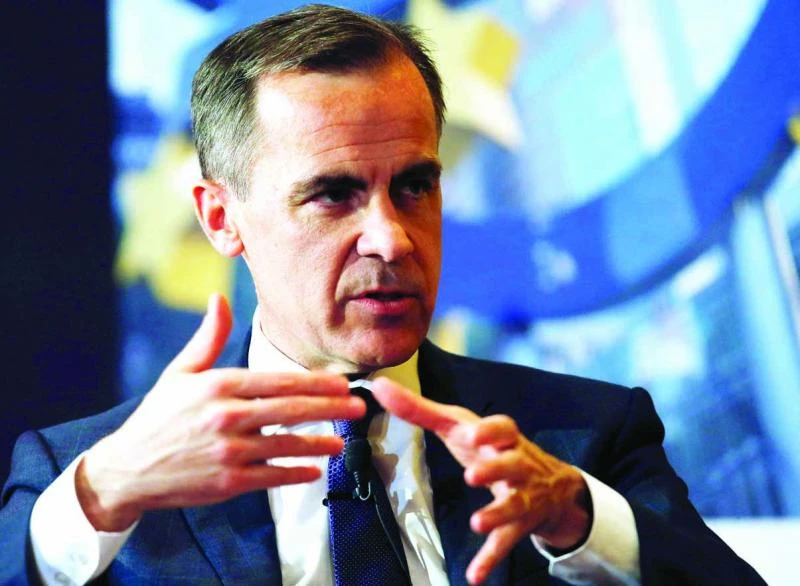
Bank Governor Mark Carney took the helm at the BoE last August and launched a forward guidance policy, under which he said borrowing costs would not be lifted until the British unemployment rate falls to at least 7.0 percent.
But after unemployment fell faster than expected to just above the 7.0-percent level, he recently delivered amended guidance. This states that the BoE will seek to absorb all the spare capacity in the economy as it looks to keep inflation close to a government-set target of 2.0 percent, before moving to hike its key lending rate.
Britain’s 12-month inflation slowed to 1.9 percent in January, the lowest level for more than four years, according to the latest official data.
The Bank of England meanwhile last month ramped up its economic growth forecasts for Britain.
Gross domestic product (GDP) is set to grow by 3.4 percent this year, the central bank said in its latest quarterly report. That is up sharply from an earlier estimate of 2.8 percent.
The British economy expanded at the fastest annual rate last year since before the 2008 global financial crisis, growing by 1.9 percent.
There are fears however of a fresh property price bubble, which some analysts say could trigger an interest rate hike this year.
Britain is a member of the European Union but not of the eurozone so retains responsibility for its monetary policy, and although the central bank has a high degree of independence, it answers in the last resort to the government.
Bank of England leaves key rate at 0.50%