The countries of the world are currently redefining and setting the universal sustainable development agenda for at least the next 15 years as the Sustainable Development Goals (SDGs) processes move rapidly towards their conclusion by the end of 2015.
One of the proposed SDGs is “Promote sustained, inclusive and sustainable economic growth, full and productive employment and decent work for all” (Goal No. 8) that, in simple words, means green jobs.
The GCC countries currently face mounting challenges and problems. Some are traditional challenges such as water scarcity, rising unemployment among nationals, and pollution related to the oil and gas industry. There are other emerging challenges such as increasing urbanization, climate change impact, and rising demand for energy.
All the GCC countries suffer from the problems of rapid urbanization especially some countries which are almost 100 percent urbanized such as Bahrain and Qatar. In addition, youth on average constitute around 60 percent of the population. This leads to huge demands for food, employment, housing, education, healthcare, transportation systems and other services. All these demands need to be managed in a sustainable way in order to create green jobs.
Green economy
The GCC countries are considered undiversified economies, i.e. capital intensive, low employment rates, and dependent on extractive industries (e.g., oil, natural gas, gold, iron, and phosphates) which makes them vulnerable to global price volatilities. Current economic development patterns will increasingly strain the ability of the GCC governments to cope with increasing demands for decent-paying jobs.
Achieving the aspired sustainable development rests almost entirely on getting the economy on the right path. It is very obvious that the present economic models have not adequately addressed social marginalization and resource depletion, for instance.
The shift from brown to green economies can achieve sustainable development with a better quality of life, guarantee real investments, achieve social justice and, most importantly, create real green jobs.
Green jobs
Green jobs, also known as green collar jobs, are defined as “jobs that reduce the environmental impact of enterprises and economic sectors, ultimately to levels that are sustainable.” They are vital for the GCC because it is clear that decent work, adequate wages, safe conditions, workers' rights, social dialogue and protection can guarantee a satisfied workforce, less unrest, and more productivity and income. Green jobs provide good income generation opportunities and are seen as a real solution not only to environmental but also economic and social challenges.
In principle, green jobs can be found in all sectors in an economy, and all sectors and jobs can potentially become greener. The jobs in many existing sectors such as agriculture and tourism in their work methods and profiles are greened. This shift will result in eliminating some current jobs which will be no longer needed. For instance, from a shift from fossil fuels to renewables, from truck manufacturing to railway rolling stock manufacturing, from land filling and waste incineration to recycling...etc.
It is worth mentioning that green jobs do not necessarily mean depending on modern clean technology only. In many cases, such as in the GCC, cheap, sustainable, traditional local knowledge can be smarter and greener. Collective ancestral knowledge and traditional techniques of shading, lighting, building designs, irrigation and agriculture systems can be more effective, cheap, and provide more green jobs than high the clean technology sector.
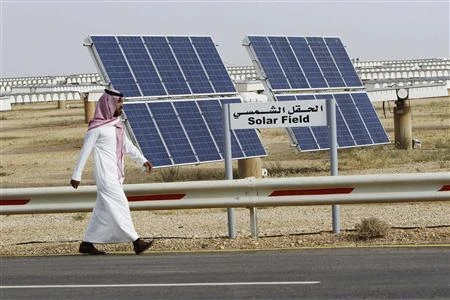
Investment in greener economic activities creates green jobs, directly (solar panel production, installation and maintenance) and indirectly (in the supply chain, steel production for wind turbines), and investment in environment-friendly industries leads to induced employment in the form of jobs generated by consumer spending.
Deployment of renewable energy (RE) in the GCC especially can play a significant role in creating more green jobs. In RE, a relatively new sector, massive employment opportunities are likely to emerge in the near future. From a job creation point of view, research shows that for every one megawatt of solar energy, 15 jobs would be created across the value chain.
Without doubt, there is a pressing need for a number of enabling conditions in order to promote green jobs in the region. Among them are fiscal policy reform, including strategies for a green economy, a funding mechanism for growing green sectors or for greening brown sectors, transfer of clean technology, capacity building, information, awareness and education campaigns, and widespread participation.
There is huge potential to create more green jobs in the GCC, more than is the case in many parts of the world because many brown sectors and industries can be greened in the region. Besides, green jobs will provide manifold benefits for the region by attracting green foreign investment and technologies, decreasing waste and emissions, encouraging resource efficiency, and ultimately improving the quality of life and ensuring sustainable societies.
— Mohamed Abdel Raouf is a research fellow in the Environmental Research Program of the Gulf Research Center.
Bright future for green jobs in Gulf economies