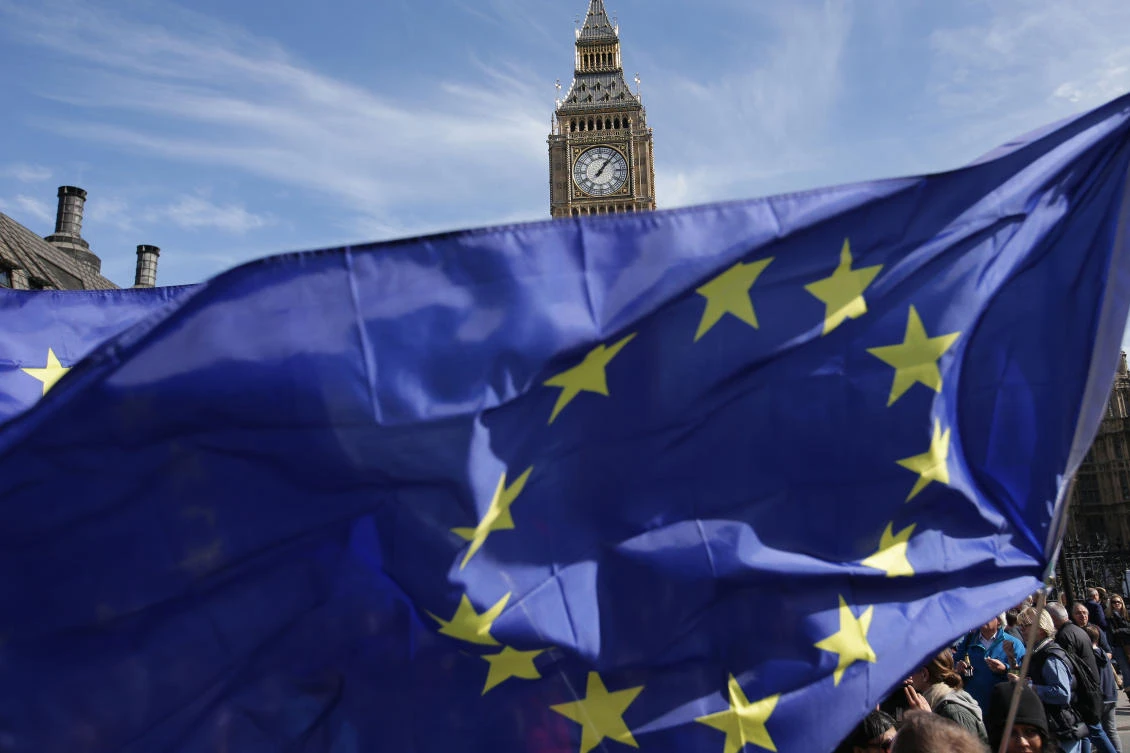
LONDON: A bespoke trade deal between Britain and the EU should be “one of the easiest in human history” to reach, British Trade Minister Liam Fox said on Thursday.
Fox said Britain and the EU already have similar regulatory rules and no tariffs.
“The only reason that we wouldn’t come to a free and open agreement is because politics gets in the way of economics,” Fox told the BBC.
British and EU Brexit negotiators are due to say on Thursday how their first round of talks has gone.
Fox said Britain could “survive” without a post-Brexit free-trade deal with the EU.
His comments are in stark contrast to the view expressed by Philip Hammond, Britain’s finance minister, who said that no deal would be a “very, very bad outcome.”
Fox also said he expects Prime Minister Theresa May to remain in power for the rest of this parliament after losing her majority in last month’s election.
“I think that the prime minister is likely to be there for the rest of this parliament, I think she has the support of her colleagues in the House of Commons, I think she has a mandate to be the prime minister,” Fox said.
Meanwhile it emerged on Thursday that the euro zone’s public deficit had dropped in the first quarter of the year to its lowest level in nearly a decade, driven by a widening surplus in Germany and despite France’s increasing fiscal gap.
The figures, published by the EU’s statistics office Eurostat, confirmed the improving state of the bloc’s public finances, although public debt increased in the first quarter driven by a further expansion of Italy’s debt, the second-largest in the 19-country currency bloc.
Eurostat said that government deficit in the euro zone dropped to 0.9 percent of output in the first quarter of the year from 1.1 percent in the previous quarter, confirming a long-lasting downward trend.
It was the lowest level of public deficit since the last quarter of 2007, when the global financial crisis began hitting the euro zone’s economies, forcing higher public spending to prop up the financial sector.
The fall in the bloc’s fiscal gap was helped by Germany’s thrift, as the bloc’s largest economy further expanded its surplus to 1.5 percent of output in the first quarter from 1.4 percent in the last quarter of 2016, and 0.7 percent in the third quarter of last year.
The widening of the surplus goes against calls on Germany from other euro zone countries and EU institutions to increase spending and raise wages to help strengthen the bloc’s recovery.
France, the euro zone’s second-largest economy, instead saw an increase of its government deficit in the first quarter to 3.3 percent of output from 3.2 percent in the previous quarter.
The figure was above a 3 percent limit set by EU fiscal rules, but French President Emmanuel Macron and his government have repeatedly pledged that they will bring the annual deficit below the 3 percent threshold this year.
The drop in the euro zone deficit was offset by an increase of the bloc’s public debt to 89.5 percent of output in the first quarter from 89.2 percent in the last quarter of 2016, above an indicative limit of 60 percent required for euro zone countries by EU fiscal rules.
The increase was partly due to the expansion of debt in Italy, the third-largest economy in the euro zone. Rome’s debt, already the second highest in the bloc, grew to 134.7 percent of output in the first quarter of the year from 132.6 percent in the previous quarter.
In Greece, which has the euro zone’s highest debt, Eurostat recorded a drop in the first quarter to 176.2 percent of output from 179 percent in the last quarter of 2016.
Fox said Britain and the EU already have similar regulatory rules and no tariffs.
“The only reason that we wouldn’t come to a free and open agreement is because politics gets in the way of economics,” Fox told the BBC.
British and EU Brexit negotiators are due to say on Thursday how their first round of talks has gone.
Fox said Britain could “survive” without a post-Brexit free-trade deal with the EU.
His comments are in stark contrast to the view expressed by Philip Hammond, Britain’s finance minister, who said that no deal would be a “very, very bad outcome.”
Fox also said he expects Prime Minister Theresa May to remain in power for the rest of this parliament after losing her majority in last month’s election.
“I think that the prime minister is likely to be there for the rest of this parliament, I think she has the support of her colleagues in the House of Commons, I think she has a mandate to be the prime minister,” Fox said.
Meanwhile it emerged on Thursday that the euro zone’s public deficit had dropped in the first quarter of the year to its lowest level in nearly a decade, driven by a widening surplus in Germany and despite France’s increasing fiscal gap.
The figures, published by the EU’s statistics office Eurostat, confirmed the improving state of the bloc’s public finances, although public debt increased in the first quarter driven by a further expansion of Italy’s debt, the second-largest in the 19-country currency bloc.
Eurostat said that government deficit in the euro zone dropped to 0.9 percent of output in the first quarter of the year from 1.1 percent in the previous quarter, confirming a long-lasting downward trend.
It was the lowest level of public deficit since the last quarter of 2007, when the global financial crisis began hitting the euro zone’s economies, forcing higher public spending to prop up the financial sector.
The fall in the bloc’s fiscal gap was helped by Germany’s thrift, as the bloc’s largest economy further expanded its surplus to 1.5 percent of output in the first quarter from 1.4 percent in the last quarter of 2016, and 0.7 percent in the third quarter of last year.
The widening of the surplus goes against calls on Germany from other euro zone countries and EU institutions to increase spending and raise wages to help strengthen the bloc’s recovery.
France, the euro zone’s second-largest economy, instead saw an increase of its government deficit in the first quarter to 3.3 percent of output from 3.2 percent in the previous quarter.
The figure was above a 3 percent limit set by EU fiscal rules, but French President Emmanuel Macron and his government have repeatedly pledged that they will bring the annual deficit below the 3 percent threshold this year.
The drop in the euro zone deficit was offset by an increase of the bloc’s public debt to 89.5 percent of output in the first quarter from 89.2 percent in the last quarter of 2016, above an indicative limit of 60 percent required for euro zone countries by EU fiscal rules.
The increase was partly due to the expansion of debt in Italy, the third-largest economy in the euro zone. Rome’s debt, already the second highest in the bloc, grew to 134.7 percent of output in the first quarter of the year from 132.6 percent in the previous quarter.
In Greece, which has the euro zone’s highest debt, Eurostat recorded a drop in the first quarter to 176.2 percent of output from 179 percent in the last quarter of 2016.