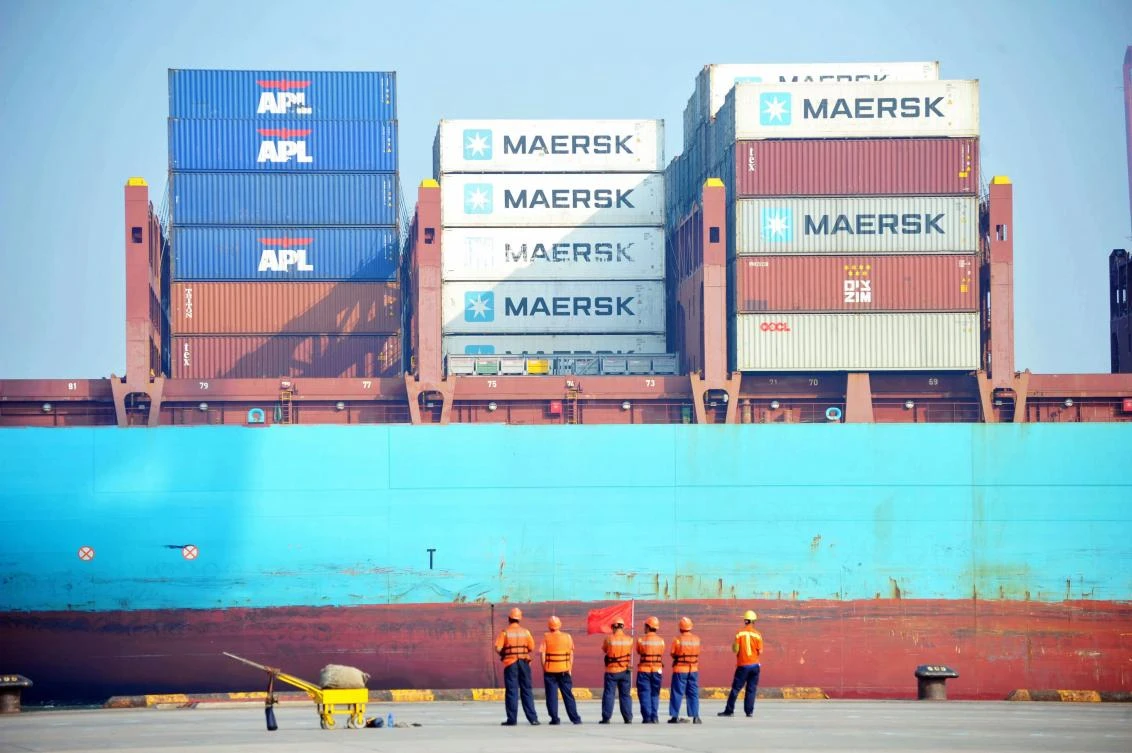
BEIJING: Growth in Chinese exports and imports outstripped expectations in June, official data showed Thursday, but analysts warned the pick up could be temporary.
The world’s second-largest economy is expected to lose momentum in the second half as Beijing clamps down on free-wheeling credit and property purchases that have been key drivers of growth for years.
“We still expect export growth to slow in the second half of 2017 on stronger RMB (yuan) so far this year and uncertainties in external demand,” said Yang Zhao, chief China economist at Nomura.
“The cooling property market leads to slower domestic investment growth, which may weigh on import growth as well.”
Exports rose 11.3 percent from a year ago to $196.59 billion, the customs administration said, topping a Bloomberg News forecast of 8.9 percent.
Imports were up 17.2 percent year-on-year — compared with an expected increase of 14.5 percent — to $153.83 billion, lifting the trade surplus to $42.76 billion.
While China’s exports were likely to remain strong, “we are skeptical that the current pace of imports can be sustained for much longer given the increasing headwinds to China’s economy from policy tightening,” said Julian-Evans Pritchard, China economist at Capital Economics.
China has been trying to rein in risky bank lending and put restrictions on property purchases as the country’s mounting debt fuels fears of a looming financial crisis that could blow out globally.
The surprising trade data comes ahead of US-China talks in Washington next week where they are expected to assess the results of a 100-day action plan aimed at improving trade ties between the economic rivals.
Tensions between the two countries have intensified in recent months amid disagreements over how to handle the growing North Korea threat.
China’s trade surplus with the rest of the world has historically been a thorn in relations.
But US data released earlier this month showed America’s deficit in goods with China, which the White House has targeted with accusations of unfair trade, fell 6.2 percent in May to $30.1 billion.
China insisted it was upholding UN sanctions on North Korea despite a jump in its trade with the nuclear-armed nation.
Trade between China and its neighbor increased 10.5 percent to $2.5 billion in the first six months of the year compared to the same period last year, including a 29.1 percent jump in exports.
Huang Songping, Customs administration spokesman, said Beijing was upholding the UN sanctions against the regime of Kim Jong-Un.
“Simple accumulated data cannot be used as evidence to question China’s severe attitude in carrying out UN Security Council resolutions,” Huang said.
He pointed to a 13.2 percent drop in imports from North Korea in the same period as an example of the pressure, adding that there have been sharp decreases every month since March.
“UN Security Council sanctions are not a total ban on shipments. Trade related to DPRK people’s livelihood, especially those that reflect humanitarianism should not be influenced by the sanctions,” Huang said.
China announced in February the suspension of coal imports from the North, striking a blow at a major source of income for the hermit state.
Huang said coal imports dropped by three-quarters in the first half, and all those shipments had been made before February 18.
At the same time, iron ore imports have surged between January and May to $74.4 million compared to $24 million over the same period last year.
But foreign ministry spokesman Geng Shuang said UN resolution 2321 allows imports of iron and iron ore if the income is for the livelihood of civilians.
“It has nothing to do with creating income for DPRK nuclear programs, so it is not on the sanctions list,” Geng told a regular news briefing.
By comparison, imports of coal alone were worth $97.6 million just in the month of February.
Trump has complained that trade increased between the two despite calling on his Chinese counterpart Xi Jinping to use the nation’s unique diplomatic and economic clout over North Korea as leverage.
“Trade between China and North Korea grew almost 40 percent in the first quarter. So much for China working with us — but we had to give it a try!” Trump tweeted on July 5.
Previous Chinese customs data showed two-way trade with the North had risen 30.6 percent in dollar terms in the first three months of the year.
The US ambassador to the UN, Nikki Haley, said on Sunday that Washington would crank up pressure on China to ensure it implements sanctions over the missile test.
She told the Security Council last week that the US planned a new resolution that would also ensure existing measures are enforced.
“We’re going to push hard against China because 90 percent of the trade that happens with North Korea is from China, and so while they have been helpful, they need to do more,” she told CBS television.
The Trump administration angered China last month by imposing sanctions on a Chinese bank accused of laundering North Korean cash and approving a $1.3 billion arms sale to Taiwan, which Beijing considers a breakaway province.
The world’s second-largest economy is expected to lose momentum in the second half as Beijing clamps down on free-wheeling credit and property purchases that have been key drivers of growth for years.
“We still expect export growth to slow in the second half of 2017 on stronger RMB (yuan) so far this year and uncertainties in external demand,” said Yang Zhao, chief China economist at Nomura.
“The cooling property market leads to slower domestic investment growth, which may weigh on import growth as well.”
Exports rose 11.3 percent from a year ago to $196.59 billion, the customs administration said, topping a Bloomberg News forecast of 8.9 percent.
Imports were up 17.2 percent year-on-year — compared with an expected increase of 14.5 percent — to $153.83 billion, lifting the trade surplus to $42.76 billion.
While China’s exports were likely to remain strong, “we are skeptical that the current pace of imports can be sustained for much longer given the increasing headwinds to China’s economy from policy tightening,” said Julian-Evans Pritchard, China economist at Capital Economics.
China has been trying to rein in risky bank lending and put restrictions on property purchases as the country’s mounting debt fuels fears of a looming financial crisis that could blow out globally.
The surprising trade data comes ahead of US-China talks in Washington next week where they are expected to assess the results of a 100-day action plan aimed at improving trade ties between the economic rivals.
Tensions between the two countries have intensified in recent months amid disagreements over how to handle the growing North Korea threat.
China’s trade surplus with the rest of the world has historically been a thorn in relations.
But US data released earlier this month showed America’s deficit in goods with China, which the White House has targeted with accusations of unfair trade, fell 6.2 percent in May to $30.1 billion.
China insisted it was upholding UN sanctions on North Korea despite a jump in its trade with the nuclear-armed nation.
Trade between China and its neighbor increased 10.5 percent to $2.5 billion in the first six months of the year compared to the same period last year, including a 29.1 percent jump in exports.
Huang Songping, Customs administration spokesman, said Beijing was upholding the UN sanctions against the regime of Kim Jong-Un.
“Simple accumulated data cannot be used as evidence to question China’s severe attitude in carrying out UN Security Council resolutions,” Huang said.
He pointed to a 13.2 percent drop in imports from North Korea in the same period as an example of the pressure, adding that there have been sharp decreases every month since March.
“UN Security Council sanctions are not a total ban on shipments. Trade related to DPRK people’s livelihood, especially those that reflect humanitarianism should not be influenced by the sanctions,” Huang said.
China announced in February the suspension of coal imports from the North, striking a blow at a major source of income for the hermit state.
Huang said coal imports dropped by three-quarters in the first half, and all those shipments had been made before February 18.
At the same time, iron ore imports have surged between January and May to $74.4 million compared to $24 million over the same period last year.
But foreign ministry spokesman Geng Shuang said UN resolution 2321 allows imports of iron and iron ore if the income is for the livelihood of civilians.
“It has nothing to do with creating income for DPRK nuclear programs, so it is not on the sanctions list,” Geng told a regular news briefing.
By comparison, imports of coal alone were worth $97.6 million just in the month of February.
Trump has complained that trade increased between the two despite calling on his Chinese counterpart Xi Jinping to use the nation’s unique diplomatic and economic clout over North Korea as leverage.
“Trade between China and North Korea grew almost 40 percent in the first quarter. So much for China working with us — but we had to give it a try!” Trump tweeted on July 5.
Previous Chinese customs data showed two-way trade with the North had risen 30.6 percent in dollar terms in the first three months of the year.
The US ambassador to the UN, Nikki Haley, said on Sunday that Washington would crank up pressure on China to ensure it implements sanctions over the missile test.
She told the Security Council last week that the US planned a new resolution that would also ensure existing measures are enforced.
“We’re going to push hard against China because 90 percent of the trade that happens with North Korea is from China, and so while they have been helpful, they need to do more,” she told CBS television.
The Trump administration angered China last month by imposing sanctions on a Chinese bank accused of laundering North Korean cash and approving a $1.3 billion arms sale to Taiwan, which Beijing considers a breakaway province.