DUBAI: Emirates airline, the Dubai carrier, sees “hyper-competition” and “volatility in many markets” affecting its financial performance in the current year, according to a statement from the company on Thursday.
The airline reported an 82 percent fall in profits in 2016-2017, to 1.3 billion dirhams ($340 million), its 29th year of profits but the first decline for several years.
A combination of European concern over terrorism, US policies impacting air travel, sluggish demand in many parts of the world, and the strong dollar were responsible for what the airline called a “turbulent” year, its worst since the aftermath of the global financial crisis in 2011.
However, Dnata, the airport operator and aviation support services business within the Emirates Group, reported record profits of 1.2 billion dirhams, boosted by its growing international business. The wider Emirates Group reported a 2.5 billion dirham profit, down 70 percent on the previous financial year.
Sheikh Ahmed bin Saeed Al-Maktoum, the group chairman and chief executive, said: “Emirates and Dnata have continued to deliver profits and grow the business, despite 2016-17 having been one of our most challenging years to date.
“Over the years, we have invested to build our business capabilities and brand reputation. We now reap the benefits as these strong foundations have helped us to weather the destabilizing events which have impacted travel demand during the year — from the Brexit vote to Europe’s immigration challenges and terror attacks, from the new policies impacting air travel into the US, to currency devaluation and funds repatriation issues in parts of Africa, and the continued knock-on effect of a sluggish oil and gas industry on business confidence and travel demand,” he added.
The group, owned by the Dubai sovereign wealth fund Investment Corporation of Dubai, will not pay a dividend this year, “in line with the current business climate and to support future investment plans,” the airline said in a statement.
Group revenue reached 94.7 billion dirhams ($25.8 billion), an increase of 2 percent over last year’s results, while its cash balance decreased by 19 percent to 19.1 billion dirhams, mainly due to the repayment of two bonds on maturity, and ongoing high investment in its fleet and aircraft-related assets.
Unfavorable currency exchange rates — principally the “relentless rise” of the US dollar — knocked 2.1 billion dirhams off revenue, the airline said. Its fuel bill came to 21 billion dirhams, up 6 percent, and around 25 percent of total costs.
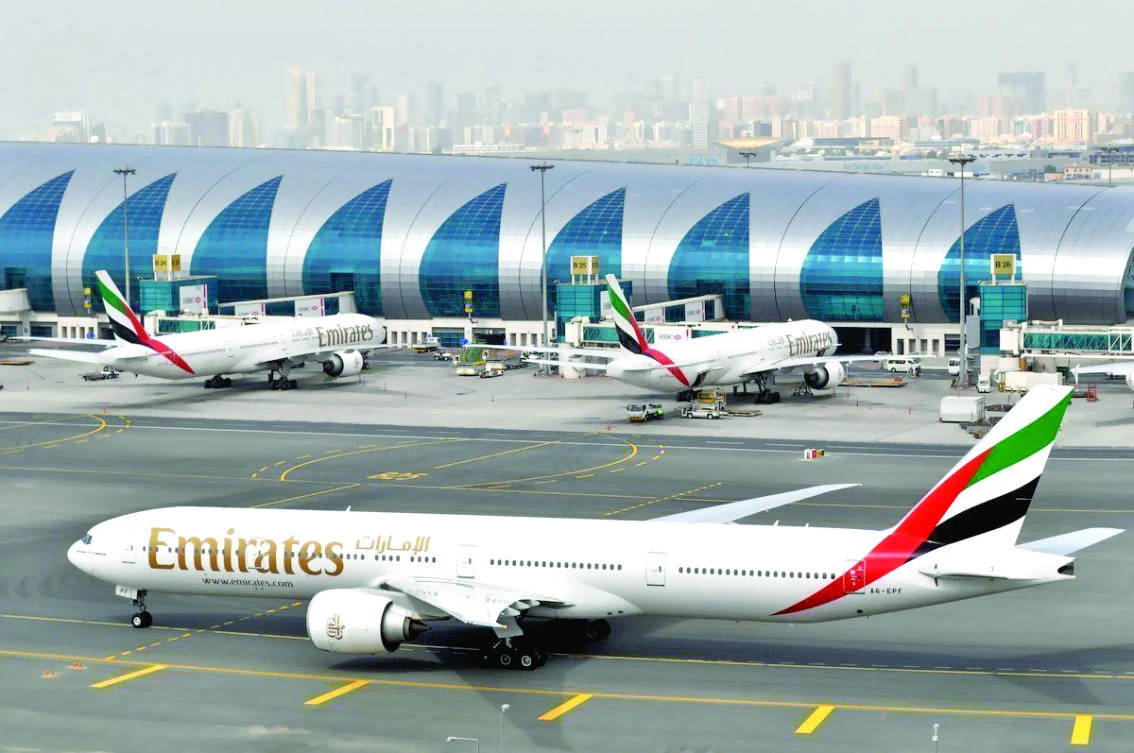
Emirates received 35 new aircraft, its highest number during a financial year, comprising of 19 A380s and 16 Boeing 777-300ERs. At the same time, 27 older aircraft were phased out, bringing its total fleet count to 259 by the end of March. This fleet rollover involving 62 aircraft was the largest program it has ever managed in a year, and it brought the average fleet age down significantly to 63 months, compared with 74 months last year, and against an industry average of 140 months.
Dnata achieved record revenue of 12.2 billion dirhams, some two-thirds of it from overseas. It expanded its global footprint with ground handling acquisitions in the Americas, as well as new facilities and service capabilities across its airport, cargo, catering, and travel services divisions.
Sheikh Ahmed said: “We remain optimistic for the future of our industry, although we expect the year ahead to remain challenging with hyper competition squeezing airline yields, and volatility in many markets impacting travel flows and demand.
“Emirates and Dnata will stay attuned to the events and trends that impact our business, so that we can respond quickly to opportunities and challenges. We will also progress on our digital transformation journey. We are redesigning every aspect of how we do business, powered by an entirely new suite of technologies. Our aim is to deliver more personalized customer experiences, and seamless customer journeys, and make our operations and back-office functions even more efficient,” he added.
Emirates invested 13.7 billion dirhams in new aircraft and equipment, the acquisition of companies, modern facilities, the latest technologies, and staff initiatives, he added.
The airline reported an 82 percent fall in profits in 2016-2017, to 1.3 billion dirhams ($340 million), its 29th year of profits but the first decline for several years.
A combination of European concern over terrorism, US policies impacting air travel, sluggish demand in many parts of the world, and the strong dollar were responsible for what the airline called a “turbulent” year, its worst since the aftermath of the global financial crisis in 2011.
However, Dnata, the airport operator and aviation support services business within the Emirates Group, reported record profits of 1.2 billion dirhams, boosted by its growing international business. The wider Emirates Group reported a 2.5 billion dirham profit, down 70 percent on the previous financial year.
Sheikh Ahmed bin Saeed Al-Maktoum, the group chairman and chief executive, said: “Emirates and Dnata have continued to deliver profits and grow the business, despite 2016-17 having been one of our most challenging years to date.
“Over the years, we have invested to build our business capabilities and brand reputation. We now reap the benefits as these strong foundations have helped us to weather the destabilizing events which have impacted travel demand during the year — from the Brexit vote to Europe’s immigration challenges and terror attacks, from the new policies impacting air travel into the US, to currency devaluation and funds repatriation issues in parts of Africa, and the continued knock-on effect of a sluggish oil and gas industry on business confidence and travel demand,” he added.
The group, owned by the Dubai sovereign wealth fund Investment Corporation of Dubai, will not pay a dividend this year, “in line with the current business climate and to support future investment plans,” the airline said in a statement.
Group revenue reached 94.7 billion dirhams ($25.8 billion), an increase of 2 percent over last year’s results, while its cash balance decreased by 19 percent to 19.1 billion dirhams, mainly due to the repayment of two bonds on maturity, and ongoing high investment in its fleet and aircraft-related assets.
Unfavorable currency exchange rates — principally the “relentless rise” of the US dollar — knocked 2.1 billion dirhams off revenue, the airline said. Its fuel bill came to 21 billion dirhams, up 6 percent, and around 25 percent of total costs.
Emirates received 35 new aircraft, its highest number during a financial year, comprising of 19 A380s and 16 Boeing 777-300ERs. At the same time, 27 older aircraft were phased out, bringing its total fleet count to 259 by the end of March. This fleet rollover involving 62 aircraft was the largest program it has ever managed in a year, and it brought the average fleet age down significantly to 63 months, compared with 74 months last year, and against an industry average of 140 months.
Dnata achieved record revenue of 12.2 billion dirhams, some two-thirds of it from overseas. It expanded its global footprint with ground handling acquisitions in the Americas, as well as new facilities and service capabilities across its airport, cargo, catering, and travel services divisions.
Sheikh Ahmed said: “We remain optimistic for the future of our industry, although we expect the year ahead to remain challenging with hyper competition squeezing airline yields, and volatility in many markets impacting travel flows and demand.
“Emirates and Dnata will stay attuned to the events and trends that impact our business, so that we can respond quickly to opportunities and challenges. We will also progress on our digital transformation journey. We are redesigning every aspect of how we do business, powered by an entirely new suite of technologies. Our aim is to deliver more personalized customer experiences, and seamless customer journeys, and make our operations and back-office functions even more efficient,” he added.
Emirates invested 13.7 billion dirhams in new aircraft and equipment, the acquisition of companies, modern facilities, the latest technologies, and staff initiatives, he added.