The International Air Transport Association has called on Gulf aviation regulators to take effective measures to tackle the issue of air traffic congestion in regional skies.
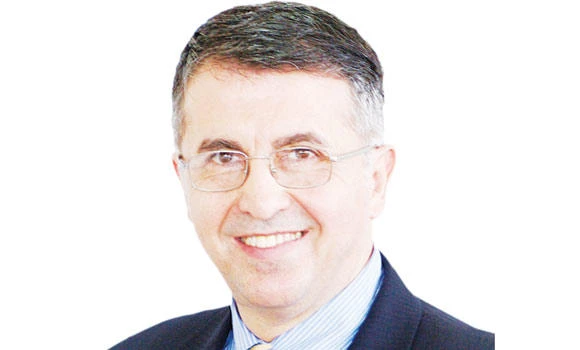
Hussain Dabbas, IATA’s regional vice president, said that regional governments must act together to ensure that achievements made in airport infrastructure, new runways and modern planes are matched by improvements in air traffic management.
“The governments must take a look at this issue seriously as it affects the on-time performance of airlines as well,” he said.
“Our responsibility as IATA is to highlight this issue, but it is up to the governments to arrive at speedy solutions to end the problem,” he said.
Dabbas also said that limitations in Gulf airspace could delay take-offs and landings which in turn could increase fuel costs.
“More the 30 percent of the cost of operations comes from fuel. The more you burn fuel, the more you burn money as well,” he pointed out.
Dabbas was speaking to journalists on the sidelines of IATA’s annual general meeting in Doha, Qatar.
Separately, Qatar Airways CEO Akbar Al-Baker and IATA CEO Tony Tyler also touched on this issue when addressing the media on Monday and Tuesday.
“Our people here are working with various air navigation service providers to try to get things moving in terms of better coordination between the different air spaces,” Tyler told an earlier news conference.
Regional governments have divided airspace between commercial and military aircraft and Dabbas stressed the need to free up more space for commercial carriers.
Airspace capacity in the Gulf is not keeping pace with the growth of the industry, Dabbas said, calling for more investments in regional air traffic management.
He also described Qatar’s new Hamad International Airport as one of the best in the world. He voiced confidence that that airport would soon double its passenger traffic because of its state-of-the art facilities.
He also said that although the Arabian Gulf region was witnessing robust growth in commercial aviation Middle East countries such as Syria, Jordan and Egypt were facing some challenges at present.
The 70th annual general meeting and World Air Transport Summit in Qatar attracted 1,000 participants.
This included aviation leaders from among IATA’s 240 member airlines, governments, international organizations, industry stakeholders, IATA strategic partners, and the media.
The next meeting will be held in Miami, US.
Kevin Hiatt, senior vice president at IATA’s Safety and Flight Operations department, highlighted the airline group’s commitment to the safety and security of passengers.
But he admitted that there is no specific timetable for implementing new tracking recommendations following the disappearance of a Malaysian aircraft with 239 people aboard in March.
“Aviation stakeholders are united in their desire to ensure that we never face another situation where an aircraft simply disappears,” he said.
But he declined to say if airlines could ultimately pass the cost of real-time tracking to passengers, with an IATA spokesman adding that the association was not involved in “airline pricing decisions.”
Hiatt commented: “Aircraft technology is outpacing air traffic control technology.”
Aircraft manufacturers have been launching innovative models and air traffic control measures need to keep pace with rapid advances, delegates said.
Gulf carriers urged to tackle air traffic congestion