NEW DELHI: India is bracing for upheaval as it storms ahead with its most ambitious reform in decades — transforming the world’s fastest-growing major economy into a single market for the first time.
The long-awaited goods and services tax (GST) rolls out Saturday even as businesses complain they are ill-prepared for the massive changes about to ripple through India’s unwieldy, $2 trillion economy.
The government promises the new regime will not just simplify trade by replacing more than a dozen levies with one tax but combat corruption and enrich state coffers by bringing the informal economy into the digital era.
Most economists agree the reform — first proposed in 2006 — is necessary and long overdue, but warn the initial shock to the economy is likely to drag, rather than stoke, growth in the short term as businesses adjust.
There are already signs the transition could be rocky.
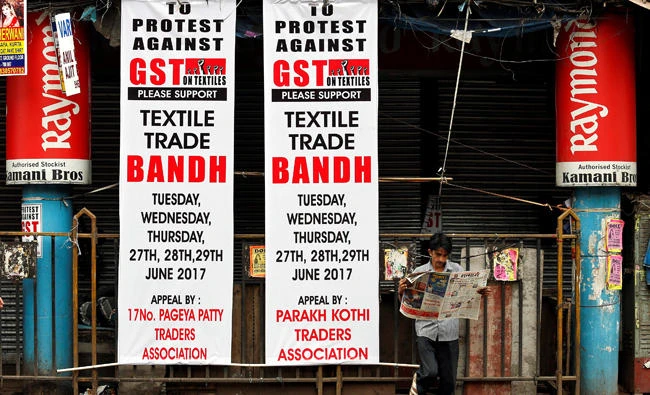
Industries are on strike, others are facing an avalanche of paperwork, while some retailers remain unclear about what to charge just days before the taxes take effect.
“There are different rates for a mobile set, charger and headphones — all of which come in one box,” said Praveen Khandelwal, secretary-general of Confederation of All India Traders (CAIT), pointing to one such example.
“What tax rate will be applicable in such a scenario? We do not know yet.”
A slew of basic staples like fresh vegetables and milk are exempted, along with less obvious items like temple offerings, the national flag and human hair.
So-called “sin” goods like tobacco will be slapped with extra levies, while states will still be allowed to separately tax some products including petrol and aviation fuel.
Some industries have suddenly discovered their products elevated to a higher tax bracket. Fireworks manufacturers are protesting over crackers being taxed at the maximum of 28 percent, while garment and textile workers are crying foul over heightened imposts.
Ayushi Gudwani, who runs an online fashion startup, supports the creation of a common market but was shocked to learn her taxes had more than doubled.
“Our profitability will be hit,” she told AFP.
Under the new regime, companies must file a tax return in every state they pass through — a nightmare for a trucking company shipping goods nationwide.
All but the smallest businesses will now be required to declare their earnings online, an effort to broaden India’s woefully small tax base, digitize the economy and flush out cash hoarders.
But training employers to log tax information online presents immense challenges in India, where most small and informal businesses do not own computers, let alone access the Internet, the trade association said.
India has one of the lowest tax-to-gross domestic product (GDP) ratios in the world and these changes, though initially painful, will have a “significant impact” on compliance, said Neelkanth Mishra, managing director at Credit Suisse.
“India is like a house under renovation. While the new parts are being built, no one will be happy,” he told AFP.
The sweeping reforms come less than a year after Prime Minister Narendra Modi devalued India’s largest banknotes in a sudden move designed to outmaneuver tax cheats, but was blamed for a crippling cash shortage and slowing growth.
To avoid a similarly rough landing, the government has trained 60,000 tax bureaucrats and run sessions with private accountants to ensure everyone is up to speed on the finer points of the GST.
A GST Council has spent months thrashing out the final legislation, which was blocked in the Parliament for a year until an amended version was approved.
“This is a tax reform that was needed,” said Sunil Sinha, principal economist at Fitch India.
“We came into existence as a nation in 1947 but never had a common Indian market. GST will make India one.”
The long-awaited goods and services tax (GST) rolls out Saturday even as businesses complain they are ill-prepared for the massive changes about to ripple through India’s unwieldy, $2 trillion economy.
The government promises the new regime will not just simplify trade by replacing more than a dozen levies with one tax but combat corruption and enrich state coffers by bringing the informal economy into the digital era.
Most economists agree the reform — first proposed in 2006 — is necessary and long overdue, but warn the initial shock to the economy is likely to drag, rather than stoke, growth in the short term as businesses adjust.
There are already signs the transition could be rocky.
Industries are on strike, others are facing an avalanche of paperwork, while some retailers remain unclear about what to charge just days before the taxes take effect.
“There are different rates for a mobile set, charger and headphones — all of which come in one box,” said Praveen Khandelwal, secretary-general of Confederation of All India Traders (CAIT), pointing to one such example.
“What tax rate will be applicable in such a scenario? We do not know yet.”
A slew of basic staples like fresh vegetables and milk are exempted, along with less obvious items like temple offerings, the national flag and human hair.
So-called “sin” goods like tobacco will be slapped with extra levies, while states will still be allowed to separately tax some products including petrol and aviation fuel.
Some industries have suddenly discovered their products elevated to a higher tax bracket. Fireworks manufacturers are protesting over crackers being taxed at the maximum of 28 percent, while garment and textile workers are crying foul over heightened imposts.
Ayushi Gudwani, who runs an online fashion startup, supports the creation of a common market but was shocked to learn her taxes had more than doubled.
“Our profitability will be hit,” she told AFP.
Under the new regime, companies must file a tax return in every state they pass through — a nightmare for a trucking company shipping goods nationwide.
All but the smallest businesses will now be required to declare their earnings online, an effort to broaden India’s woefully small tax base, digitize the economy and flush out cash hoarders.
But training employers to log tax information online presents immense challenges in India, where most small and informal businesses do not own computers, let alone access the Internet, the trade association said.
India has one of the lowest tax-to-gross domestic product (GDP) ratios in the world and these changes, though initially painful, will have a “significant impact” on compliance, said Neelkanth Mishra, managing director at Credit Suisse.
“India is like a house under renovation. While the new parts are being built, no one will be happy,” he told AFP.
The sweeping reforms come less than a year after Prime Minister Narendra Modi devalued India’s largest banknotes in a sudden move designed to outmaneuver tax cheats, but was blamed for a crippling cash shortage and slowing growth.
To avoid a similarly rough landing, the government has trained 60,000 tax bureaucrats and run sessions with private accountants to ensure everyone is up to speed on the finer points of the GST.
A GST Council has spent months thrashing out the final legislation, which was blocked in the Parliament for a year until an amended version was approved.
“This is a tax reform that was needed,” said Sunil Sinha, principal economist at Fitch India.
“We came into existence as a nation in 1947 but never had a common Indian market. GST will make India one.”