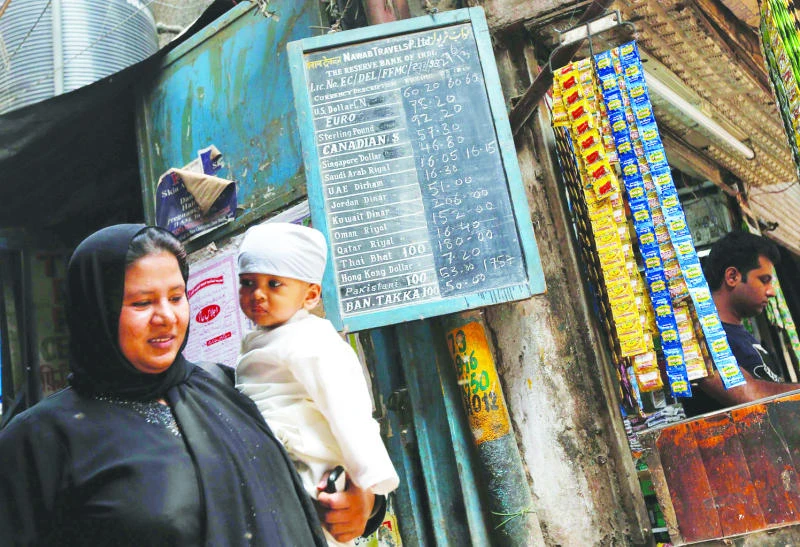
MUMBAI: India’s current account deficit narrowed to 3.6 percent in the first quarter of 2013, data showed, helping to reverse a dramatic slide in the rupee to historic lows.
The better-than-expected figures eased pressure on the currency, which lost nearly 2.0 percent on Wednesday when it touched a record 60 to the dollar.
The current account data came a day earlier than expected and dealers speculated its release might have been moved forward by the Reserve Bank of India (RBI) to boost sentiment.
The rupee, which hit a lifetime low of 60.72 to the dollar on Wednesday, strengthened to 60.33 after the data was released. It was trading at 60.53 by at 0630 GMT.
The deficit for the three months to March was $18.1 billion, compared with a record $ 32.6 billion, or 6.7 percent of gross domestic product, for the previous quarter, the RBI said in a statement.
The imbalance in the current account, which measures the gap between inflows of foreign currency and outflows and is the broadest gauge of trade, is the biggest risk to the economy, according to the bank.
After the data, India’s Finance Minister P. Chidambaram warned that the deficit “may widen” in the current quarter because of recent money outflows. “The data has calmed the (forex) market somewhat,” said Shubhada Rao, chief economist with private Yes Bank.
She said the deficit numbers for the March quarter improved as non-oil and non-gold imports declined.
India’s deficit stems mainly from large oil and gold imports and weaker exports amid the global economic downturn, which has raised inflation concerns.
Foreign investors have been pulling out money from India — besides other emerging markets — in June, to safer havens such as US Treasury bills.
The deficit figures come as India’s Congress-led government struggles to stimulate the economy, which grew at a decade-low of five percent last year, ahead of elections due next year.
For the full fiscal year ended March, the current account gap was $ 87.8 billion, or 4.8 percent of GDP, compared with $ 78.2 billion a year earlier.
“The data was well above our expectations, as the services sector performed better than expected in the March-end quarter,” said Siddhartha Sanyal, chief India economist with Barclays Capital.
Barclays
India’s current account data boosts ailing rupee