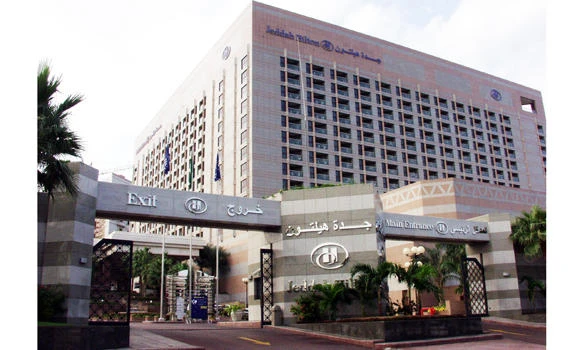
Saudi Arabia, specifically Madinah and Jeddah, witnessed a positive RevPAR growth in May, according to an Ernst& Young survey of the hospitality markets in the wider MENA region.
The hospitality markets in Madinah and Jeddah experienced RevPAR growth of around 22.5 percent and 9.2 percent respectively, as compared to the same period last year.
This was predominately driven by an increase in average room rates in the two cities.
However, Makkah and Riyadh recorded a decline, with RevPAR decreasing by 5.4 percent and 2.4 percent respectively over the same time period.
The drop in Makkah can be attributed to a decrease in average occupancy from 81 percent to 74 percent year-on-year.
The minor change in Riyadh’s RevPAR was caused by a 6.1 percent decrease in average room rate, while average occupancy remained primarily unchanged, the survey report said.
Commenting on the survey, Yousef Wahbah, MENA head of transaction real estate at Ernst & Young, said: “May is the start of the summer season in the region when the hospitality market peak season is coming to an end and the region begins to witness the seasonal slowdown. While these seasonal factors, including increased temperatures and the holy month of Ramadan, affect the majority of MENA countries, political and socioeconomic conditions are additionally impacting other countries throughout the region.”
The overall occupancy rate in Dubai increased by around 5 percentage points (pp) compared to May 2012, with average room rates increasing by 12.1 percent and RevPAR increasing by 19.4 percent. These increases can be attributed to a substantial seasonal spike of 8 pp in the city’s beachfront hotels.
Despite Dubai’s overall performance slowing marginally in May 2013 as compared to April, the numbers are in line with the city’s typical summer season.
Furthermore, Abu Dhabi witnessed an increase of 14.9 percent in average room rates in May from $169 to $194, year-on-year, resulting in RevPAR growth of 20.9 percent during the same period.
The emirate also witnessed an increased overall occupancy rate of 4 pp.
In addition, Al-Ain recorded positive numbers in May, with its overall occupancy rate also increasing from 65 percent in May 2012 to 69 percent in May 2013, its average room rate increasing by 2.7 percent and its RevPAR increasing by 9.5 percent.
In Egypt, the Red Sea resorts continue to achieve higher average room rates in 2013 compared to 2012. More specifically, resorts in Hurghada and Sharm El Shaikh have continued to witness an upward trend since the beginning of 2013.
Hurghada and Sharm El Shaikh both saw growth of 66.7 percent and 20.9 percent respectively in their RevPAR over the same period last year.
This increase can be primarily attributed to an increase in average room rates, from $25 in May 2012 to $41 in May 2013 in Hurghada (63.9 percent increase) and $42 to $57 for Sharm El Shaikh (37.6 percent increase) over the same period.
Despite these increases, Cairo continues to see decreases in its hospitality market as political tensions in the city have escalated over the last few months.
Additionally, Cairo’s overall RevPAR dropped by 12.2 percent year-on-year, mainly due to a 13.1 pp decrease in average occupancy over the same period, from 48.1 percent to 34.9 percent.
In May 2013, Beirut’s RevPAR dropped by 27 percent compared to the same period last year, due to a reduced average occupancy rate, from 67 percent to 59 percent year-on-year, and a further decrease in average room rates year-on-year, from $200 to $165.
Furthermore, Jordan continues to see lower levels of average occupancy, with Amman’s occupancy rate decreasing by 14 pp year-on-year, along with a 9.6 percent decrease in average room rates from $172 to $155 and a drop in RevPAR of 26.1 percent.
Overall, while there have been significant variations by country, the hospitality market across the MENA region, particularly in the UAE, has remained robust in May.
The months of July and August traditionally have the hottest weather in the region, so lower rates are expected over the coming months.
Jeddah, Madinah hospitality markets show sharp growth