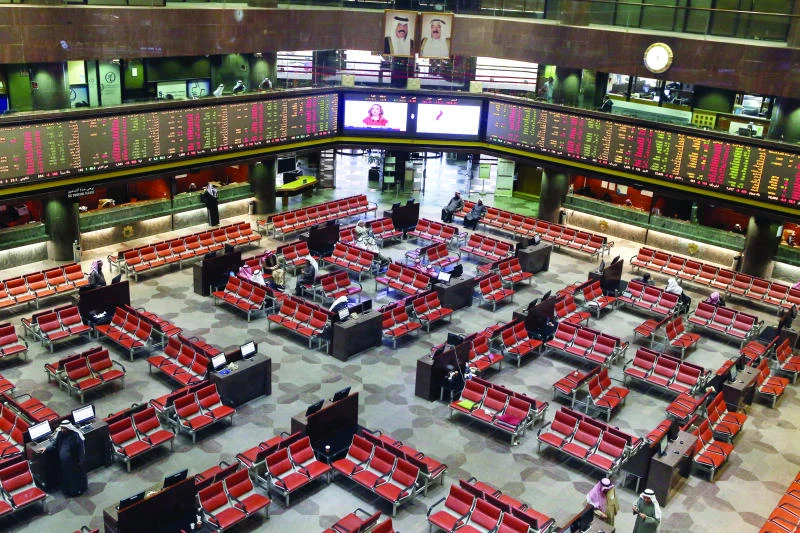
JEDDAH: Most Middle East stock markets tumbled on Monday in a global sell-off triggered by China.
Chinese stocks slumped by 7 percent after weak manufacturing data, causing emerging markets in general to suffer their biggest fall in four months.
“The broad market sell-off is part of the general weakness in global equity markets,” said Muhammad Shabbir, head of equity funds at Dubai-based Rasmala Investment Bank.
The lack of a catalyst that would support a market rally in the Gulf leaves the region vulnerable to volatile trade, he added.
In past years, the region outperformed emerging markets because of its strong budget and current account surpluses, but most of those surpluses have now been erased by low oil prices. “While rising geopolitical tension makes headlines and weighs on sentiment, weakness in oil and worries about Chinese demand remain the primary drivers of GCC stock markets,” said Akber Khan, director of asset management at Doha’s Al-Rayan Investment.
Riyadh’s equities benchmark — Tadawul All-Share Index — faced a heavy sell-off in the last hour of trade as investors dumped stocks across the board. The index sank 2.4 percent.
Savola, one of the few Saudi companies with a presence in Iran, fell 3.2 percent.
The food conglomerate has factories in Tehran; Iran provided 11 percent of its revenue in the third quarter of 2015 and the company’s revenues from Iran totalled SR2 billion ($534 million) in the first nine months of 2015, its financial statements showed. Alinma retreated 3.7 percent after rising in early trade.
Health insurer Bupa Arabia, usually a favorite of foreign investors, plunged 9.6 percent.
Petrochemical shares showed some early strength after being hit hard by higher natural gas feedstock prices in last week’s 2016 state budget.
But they succumbed in late trade, with Saudi Basic Industries Corp. (SABIC) losing 1.6 percent.
Key Tadawul index falls 2.4%; SABIC drops 1.6%