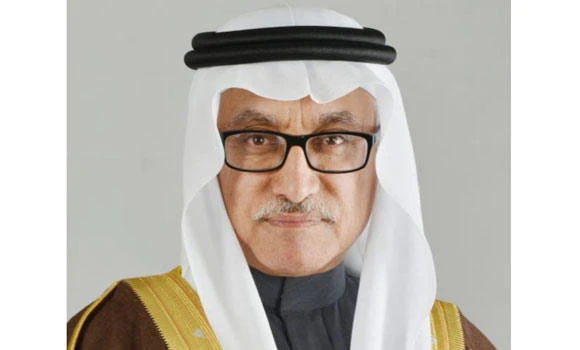
Mansour Al-Maiman, chairman of the National Commercial Bank (NCB), announced that the bank achieved a record net income in 2013 at SR7.85 billion compared to SR6.45 billion for the previous year, achieving an increase of SR1.40 billion, with a growth rate of 21.7 percent.
Al-Maiman remarked that the bank has boosted its leading position as a premier financial institution through a number of critical internal changes, which had very positive impacts on NCB financial results.
NCB looks at 2013 as the year of market growth, expansion in local and international outreach, upgrade of technical infrastructure, and training and development of its human capital. In this regard, certain procedures were taken to enhance NCB work environment, improve staff capabilities and attract the best talents.
Al-Maiman pointed out that NCB capitalized on all opportunities available in 2013 and achieved significant progress in service outlets through the expansion of its branch network. In this context, NCB had a very strong year in terms of network expansion, with 17 new branches to bring the total of NCB branches to 329. Also, 29 new Quick Pay (QP) centers were opened bringing the total of QP centers to 57; plus 292 new ATMs were installed to reach 2,252 machines; and new 1,300 POS were added to reach 14,075 through the Kingdom at the end of the year. This reflects the continuous efforts of the bank to develop its infrastructure, promote its products and increase its service channels, which will give the customer access to all services 24/7.
On other hand, the Turkiye Finans Katilim Bankasi, in which NCB owns a majority stake, kept on its good performance during the year 2013 and maintained its position as the leading bank in the Islamic banking in Turkey. Its branch network was enhanced by 30 new branches in 2013 bringing the a total number to 250 branches throughout Turkey.
In addition, the bank inaugurated its a new representative office in Shanghai strengthening its international presence in 2013. NCB was also successful in to maintaining its A+ rating by Standard & Poor's and Fitch agencies, one of the highest ratings in the financial services industry in the Kingdom. The rating reflects NCB strong financial position, high levels of financial liquidity, in addition to the leading position of the bank locally and regionally.
“We managed to build on the favorable economic atmosphere to efficiently develop our operations, distribute our assets, diversify our sources of income and improve our performance, which ultimately led to a significant increase in our revenues and profits, thanks to the motivating economic factors and efficient operating plans." Al-Maiman said.
“The new organizational structure carried out during 2013 merged the overlapping activities in correlated departments, which increased the efficiency and significantly reduced the operating costs,” he added.
In the area of human resources, NCB gave great importance to its human capital being one of the main strategic assets of the bank. NCB HR was reorganized to help attract and retain qualified talents. New scientific assessment tools were introduced to identify, manage and develop the internal calibers taking into account the bank’s short-term and long-term goals in people management. Also, training programs were developed to cope up with the strategic plan, which requires all new employees to be trained before joining the work to be capable of doing their jobs from day one in the bank.
NCB recently announced its graduate development program, Rowad Al-Ahli, to play a major role in attracting and retaining high potential employees from Saudi students in best local and international universities. It is a comprehensive program, where the choice process is built on recognized international standards used by top-500 international companies.
The program aims to provide the mid-management level with high potential talents, who will be ready to assume high management roles when needed. It is the best graduate development program in the Kingdom. Since NCB has its branches in all regions of the Kingdom, the fruits of the program will be directed to customer service when its trained graduates are distributed to these branches. All the employee compensations and incentives will be based on the employee’s efficiency and his/her ability to deliver with high performance levels.
Al-Maiman said: “This good growth in NCB’s net income reflects the bank’s ability to optimally deploy its assets, and the bank’s strategy to diversify its sources of revenue has resulted in an increase of 2 percent in fee income from banking services, 25.6 percent in income from foreign currency exchange, and gains from sale of investments reached SR646 million compared to SR602 million for 2012. Despite the prevailing low rates, the bank’s net special commission income during the year increased by 11.7 percent to reach SR10.012 million during 2013.
The increase in shareholders' equity and growth in customer deposits increased the bank’s total assets, where total shareholders' equity reached SR42.6 billion on Dec. 31, 2013, with an increase of SR3.2 billion, almost 8.2 percent. The customer deposits reached SR300.6 billion on Dec. 31, 2013, with an increase of SR27.1 billion, 9.9 percent. The total assets growth rate has reached 9.3 percent to reach SR377.3 billion. This increase was reflected in expanded lending activities with the loans and advances increased by 14.8 percent to reach SR187.7 billion.
NCB continued its successful credit risk management during 2013, taking all necessary provisions as per the conservative methodology it follows to determine provisions. Consequently, the coverage ratio of nonperforming loans and advances increased from142.5 percent in 2012 to reach 165.9 percent in 2013.The ration of return on shareholders’ equity reached 20 percent in 2013, and the capital adequacy ratio — pillar 1 (Tier 1 and Tier 2) — reached 17.2 percent.
Al-Maiman expressed his deep gratitude to the bank’s clients and shareholders for their trust in the bank and to the board of directors and staff for their contribution and support to help it achieve these results. He also thanked the government of Custodian of the Two Holy Mosques King Abdullah, the Ministry of Finance and the Saudi Arabian Monetary Agency (SAMA), whose fiscal and monetary policies had the greatest impact in creating and improving the economic climate for Saudi businesses in general and the banking industry in particular.
NCB posts record net income of SR7.85bn