BENGALURU/DETROIT: Ford has outlined a broad reshuffling of senior management under its new chief executive officer, including a new vice president for autonomous and electric vehicles hired away from ride services power Uber.
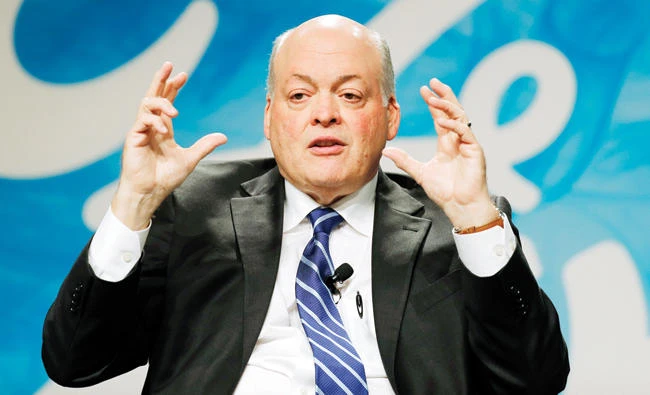
James Hackett, named CEO on Monday, has said he wants to streamline the company’s hierarchy and speed up decision-making. But Thursday’s moves indicate Hackett will rely mainly on Ford veterans to get the job done, instead of bringing in outside talent.
The new vice president for Ford’s autonomous vehicles and electrification, Sherif Marakby, was hired away from Uber Technologies Inc, where he was vice president of global vehicle programs. Prior to joining Uber last year, Marakby was at Ford for more than 25 years and worked on hybrid and electric vehicles.
Ford will also combine its purchasing and product development operations under Hau Thai-Tang, previously head of global purchasing. Thai-Tang, 50, will have the task of simultaneously accelerating vehicle development and reining in costs as rival General Motors Co. unleashes a volley of models aimed at the heart of Ford’s product lineup.
Raj Nair, currently Ford’s executive vice president of product development and chief technical officer, will take over as president, North America, effective June 1, the company said. He will be responsible for operations that generate about 90 percent of Ford’s global profits.
In other moves, the No. 2 US automaker named Steven Armstrong as head of Europe, Middle East and Africa and Peter Fleet as chief of Asia Pacific and China.
Armstrong is currently chief operating officer for Ford of Europe, while Fleet is in charge of sales and marketing for the Asia-Pacific region.
Last week, the company announced plans to cut 1,400 white-collar positions and is expected to make significant cost cuts in the coming months.
Hackett, who replaced Mark Fields, is the latest in a line of non-family CEOs given a mandate to change the management culture at one of the auto industry’s oldest institutions.
For much of the past decade, Ford has benefited from management and marketing problems at General Motors (GM), including GM’s 2009 bankruptcy and a safety scandal that hobbled the company in 2014.
Now, however, Ford confronts a crosstown rival largely free of debt and focused on grabbing market share from Ford, particularly in the truck and SUV segments which account for most of both companies’ profits.
GM, the No. 1 US automaker, is in the midst of a prolific four-year patch of new vehicle launches, many approved by Mary Barra, the company’s former head of global product development who was named CEO in January 2014.
In hindsight, GM benefited from its bankruptcy, as it emerged essentially debt-free and able to spend more on new products. Ford did not seek bankruptcy during last decade’s auto industry crisis, and instead borrowed heavily to survive it, leaving it short on cash to invest in new vehicles.
That result of that disparity is now becoming evident. A Reuters analysis shows that over the past two years GM has surpassed Ford in pretax profit per vehicle in North America. In 2016, Ford made $2,981 per vehicle, calculated by dividing pretax earnings by the number of vehicles sold, compared with $3,044 for GM. And GM plans to solidify that lead by rolling out a volley of new models aimed at the heart of Ford’s lineup.
GM has invested billions of dollars over the past three years to overhaul many of its best-selling truck and SUV models, including the full-size Chevrolet Suburban and Cadillac Escalade SUVs that dominate their sector and typically boast pretax margins of $20,000 or more.
GM also has boosted its share of the US truck market with the 2014 launch of the mid-size Chevrolet Colorado and GMC Canyon pickups. Ford’s rival to the Colorado — an all-new Ranger pickup — is not expected to debut until early 2019.
Over the past five years, both companies have spent roughly the same — about 8 percent to 10 percent of revenue — on capital equipment, engineering, and research and development, Reuters analysis shows. But GM has brought far more new and redesigned vehicles to market in the United States in the past three years.
“GM seems to be getting more for its money and realizing the results sooner,” said Joe Langley, an analyst with IHS Markit.
Shares dipped 0.2 percent to $10.92 on Thursday.
The stock is down about 36 percent since Fields took over three years ago at the peak of the US auto industry’s recovery from the crisis last decade.
James Hackett, named CEO on Monday, has said he wants to streamline the company’s hierarchy and speed up decision-making. But Thursday’s moves indicate Hackett will rely mainly on Ford veterans to get the job done, instead of bringing in outside talent.
The new vice president for Ford’s autonomous vehicles and electrification, Sherif Marakby, was hired away from Uber Technologies Inc, where he was vice president of global vehicle programs. Prior to joining Uber last year, Marakby was at Ford for more than 25 years and worked on hybrid and electric vehicles.
Ford will also combine its purchasing and product development operations under Hau Thai-Tang, previously head of global purchasing. Thai-Tang, 50, will have the task of simultaneously accelerating vehicle development and reining in costs as rival General Motors Co. unleashes a volley of models aimed at the heart of Ford’s product lineup.
Raj Nair, currently Ford’s executive vice president of product development and chief technical officer, will take over as president, North America, effective June 1, the company said. He will be responsible for operations that generate about 90 percent of Ford’s global profits.
In other moves, the No. 2 US automaker named Steven Armstrong as head of Europe, Middle East and Africa and Peter Fleet as chief of Asia Pacific and China.
Armstrong is currently chief operating officer for Ford of Europe, while Fleet is in charge of sales and marketing for the Asia-Pacific region.
Last week, the company announced plans to cut 1,400 white-collar positions and is expected to make significant cost cuts in the coming months.
Hackett, who replaced Mark Fields, is the latest in a line of non-family CEOs given a mandate to change the management culture at one of the auto industry’s oldest institutions.
For much of the past decade, Ford has benefited from management and marketing problems at General Motors (GM), including GM’s 2009 bankruptcy and a safety scandal that hobbled the company in 2014.
Now, however, Ford confronts a crosstown rival largely free of debt and focused on grabbing market share from Ford, particularly in the truck and SUV segments which account for most of both companies’ profits.
GM, the No. 1 US automaker, is in the midst of a prolific four-year patch of new vehicle launches, many approved by Mary Barra, the company’s former head of global product development who was named CEO in January 2014.
In hindsight, GM benefited from its bankruptcy, as it emerged essentially debt-free and able to spend more on new products. Ford did not seek bankruptcy during last decade’s auto industry crisis, and instead borrowed heavily to survive it, leaving it short on cash to invest in new vehicles.
That result of that disparity is now becoming evident. A Reuters analysis shows that over the past two years GM has surpassed Ford in pretax profit per vehicle in North America. In 2016, Ford made $2,981 per vehicle, calculated by dividing pretax earnings by the number of vehicles sold, compared with $3,044 for GM. And GM plans to solidify that lead by rolling out a volley of new models aimed at the heart of Ford’s lineup.
GM has invested billions of dollars over the past three years to overhaul many of its best-selling truck and SUV models, including the full-size Chevrolet Suburban and Cadillac Escalade SUVs that dominate their sector and typically boast pretax margins of $20,000 or more.
GM also has boosted its share of the US truck market with the 2014 launch of the mid-size Chevrolet Colorado and GMC Canyon pickups. Ford’s rival to the Colorado — an all-new Ranger pickup — is not expected to debut until early 2019.
Over the past five years, both companies have spent roughly the same — about 8 percent to 10 percent of revenue — on capital equipment, engineering, and research and development, Reuters analysis shows. But GM has brought far more new and redesigned vehicles to market in the United States in the past three years.
“GM seems to be getting more for its money and realizing the results sooner,” said Joe Langley, an analyst with IHS Markit.
Shares dipped 0.2 percent to $10.92 on Thursday.
The stock is down about 36 percent since Fields took over three years ago at the peak of the US auto industry’s recovery from the crisis last decade.