IT is oft-repeated now that 2016 is proving to be a challenging year for businesses in the Gulf Cooperation Council (GCC) countries. Several industries are beginning to feel the pinch of oil price volatility, which has fluctuated by more than 70 percent since January 2014.
While there are green shoots of recovery, for the hydrocarbon-rich states of the Arabian Gulf, oil price volatility has certainly had a serious impact on their financial bottom line. A closer look at market trends during this era of disruption, however, shows that these circumstances come with opportunities for diversification— prospects which, when seized, will make for a resilient regional economies.
For the region, oil revenues are a major contributor to national earnings, with hydrocarbons accounting for roughly 80 percent of revenues, 45 percent of GDP, and 90 percent of export earnings.
These earnings are subsequently pumped back by the government to the economy through investments in infrastructure, health care and education. With this model, the Kingdom’s economy has raised the standards of living of its people.
One could argue that everything is connected in this system. The oil harnessed from say, the Ghawar, Safaniya or Shaybah fields, has not only made the livelihoods of the people in these fields, but also touched the lives of those who are employed in ancillary sectors — be it in banking, shipping, logistics and others. Oil, thus, runs through the very veins of the Saudi economy.
While this model has made significant contributions to the development of the country, there is room for improvement through a concerted effort to diversify the economy to reduce its heavy reliance on volatile oil revenue. That is taking the diversification narrative to the next level. Currently, while the need to diversify the economy is an accepted fact, the mechanism to develop the non-oil sector seems to be under-discussed.
Typically, any economic diversification narrative is dominated by the need to build soft power skills such as tourism, information technology, education and other sectors. The role of industrial manufacturing – especially the downstream drive within the petrochemicals sector and supporting industries – needs to be supported today to draw on the natural synergies offered by the economy.
This insight was, in fact, understood by the region’s leadership as early as four decades ago, when they embarked on developing a globally competitive petrochemicals industry.
In the early 1980s, the petrochemicals industry began out of the necessity to use the associated gas in the region’s oilfields, a resource that was previously flared causing pollution as well as wasted depleting natural resource. Today, Saudi Arabia is home to an 87.3 million ton petrochemicals portfolio, according to the Gulf Petrochemicals and Chemicals Association (GPCA), a figure that represents the highest capacity in the GCC region. From a macroeconomic perspective, economic diversification has brought huge socio-economic benefits to the Saudi economy.
If the Saudi leadership were to have depended solely on oil and gas reserves forty years ago, then the subsequent impact of oil price decline would be catastrophic. Instead, the diversification into manufacturing and in particular petrochemicals industries had proven to be a wise venture.
This is made evident by examining the prices fluctuation of Brent versus Polyethylene during the period of June 2014 to January 2016.
The drop in oil prices during this time had been 72 percent whilst that of polyethylene was 35 percent. In fact, polyethylene prices have been higher than Brent crude at every bearish period since 2003— whether it was during shockwaves at the Lehman brothers collapse in 2008 or the difficult early period Euro debt crisis in 2012, this petrochemical commodity has been consistently higher than its upstream counterpart.
This is a testimony to the wise vision of the GCC leadership which took bold steps to venture into the petrochemicals manufacturing to reduce the heavy reliance of national economies on volatile oil revenues.
While it might be true that we are living in challenging times, rather than dwelling on the negatives, let us look at obstacles as an opportunity to evolve, rather than decline.
Research by the IMF has found that economic diversification for oil exporting countries usually takes place in times of declining resource revenues and takes decades of development in the non-oil tradable sector.
In Saudi Arabia, the foundations for economic diversification have been laid but there should be no illusion of phasing out the oil sector.
Additionally, development should leverage the natural resources the country is endowed with, namely in the hydrocarbon and mining sectors, which will support allied industries like as logistics, and shipping, among others. The next phase in this journey should be geared to develop of the full potential of these sectors, through a concerted emphasis on downstream industries that integrates refineries and the petrochemicals sector, while expanding industries based on industrial minerals. This drive will have a spillover effect that benefits the rest of the economy.
Looking ahead to the future, there are several policies that can support the diversification drive. Providing the conducive investment environment and enablers such as government incentives to organizations that focus on innovation, entrepreneurship, human capital and employment will help in developing a more resilient economy.
Encouraging a research mindset, where organizations question, collaborate and develop solutions with global partners will also help drive innovation.
The next step, then, is for a consistent and open innovation perspective to take root that brings together government, businesses and academia.
After all, successful diversification of the economy cannot, and should not, occur from one stakeholder alone.
The future lies in collaboration, so let us join hands to realize its potential.
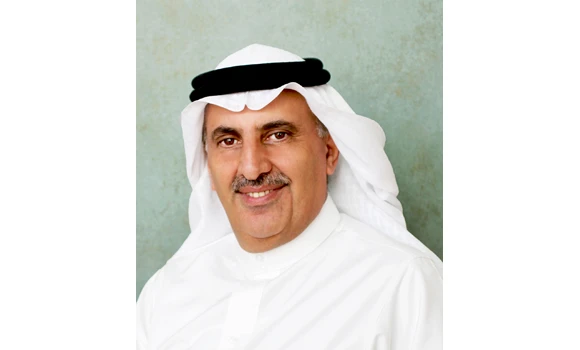
— Abdulwahab Al-Sadoun is the secretary General of the Gulf Petrochemicals and Chemicals Association
Of disruptions and divergence: How diversification is good for GCC economies