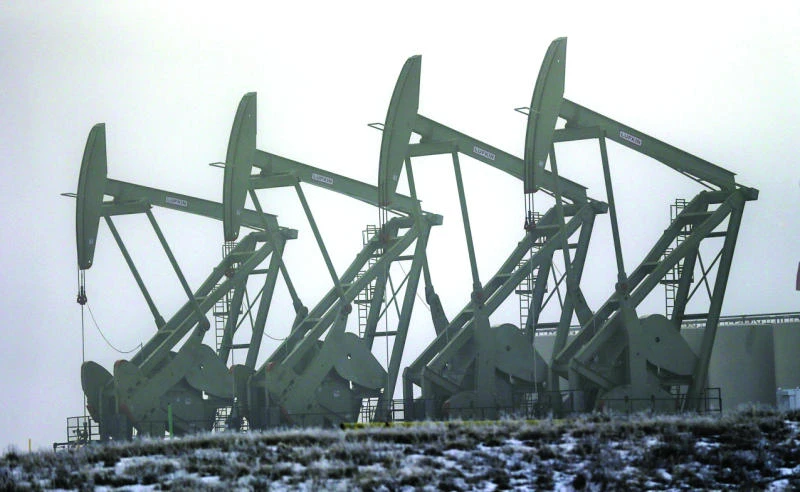
HOUSTON: Low oil prices are biting deeper into the energy industry as Halliburton Co. eliminated thousands more jobs and Canadian producer Talisman Energy Inc. wrote down the value of drilling assets by $1.3 billion.
The global oil industry has cut more than $40 billion in spending and fired 50,000 or more workers to cope with oil prices that sank below $50 for most of January.
The damage to oil companies has been balanced by gains for other industries, from airlines to pizza parlors, which have benefited from lower fuel costs and more money in consumers’ pockets.
“Energy has been hit,” while other industries from transportation to manufacturing have done well, said Rob Desai, an oilfield services analyst at Edward Jones in St. Louis.
“This is just a really good lesson in diversification.”
Halliburton, the world’s largest provider of hydraulic fracturing services, said Tuesday it’s cutting as much as 8 percent of its global workforce of more than 80,000.
The Halliburton cuts, which could be as much as 6,400 globally, included 1,000 jobs the company said in December it would be cutting, Emily Mir, a spokeswoman, said in an e-mail.
“We are faced with the difficult reality that reductions are necessary to work through this challenging market environment,” Mir said.
“The impact will be across all areas of Halliburton’s operations.”
Talisman, which agreed to be acquired by Spain’s Repsol in December, blamed low oil prices for the fall in value of drilling acreage in Iraq and Texas as it reported a fourth quarter loss of $1.59 billion.
Talisman wrote down acreage in the Eagle Ford Shale of South Texas by $614 million, and shrunk the value of its investment in Block K44 in the Kurdistan region of Iraq by $234 million. International oil companies including BP, Statoil and BG Group have written down almost $20 billion in asset values as oil prices fell by more than half since June.
Service companies such as Halliburton and Schlumberger Ltd. that help producers find oil and gas and drill wells have been among the hardest hit. They’re seeing revenues plunge as drilling slows and business dries up, and at the same time customers are pressing for steep price discounts.
The Philadelphia Oil Services Index dropped 34 percent since the crude downturn began in late June.
Producers in the Standard & Poor’s 500 energy index have fallen 27 percent in the same period.
So far, the US economy appears to be absorbing the fallout from the oil industry, as more than 1 million workers were added to payrolls since November, the biggest three-month advance in 17 years, according to figures from the Labor Department released Feb. 6.
The price collapse won’t be enough to boost growth around the world as major economies face unemployment, political uncertainty and shrinking profits from crude exports, according to Moody’s Investors Service.
Pay increases, an uptick in hiring and falling inflation — along with gasoline prices that have reached the lowest level in almost six years — are handing a windfall to consumers and other industries including airlines, car makers, fast food chains and retail stores.
“There will, of course, be a little more spending,” which should benefit entertainment and tourism-related industries, said Desai at Edward Jones. People are also managing to save some of the money they’re getting back on lower gasoline prices, he said.
Airlines, for whom fuel is one of the largest expenses, are among the clearest winners. The chief executives of Delta Air Lines and Southwest Airlines both said cheaper jet fuel would significantly boost their bottom lines.
“Our earnings outlook is superb,” Southwest CEO Gary Kelly told investors Jan. 22. “We have significantly lower fuel costs and it drops straight to the bottom line for the most part.”
US car companies had their best January since 2006 as lower prices and rising consumer confidence led people to buy more vehicles from General Motors Co. and Ford Motor Co.
Low pump prices helped boost personal consumption spending growth in the fourth quarter of last year to 4.3 percent, although Americans saved slightly more in December than in the two months that preceded, Michael Gapen, chief US economist at Barclays Plc, said.
The biggest impact of the oil market crash is likely occurring this month and last month as falling prices trickle through the economy to push down inflation, he said.
“Our savings rate is low, so if Americans get an extra dollar, they generally will be spending most of it,” Gapen said. That’s been good news for Family Dollar Stores, Popeyes Louisiana Kitchen and McDonald’s, which all said they’re benefiting from lower gas prices or will in the second half of the year. Popeyes attributed about 1 percent of the gain in its fourth-quarter same-store sales growth to the gasoline price drop.
The picture in the industrial sector has been more mixed, with companies such as Eaton Corp. and Honeywell International Inc. seeing benefits from increased demand for some products and a decline from businesses tied to the oil and gas industry.
This month, three of the major oil companies to report earnings amid the worst oil crash since 2009 saw net losses of about $3.5 billion in the final three months of last year.
For Occidental Petroleum Corp., it was the first time in more than a decade that the company reported a quarterly loss.
Many of the US companies that make most of their money drilling in shale formations, such as Apache Corp., have yet to disclose the impact of falling prices on their operations.
Apache reports on Feb. 12, followed by EOG Resources Inc. and Marathon Oil Corp. next week.
Apache is expected to report adjusted net income of 79 cents a share, a 50 percent decline from last year, according to an average of 31 analyst estimates compiled by Bloomberg.
(c) 2015, Bloomberg News.
Oil’s pain is others’ gain as consumer boost trumps layoffs