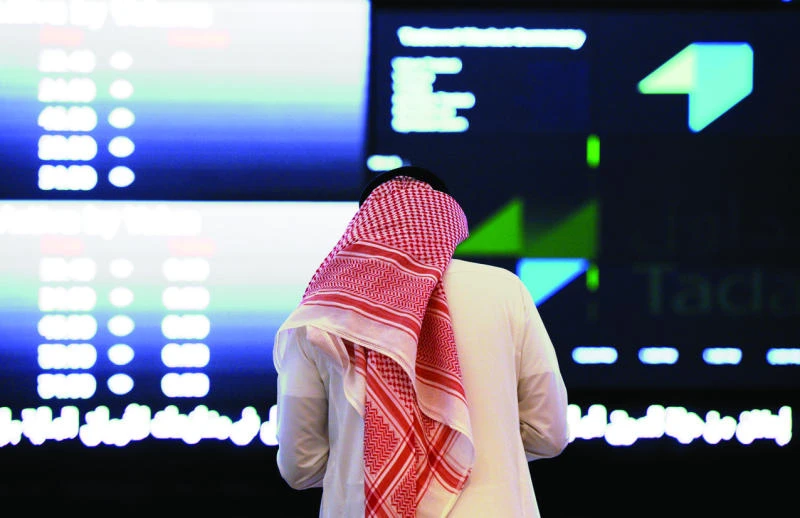
DUBAI: Stock markets across the Middle East fell on Sunday after oil prices dropped again and Saudi Arabia, heavily influenced by the petrochemicals sector, led losses, hitting a four-month low.
The main Saudi Tadawul All-Share Index sank 3.2 percent to 8,807 points, its biggest daily loss since late March, with nearly all stocks in the red. It has no significant technical support left above the April low of 8,502 points.
Petrochemicals giant Saudi Basic Industries Corp. tumbled 3.9 percent. The company's profits have been hurt by the drop in oil prices over the last 12 months, and the commodity's fresh weakness is a concern for investors.
US crude posted its biggest monthly drop — 21 percent — since the 2008 financial crisis on Friday after a string of losses in July triggered by China's stock market slump and signs that top Middle East producers were pumping crude at record levels. Brent lost 5 percent on the week and 18 percent on the month.
Other companies in the petrochemicals industry also fell sharply, and the sector's index was down 4.4 percent.
Red Sea Housing Services tumbled to its daily 10 percent limit after second-quarter profit dropped 58 percent on lower sales and margins and the firm announced delays in the implementation of some projects.
Mediterranean and Gulf Insurance & Reinsurance Co. was also down 10 percent after swinging to a loss in the second quarter, which it blamed on higher claims.
In the latest monthly Reuters survey of leading Middle East fund managers, published on Thursday, 40 percent said they expected to cut equity allocations to Saudi Arabia in the next three months and just 7 percent to increase them. That compared with 27 percent intending to decrease allocations and 13 percent to increase them in the June survey.
With the exception of Turkey, Saudi Arabia was seen as the most negative major Middle Eastern equities market, because of high valuations and the heavy weighting of petrochemicals.
Another factor that may have hurt the sentiment of Saudi investors was a fresh restatement of earnings by telecommunications firm Mobily for the last 27 months; it slashed total profits over the period by nearly SR1.76 billion ($470 million) in its latest attempt to resolve an accounting scandal.
Shares in Mobily, which also posted a loss of SR900.9 million for the second quarter on Sunday, have been suspended since June and will resume trading on Monday.
Dubai's bourse fell 0.9 percent to 4,104 points and property developer DAMAC was one of just a few gainers, jumping 2.6 percent. The company said on Sunday its board would discuss second-quarter results and a dividend payout on Tuesday.
DAMAC's board will also discuss the adoption of the IFRS 15 accounting standard, which allows developers to recognise off-plan sales earlier than under current practice.
Meanwhile another property-related firm, mortgage lender Amlak Finance, tumbled 8.5 percent and was the most traded stock in Dubai. Amlak had gained as much as 150 percent since it resumed trading in June after a multi-year suspension, and many fund managers and analysts saw the gains as highly speculative.
Elsewhere in the Gulf, Abu Dhabi's bourse lost 0.9 percent to 4,791 points while Qatar fell 1.1 percent to 11,651 points. Heavyweight Industries Qatar, whose earnings are sensitive to oil prices, also fell 1.1 percent.
Egypt's stock index inched up in early trade but then turned negative under the pressure of selling by Arab retail investors and closed 0.4 percent lower at 8,158 points.
Commercial International Bank, the country's biggest listed lender, fell 2.4 percent despite reporting second-quarter results last week that were in line with analysts' forecasts.
But Ezz Steel rose 2.0 percent after Egyptian media reported that the state energy company had contracted to obtain a floating liquefied natural gas terminal that would supply the industrial sector. Ezz and other manufacturers have been suffering from severe energy shortages.
Petchem stocks pull Tadawul index to 4-month low