The last world economic forecast released by the International Monetary Fund (IMF) depicts not only a grim picture about the economic conditions that people are experiencing first hand anyway, but more seriously it points to the lack of vision and determination to come up with durable solutions.
Moreover, the cycle of economic activity that shifts between boom and bust is a norm of life, but two things were usually there to help speed up the return to recovery that is a leadership able and willing to take the necessary measures and forge the way out. The other factor is the presence of an alternative economy that leads other economies out of the recession.
Both are missing this time and that is why risks of slowdown stand good chance thanks to this political uncertainty.
The train that usually takes the lead, namely the United States and the euro zone are in a messy situation. To complicate things more is the typical attitude of politicians to give more emphasis to the ballot box and the second round of elections, a factor that weakens the resolve to take the painful measures to face up to growing debt and the need to take cuts in public spending. That is why technocrats were given sometimes the initial task of handling the basic rescue package so as happening now in Italy.
The IMF report was very specific in its worries regarding the United States, the world top economic power. It warned that it is only weeks before reaching what it described as a fiscal cliff, where a combination of tax increase and a mandatory federal spending cut could send the country back into recession, with expected domino impact on the world economy. To make things worse the whole American political class is paralyzed because of the presidential elections that seem to be concentrating more on personalities than on issues, substance or policies to get the United States out of this quagmire.
Though the Asians led by China and India used to fuel economic activity, they are slowing down because they depend on exports and given the contraction hitting other economies that export drive has to slowdown.
That is why the IMF lowered its forecast in just six months and now expects the world economy to grow only 3.3 percent this year and 3.6 percent next year, against 3.5 percent and 3.9 percent predicted during the spring meetings. That downward forecast is met with growing pessimism and new estimates suggest that there is a 15 percent chance of a recession in the United States, 25 percent chance for Japan and over 80 percent for the euro zone.
The same is expected to happen in the Middle East and North Africa region, whose economic growth is forecast to be held back more or less. But generally speaking, the oil producing countries were mainly doing relatively good and particularly Libya that managed to restore its oil industry back to normal export levels.
But again the performance of the oil industry is related to a large extent to consumers. And unless those consumers are in good shape economically their need for oil is slated to deteriorate. One positive point is that the main oil consumption now is centered in emerging markets with better economic outlooks, not the mature ones.
On the other hand there is the factor of the economic fallout of the Arab Spring and to whether the region will go on its way to have some kind of a political stability or lack of it. The answer to that question will decide whether the growth rates registered will continue or not.
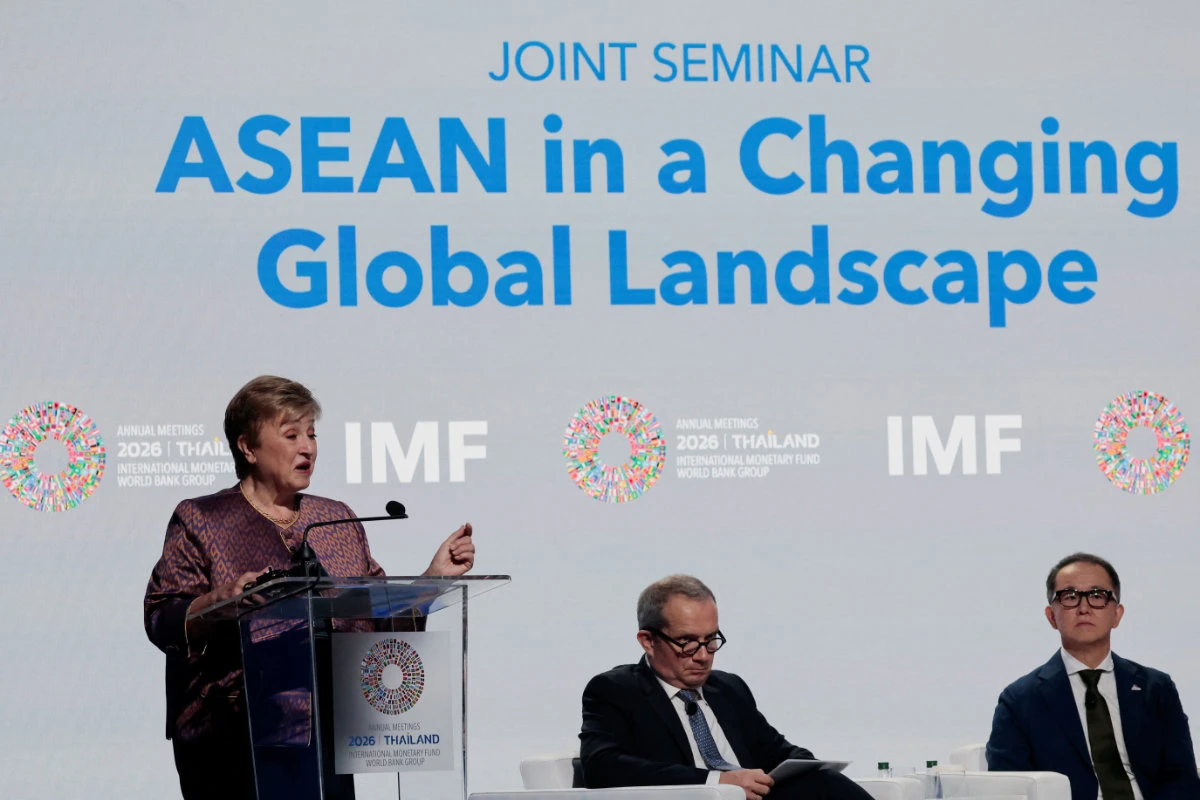
In releasing the IMF forecast, Christine Lagard, the fund's managing director spoke of the need for an action to lift the veil of uncertainty. She summed up the situation by saying that more cooperation is needed as the task of securing sustainable growth has become more complex given the fact that new players are emerging, while traditional one are assuming different roles.
And that seems the gist of the problem. Usually regional and international forums highlight the need for cooperation on the assumption that all countries are equal and they need to share and shoulder responsibilities together.
The reference to the new and emerging fact of new players and traditional ones assuming new role puts that typical talk about cooperation under a new spotlight. It is no longer business as usual. The structural changes taking place in human society in every field from economy to politics to social life requires a new and fresh outlook. This is the third revolution in human history.
After the agricultural and industrial ones, we are right now in the middle of the third that is the communication revolution, which is shaping almost aspect in our lives, but still have not got the right institutions to reflect it. And that is why we have this confusion and uncertainty.
Roots of uncertainty