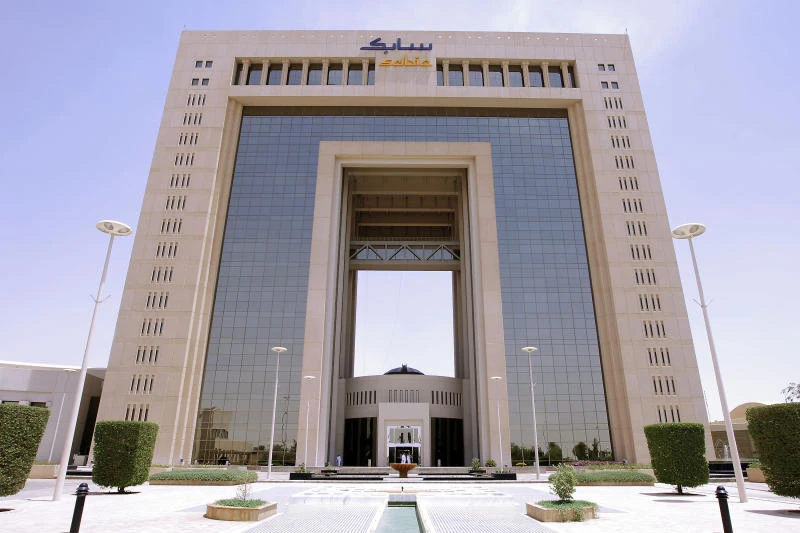
The Tadawul All-Share Index (TASI) rose 1.1 percent on Tuesday as investors' attention shifted back from the property sector to banks and petrochemicals which had traded nearly flat in the previous few sessions.
Oil prices are also providing support to heavily weighted petrochemical stocks. Tadawul’s petrochemical industries index was up 1.59 percent. Petrochemical stocks have gained 10.53 percent so far this year.
Brent was trading firmly above the $60-a-barrel support level on Tuesday.
Reacting to market developments, John Sfakianakis, Middle East director at Ashmore Group, said: “Saudi Arabia is much better protected to weather the fall in oil revenues which is the principle downside risk to its macro outlook, than many other oil producers.”
His comments came as Fitch Ratings said that lower oil prices would put pressure on the Kingdom’s fiscal position. It said the central government deficit of 2.3 percent of GDP in 2014 was the first since 2009.
Fitch estimates a 2014 fiscal breakeven oil price (Brent) of $102 per barrel (excluding capital spending the breakeven price was $63/barrel).
Fahad Alturki, chief economist and head of research, at Jadwa Investment, commented: “Short-to-medium-term oil market dynamics should not have a major impact on the overall strategy of diversifying the Saudi economy.”
He added: “The government will remain committed to key large-scale industrial projects. Economic diversification has been emphasized once again in the 2015 budget announcement as spending on infrastructure has been kept elevated.”
He added: “The ongoing works in King Abdullah Economic City (KAEC), Ras Al-Khair Industrial Complex and Jazan Economic City are just some examples of the Kingdom’s commitment in developing economic clusters that will attract different industries. Those industries will help diversify the economy both by increasing the share and productivity of nonoil sectors and by raising the utilization rates of mineral resources.”
Highlighting the strengths of the Saudi economy, the Fitch Ratings statement added: “Economic growth is greater and less volatile than for peers. Nonoil growth is even faster and has outpaced oil sector growth for 10 of the past 11 years.”
It added: “The banking sector is well capitalized and well regulated. Saudi Arabia is ranked ‘a’ in Fitch’s banking system risk indicator, below only Australia, Canada and Singapore. At end of 2014, NPLs were just 1.3 percent, capital adequacy 18 percent and coverage 163 percent.”
In his comments to Arab News, Sfakianakis also said: “Saudi Arabia has managed to pay over the last few years its debt and it has very high reserves assets. No doubt a balancing act between what is spent, and how it adjusts for its spending would have to be found. Debt as well as reserve assets would be deployed as long as there is a need.”
He also said that Saudi Arabia has saved in the good days for such an event and its picture looks pretty healthy compared to where the country was in the late 1980s during the first oil slump.
According to market data, the Saudi stock market has gained 13.85 percent so far this year.
At the end of February 2015, TASI closed at 9,313.52, increased 434.98 points or 4.90 percent over the close of the previous month.
According to Fitch Ratings, the Saudi government is considering a variety of financing strategies for 2015, based on drawing down reserves and debt issuance.
In Fitch’s view this represents a change of strategy, as previously the government appeared focused on paying down all remaining outstanding debt.
A regional analyst, who wished to remain anonymous, said: “The Saudi economy has developed strong nonoil growth drivers and is well cushioned against the effects of a weak oil cycle. The country benefits from large reserves and minimal debt. Among other things, Saudi issuers — and even the sovereign, if needed — are well positioned to tap the international and regional capital markets. This can further help smooth the cycle.”
Basil Al-Ghalayini, CEO of BMG Financial Group, commented: “The issuance of sukuk for major infrastructure projects will play a key role in financing government deficit during 2015 and 2016.”
The Fitch statement said: “Saudi Arabia has ample buffers and can comfortably finance the forecast deficits. The 2014 deficit was financed by drawing down government foreign assets managed at the central bank (Saudi Arabian Monetary Agency). SAMA net foreign assets fell by $13 billion to $724 billion over the final four months of the year; most of this fall occurred in December due to government spending patterns.”
Diversifying financing sources by re-energizing the debt market would ease the burden on the foreign asset portfolio, according to Fitch Ratings.
Fitch’s 2015 deficit projection is equivalent to $77 billion, around 10 percent of SAMA net foreign assets.
Sukuk based on specific projects are also in prospect, with the ports the most likely candidate.
Falling reserves and rising debt will pull down sovereign net foreign assets to just over 100 percent of GDP by end-2016.
General government deposits are large (55 percent of GDP at end-2014) and provide a further cushion. These are primarily owned by the pension funds and are unlikely to be used for direct deficit financing, although they are being drawn down to finance some multi-year projects.
Saudi investors upbeat on petchem, banking stocks