KUALA LUMPUR : Small and medium-scale enterprises (SMEs) need to embrace technology to enhance their competitiveness and attract a higher quality of employees.
“SMEs need to start becoming more technically enriched, so that they can enhance ‘technopreneurship’,” said Dr. Jassem Bisharah of Kuwait.
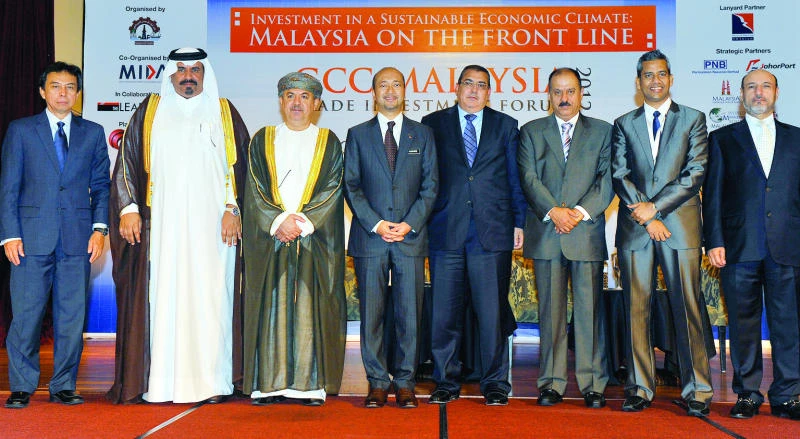
He made the remarks during a panel discussion titled “SME the new economy generator and emerging opportunities,” at the GCC-Malaysia Trade Investment Forum 2012.
The forum is aimed at exploring and boosting trade opportunities between Malaysia and GCC, which groups Saudi Arabia, Bahrain, Kuwait, Oman, Qatar and the UAE.
Bisharah, who is with the Kuwait Chamber of Commerce and Industry, also said proactive steps needed to be taken to turn entrepreneurs into “technopreneurs.”
“There is a need to increase the number of technopreneurs, who can help enhance the technology content of SMEs,” he said, adding that local universities should step in to make this into a possibility.
Technopreneurs are essentially entrepreneurs working in technology-based industries.
According to Bisharah, the “seven pillars of SME development” are the need to have a market-driven business, adequate financing and guarantee schemes, having added value, sustainability, competitive management schemes, a technology-capturing base and knowledgeable entrepreneurs.
Young Entrepreneur Organization Malaysia president Agil Faisal Ahmad Fadzil, meanwhile, said various initiatives were being undertaken by his country’s government to boost the competitiveness of SMEs. He was also a panelist at the discussion.
Citing the SME Masterplan (2012-2020), he pointed out that the government aimed to boost SME gross domestic product contribution from 32 percent in 2010 to 41 percent by 2020.
“With the various initiatives under the Masterplan, we expect the business environment (for SMEs) in Malaysia to improve,” he added.
Bisharah recalled the far-sighted and important initiative of Kuwaiti Emir Sheikh Sabah Al-Ahmad Al-Sabah in the Arab Economic Summit in Kuwait in 2009 to set up $ 2 billion fund to support SMEs in the Arab countries.
“The GCC states need to support SMEs as a part of its long-term strategy to diversify national economy and state revenue sources,” he said.
The two-day forum is attended by top GCC officials and prominent personalities, including GCC Chambers of Commerce and Industry Union Chairman Khalil Al-Khawanji and chairman of Qatar’s Commerce Chamber Sheikh Khalifa bin Jassem Al-Thani, alongside a host of decision makers from Malaysia.
The high-impact event showcases investment opportunities in both Malaysia and GCC states.
The forum provides a critical assessment of current trade and investment climate in Malaysia and encourages multilateral cooperation between international investors and role-players, academic institutions, business practitioners, and policy makers.
Malaysia has been considered as a valuable trading partner by GCC countries and the Federation of GCC Chambers over the years had played an important role in promoting Malaysia’s trade and business opportunities to the Arab world.
“With its healthy political, social and economic conditions that favor investment appetite, Malaysia is indeed a preferred destination of investment and can be considered a regional economic hub for ASEAN trade expansion for the future,” one delegate said.
SMEs urged to gain from high-tech opportunities