In Saudi Arabia, snacking has long since moved beyond the home kitchen and the supermarket shelf. Festivals, sporting events and entertainment venues are creating dozens of new occasions for grab-and-go food.
According to the General Entertainment Authority of Saudi Arabia, the Kingdom hosted 1,810 events in 2024, drawing 76.9 million visits. For retailers, that scale translates into steady demand for straightforward formats, eye-catching packaging, and an assortment that can be adapted to different venues and audiences.
The shelf follows the leisure scene
A family stocking up for the week, a visitor to a city festival, and a young shopper looking for a new flavor all bring different expectations to the same aisle. That is why importers look beyond a single pack: what matters is whether a manufacturer can work across several formats, refresh its lineups, and offer products suited to a specific consumption scenario.
Saudi businesses looking for such suppliers can turn to the “Made in Russia” national brand promotion program, run by the Russian Export Center.
The program combines voluntary certification, international trade shows, business missions and meetings with potential partners. This gives an importer or retail chain the chance to research a manufacturer in advance, request product documentation, and move straight to discussing assortment, packaging, volumes and delivery terms.
Certification under the program is carried out in the category a company chooses to pursue. This gives a foreign partner additional information about the product even before negotiations begin. Yet the value of the whole ecosystem goes beyond a single mark on the packaging: it shortens the path from interest in a Russian product category to direct contact with a specific supplier.
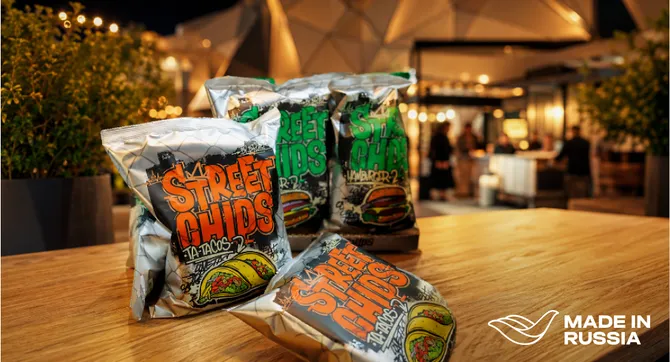
One of the program’s participants is the Russian company STAMBA and its chip brand BRUTO. The KRAFT line is made from natural potatoes with no flavor or aroma enhancers. Alongside it, the company is growing lines built for other occasions: Street Chips pairs street-food flavors with graffiti-style packaging design, while Asia Mix is built around popular Asian flavors.
For a Saudi buyer, this opens up several possible entry points. The more understated craft line could suit a regular shelf placement, while the bolder ranges are a better fit for youth-oriented retail, festivals and seasonal promotions. The company already works with retail chains and distributors abroad, and ranked fifth by sales in Russia in 2025.
The other side of the snack shelf is represented by the company Salbro with its CHI-WA-WA gummies made with added fruit juice. The manufacturer produces several lines and packaging formats, uses bold design, and regularly refreshes its flavors. The product can be aimed at families, young shoppers, and stores where quick visual recognition matters.
Salbro has been exporting its products for more than three years, and that track record matters to a potential partner: the company is already familiar with international logistics and working with distributors. The extruded CHI-WA-WA gummies have also received certification under the “Made in Russia” national brand.
A range for different occasions
BRUTO and CHI-WA-WA occupy different parts of the snack shelf. Potato chips answer the demand for a salty snack, while gummies cater to the habit of choosing a small sweet treat. Together, these categories give a Saudi importer room to discuss a trial assortment for a supermarket, a convenience store, or an entertainment venue.
The next step depends on the market itself: choosing flavors, checking labeling and ingredient requirements, and deciding on a delivery format and launch venue.
The “Made in Russia” program gives local businesses a clear route to manufacturers and the chance to handle this groundwork directly. That is how eye-catching packaging turns into a business proposal tailored to a specific Saudi buyer.