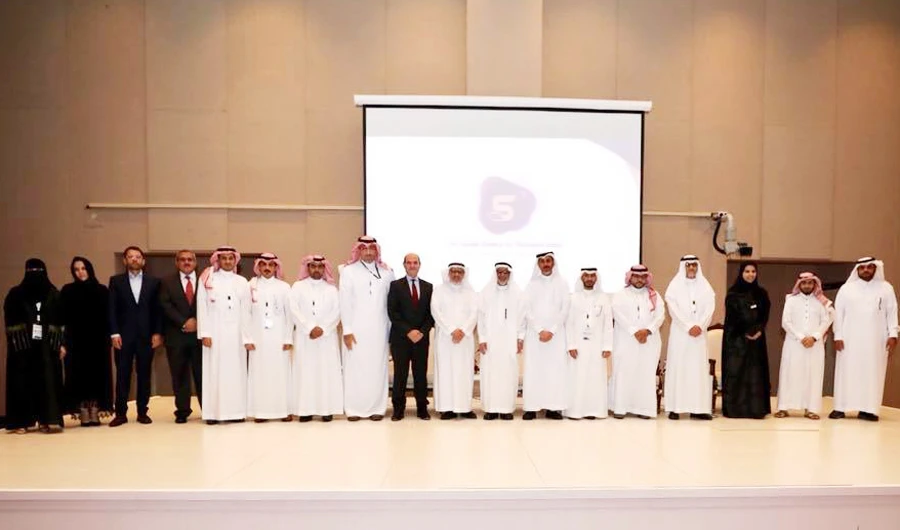
King Saud University’s 5th Scientific Meeting for Medication Safety aimed at promoting the safe use of medications using the local and global best pharmacovigilance practices.
The event titled “Guidelines for Good Pharmacovigilance Practice and Signal Management Update,” was held in Riyadh under the patronage of Vice-Rector for Graduate Studies and Scientific Research at King Saud University Dr. Khalid Alhumaizi.
The meeting was attended by a number of senior officials including Vice Rectorate for Planning and Development Dr. Yusuf Abdo Asiri, and Vice Dean of Research Chairs Dr. Abdulhamid Al-Elewi, along with senior health care policy officials, clinical leaders and researchers, medication safety officers, postgraduate researchers, as well as quality improvement professionals.
The scientific program further included a range of panel discussions and workshops where participants from local companies, hospital groups as well as government authorities collaborated together on the importance of knowledge transfers and information sharing in this crucial field to benefit patients.
Dr. Ulrich Vogel, head, GPV Strategic Data Analysis, Boehringer Ingelheim and one of the main speakers of the event, said: “Patient safety is of utmost importance to Boehringer Ingelheim. We actively monitor the benefit-risk profile of our products at all stages of development and marketed use, to reduce known risks to an acceptable minimum, and to define, communicate and minimize emerging risks as quickly as possible together with the concern. We are committed to improving the patient experience through the safe and appropriate use of our medicines, supported by the diligent work of pharmacovigilance professionals around the world.”
Professor Mohamed Meshref, regional medical and regulatory director, Middle East, Turkey and Africa (META) at Boehringer Ingelheim, said: “Patient safety is a global priority. At Boehringer Ingelheim, we take a proactive and thorough approach to safety monitoring, profiling and reporting. Our approach to safety monitoring, profiling, and reporting enables us to identify potential safety concerns early and ensure compliance with today’s ever-changing regulatory environment. We work with our partners in Saudi Arabia to ensure that we work collectively toward making health care safer through awareness programs, scientific lectures and workshops as well as activities that engage both patients and health care professionals.”
The pharmacovigilance system in Saudi Arabia has remarkably improved during the past few years. Several initiatives have been taken to improve the system’s performance, including the initiation of pharmacovigilance guidelines, enhancement of communication and reporting tools, training sessions for concerned staff and health care providers, and compliance from stakeholders.
A number of speakers from the Saudi Food & Drug Authority, and the National Pharmacovigilance and Drug Safety Center also participated in the event.
sponsored
KSU hosts 5th Scientific Meeting for Medication Safety