A rooftop water tank, an oil storage tank and a pipeline may appear to be entirely different engineering assets, but under the Saudi sun they face a common problem. Metal and concrete absorb significant amounts of heat, surfaces overheat, and owners are forced either to spend more energy on cooling or to accept product losses during storage.
For Saudi Arabia, this is a matter of scale. According to KAPSARC estimates, a 1 °C rise in average temperature could increase electricity consumption for cooling by 4.8–12.9 percent, depending on the region. For the Central Province, where Riyadh is located, the projected increase is 8.3 percent.
In industry, cooling costs are compounded by the need to protect personnel, safeguard equipment and maintain stable processes. As a result, the market is looking for materials that can be applied to operating facilities without complex structural modifications.
One millimeter of coating instead of a multilayer structure
The Russian research and production association Bronya manufactures liquid ceramic thermal-insulation coatings that can be applied with a brush, roller or specialized airless sprayer. Once dry, the coating forms a thin insulating layer suitable for façades, roofs, pipelines, tanks and industrial equipment.
According to the manufacturer, a 1 mm layer of its flagship material can provide a thermal-insulation effect equivalent to up to 50 mm of mineral wool. This format offers a practical advantage: the coating follows the geometry of complex components while adding virtually no load to the structure. This is especially important where conventional insulation is difficult to secure or must be frequently removed for equipment inspections.
In Saudi Arabia, the material is already being used, among other applications, on storage vessels and rooftop water tanks. At the initiative of the company’s partners in Saudi Arabia and Bahrain, the Bronya Classic NG coating was tested at the Italian EELab laboratory in accordance with the ASTM E1980-11 standard. The resulting solar reflectance index was 92. For an asset owner, this indicates that the surface absorbs less radiant heat. The actual economic effect, however, depends on the structure, coating thickness and operating conditions.
In oil and gas, claims face extensive testing
Entering an industrial facility does not begin with a marketing presentation. After representatives of the Bronya research and production association met with engineers from Saudi Aramco during two business missions, the process continued with testing, trial applications, an audit and technical consultations.
In 2025, Bronya obtained TÜV certification for the use of its products in Saudi Arabia’s oil and gas sector. The company and its local partner are now continuing work to introduce the material at Saudi Aramco facilities.
This sequence is important for a foreign supplier. Even a technology with a track record in other countries must demonstrate its performance again under local conditions and fit into the procedures of a major client. The manufacturer supplements its documentation with practical knowledge transfer: it holds application seminars for Saudi distributors, reviews international case studies and trains teams to monitor results on site.
The national brand starts the review; industry documents continue it
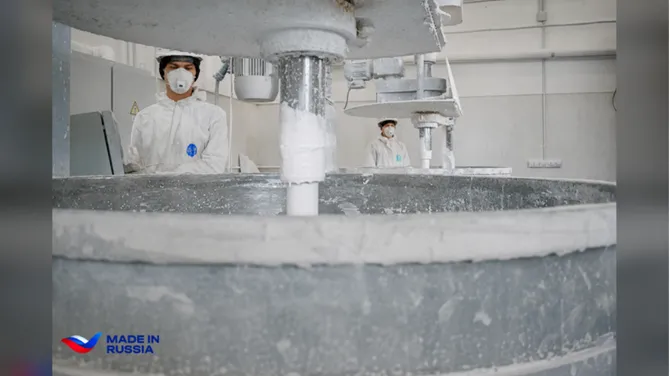
The Bronya Classic coating has received certification under the “Made in Russia” national brand. The program, implemented by the Russian Export Center, brings together manufacturers whose products have been verified against the brand’s criteria and presents them to international markets through business missions, exhibitions and information platforms.
For a Saudi partner, the “Made in Russia” mark serves as an initial layer of trust: it helps verify the product’s origin, connect the supplier with the national export-support system and demonstrate the supplier’s readiness to operate internationally.
It does not replace TÜV, ASTM or the requirements of a specific client. On the contrary, Bronya’s experience shows how the documents form a chain: national-brand certification opens the dialogue, independent testing confirms specific characteristics, and a local audit determines whether the material is suitable for a particular facility.
This approach matches the stage of development of Saudi Arabia’s construction and industrial markets. The Saudi Green Initiative aims to reduce emissions by 278 million tons per year by 2030, while the industry is moving from broad sustainability promises to solutions whose results can be measured on a specific roof, pipe or tank.
For a Russian manufacturer, the export potential here is linked not only to supplying the coating. It also includes engineering calculations, training the local team, trial application and monitoring performance in operation. This is the path that turns a technology from a foreign novelty into a practical tool for a hot climate.