- Executives must balance efficiency gains with human judgment, accountability and trust
RIYADH: As artificial intelligence reshapes the modern workplace, executives and organizational leaders are increasingly looking to AI to automate workloads, improve efficiency and support decision-making. But before organizations embrace the technology, critical questions remain: What factors should leaders consider, and how will AI affect employees?
“For leaders AI can be incredibly useful for processing information, exploring different perspectives, structuring ideas, identifying patterns and accelerating some of the more repetitive parts of knowledge work. What I find most valuable is the time it can give back to us for the work that requires human judgment: making decisions, understanding people, challenging assumptions and thinking strategically,” Mariana Ignatov, CEO of LEORON Institute in Saudi Arabia told Arab News.
“But I am also conscious that faster does not automatically mean better. A leader still needs to question the output, understand the context and remain accountable for the final decision,” she explained.
With a decade of regional experience in workforce capability, Ignatov approaches AI through a human-capital lens, focusing on responsible organizational adoption, executive understanding and preparing employees to work alongside emerging technologies.
Asked what factors leaders should evaluate when adopting AI in the workplace, Ignatov noted, “Technology is often the easiest part.”
“The more difficult questions are organizational: Do we have the right data? Do employees understand why we are introducing the technology? Are roles and workflows being redesigned? Who is accountable for AI-supported decisions? Do people have the skills to challenge an AI output rather than automatically accepting it?”
Trust, she said, is another critical consideration.
“If employees feel AI is simply being introduced to monitor them or replace them, adoption becomes much harder,” she underlined.
Ignatov also stressed the importance of clear communication throughout implementation.
“Leaders need to communicate very clearly about the purpose of AI and involve employees in understanding how their work is going to change.”

“Transformation works much better when people feel they are participating in it rather than having it done to them.”
Accountability must also remain firmly with leadership, she said.
“Executives cannot outsource accountability to an algorithm. Leaders must understand the data behind AI systems, test for bias, monitor outcomes, and retain meaningful human oversight for high-impact decisions.”
Ignatov also distinguished between experimentation and broader organizational transformation.
“AI experimentation can begin anywhere in an organization, but AI transformation has to involve leadership.”
Continuous upskilling, she added, is equally important as technology evolves.
“The pace of technology has fundamentally changed the relationship between work and learning.”
“Continuous learning cannot remain an employee benefit. It is becoming part of the infrastructure businesses need to remain competitive.”
Tahir Latif, a chief trust officer with more than 16 years of experience in data privacy, digital trust and technology governance, has focused increasingly in recent years on AI governance.
He identifies “responsible delegation” as the defining executive skill for AI implementation.

“Leaders have always delegated to people and processes; they must now decide what may be delegated to a system, under what conditions and with what limits.”
“That requires strategic judgement, data and evidence literacy, governance literacy and organizational design skills. Executives should be able to challenge the quality and relevance of data, understand uncertainty, identify conflicts between business objectives and human consequences, and establish clear ownership across the AI lifecycle.”
Latif also stressed that “Not every company needs AI in every process, and some decisions should not be automated.”
“Every company does, however, need an informed position on AI. Falling behind is not simply failing to purchase the latest model. The bigger risk is failing to learn which decisions AI can improve, which it may damage and what capabilities are needed to tell the difference,” he stated.
“Executives do not need to understand every line of code. They should, however, be able to explain why a system is being used, what it is permitted to do, where it is likely to fail, who may be affected and who is accountable when intervention is required,”
Echoing Ignatov’s views, Latif highlighted the importance of communication across an organization.
“Leaders must be able to discuss AI with technical specialists, regulators, employees, customers and boards without reducing the subject either to technical language or to empty reassurance. That is the difference between an executive who uses AI and one who is capable of governing it.”
Latif uses AI regularly but treats it as a tool to augment human judgment rather than replace it, emphasizing that “the discipline surrounding AI use matters.”
“I apply clear data boundaries, do not place confidential or personal information into unapproved systems, and independently verify material claims. I also consider whether the answer reflects the relevant legal, institutional and cultural context.”
“A plausible response is not necessarily a correct or appropriate one,” he said.
“Leadership has an essential role because leaders set the purpose, risk appetite and accountability. However, implementation cannot be designed by executives alone. The people who understand the workflow, the data and the individuals affected by the decision must also be involved.”
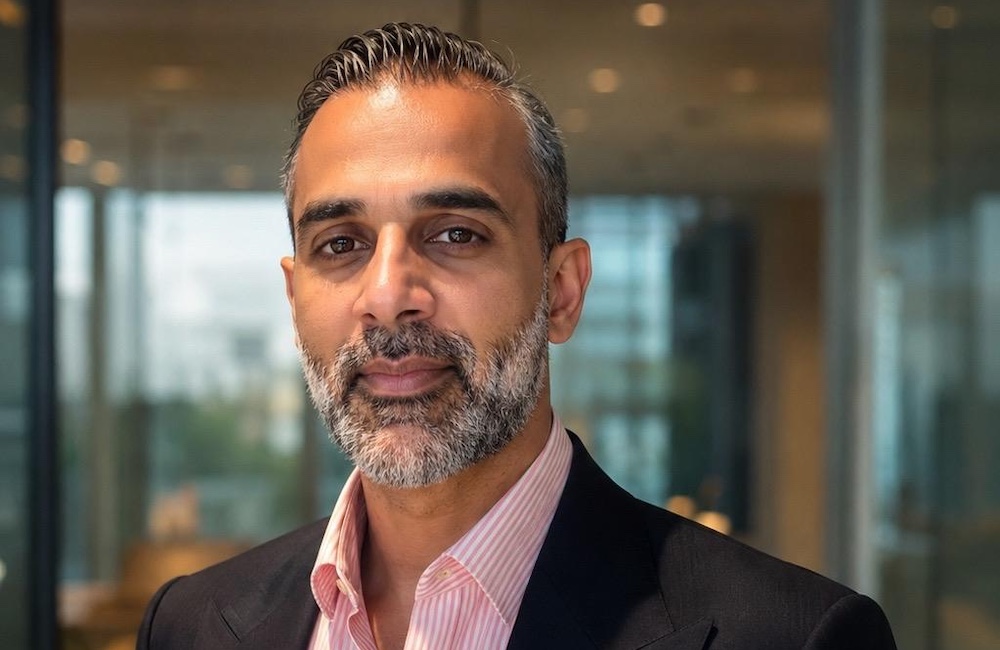
Tasawar Ulhaq, founder and CEO of Basirah, an investment company with a portfolio of operating and consumer businesses, including Incorporated, has worked with AI tools since ChatGPT was released.
“Today, roughly 60 to 70 percent of my information intake comes through AI tools rather than search.”
“We run at least four AI tools at full capacity, around the clock,” he explained.
“The most useful thing we’ve built is an autonomous morning briefing. Every day it scans emails, pending tasks, existing and new commitments, and tells me where things actually stand. In practical terms, AI acts as our operations head, our finance head and our marketing head at once, monitoring internal and external resources, and tracking client delivery stage by stage so nothing slips,” Haq said.
For Haq, AI implementation starts at the top.
“It begins with leaders. Not because leaders are best placed to use the tools, but because nobody below them can authorize the change.”
He identified three main obstacles to workplace AI adoption, in order of difficulty: confidentiality, training time and over-reliance.
“We handle sensitive corporate and structuring work, so this is the one we’ve thought hardest about. Data is cleaned and filtered before it enters any of our systems, partly for confidentiality, partly because it controls token cost.”
“Our AI is used to optimize how we work internally; it is not used to train on client material,” he stated.
Training employees to use AI effectively can also require significant investment.
“Not everyone knows how to use these tools. It costs real time to train people and build the infrastructure around them, and much of that isn’t AI at all, it’s systems and processes, so people know how to use the tools correctly in the first place.”
The third challenge is avoiding over-reliance on AI.
“Knowing how to use a tool without becoming dependent on it. I’ve seen people in this industry treat AI as complete expertise. It isn’t, not yet.”
As an experienced leader, Haq believes executives need to be willing to “get their hands dirty” in an AI-powered workplace and engage directly with their teams’ technology and coding work.
“You cannot lead an implementation you’ve never touched,” he said.
Like Latif, Haq sees judgment as central to effective AI adoption — particularly understanding the role of human oversight and knowing when to use an AI tool and when not to.
He also underlined the importance of security and understanding what information can be entered into an AI model and what must remain outside it.
Haq further emphasized the need for continuous training, noting that “the tools change faster than the training cycle.”
“Any organization treating AI training as a one-time onboarding exercise is training people for a version of the tools that no longer exists,” he said.