- Government bill would block property transactions in areas under Israeli occupation amid fears displaced residents could be pressured into selling land cheaply
- Legal experts warn the proposed restrictions might violate constitutional property rights; officials say informal deals could take place beyond state’s ability to monitor
BEIRUT: A Lebanese government proposal intended to prevent the sale of property in Israeli-occupied areas of southern Lebanon has yet to reach parliament, despite mounting concern that prolonged displacement, economic hardship and uncertainty about the border could leave landowners vulnerable to pressure to sell.
The draft law, proposed by Finance Minister Yassine Jaber and approved by the Lebanese Cabinet in mid-September, would prohibit property sales in areas occupied by the Israeli military.
It was introduced amid fears that residents of border communities could be exploited while unable to return to their homes and land. Jaber warned that Lebanon’s economic crisis could be used to entice property owners to sell at heavily discounted prices, with ownership potentially transferred later to parties linked to Israel.
Unverified reports have circulated suggesting that people using international telephone numbers had contacted landowners in the western sector of southern Lebanon with offers to purchase their properties.
Tarek Mazraani, coordinator of the Gathering of Residents of Southern Border Villages, told Arab News there had also been reports of property sales in villages devastated by Israeli attacks.
“There is talk circulating among people about sales that have taken place in destroyed villages in favor of wealthy Lebanese individuals in the Naqoura area, but nobody can confirm the information,” he said.
“If such sales have occurred, they could be linked to the American-Israeli proposal for an economic zone along Lebanon’s border.”
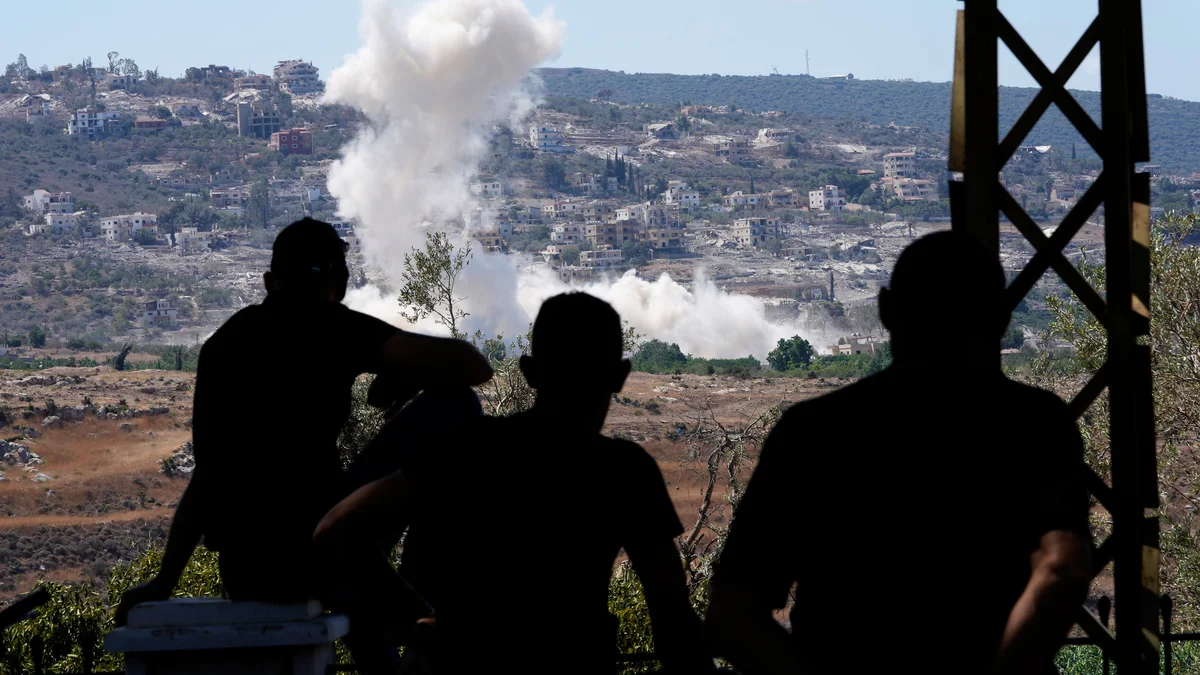
Israeli forces have continued to strike areas in Southern Lebanon to which residents were attempting to return, despite a ceasefire agreement between Israel and Lebanon that came into force on Nov. 27, 2024.
American-Israeli proposals for a broader resolution have included references to an “economic zone” in southern Lebanon, without explicitly addressing the return of displaced residents.
Israel has offered little indication that it intends to withdraw fully from southern Lebanon following two wars against Hezbollah, as its forces continue to mount military operations there and maintain positions inside what it describes as a security zone.
Israeli officials have linked withdrawal to the disarmament of Hezbollah, a connection that was once again apparent during Lebanese Prime Minister Nawaf Salam’s meetings in Washington this week, during which his government faced pressure to take further steps on the weapons issue.
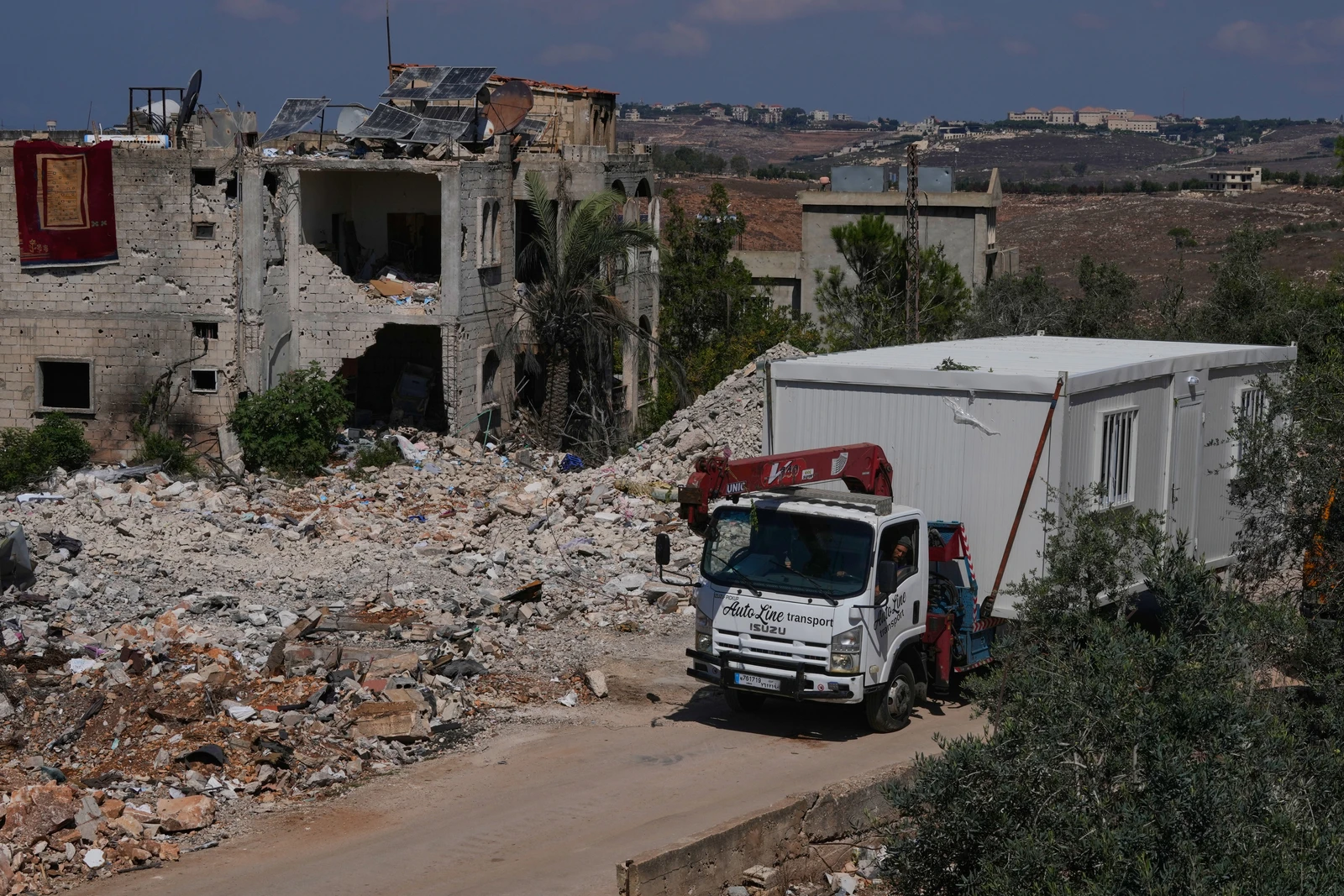
Israel is also seeking to consolidate what has been described as a buffer or “yellow zone” along the border. The area extends between about 5 and 10 kilometers into southern Lebanon and has become an active military zone, similar in concept to the so-called yellow line in Gaza. Displaced residents are effectively prevented from returning to many areas because of the threat of Israeli strikes, while demolitions continue in a number of occupied villages.
Dozens of Lebanese towns and farms across the South and Nabatieh governorates fall within the affected area. They include communities in the districts of Bint Jbeil, Nabatieh, Marjayoun, Tyre and Hasbaya, where large numbers of residents remain unable to return.
Concerns over land ownership have intensified as destruction has erased physical landmarks, and displaced residents for extended periods of time.
Mazraani said the situation now was fundamentally different from Israel’s occupation of southern Lebanon between 1978 and 2000.
“At the time, people did not abandon their villages, they did not need money badly enough to sell their land, and their homes had not been destroyed,” he said.
“Today, the situation is different. Some people can no longer even identify their land or their homes from satellite images. The landmarks of entire villages have disappeared.”
There are also fears that transactions could be conducted through powers of attorney or intermediaries representing non-Lebanese buyers, who could later resell property to Israeli parties.
Riad Al-Asaad, director general of the South Reconstruction Company, and a vocal campaigner against land sales in the border region, warned that the Lebanese state needed to act before irreversible changes took place.
An Israeli settlement movement called “Uri Tzafon,” or “Awaken the North,” recently advertised land and property in southern Lebanon for sale, encouraging prospective investors to “head north.”
The movement published a map covering communities in Lebanon south of the Litani River, assigned Hebrew names to Lebanese towns, and advertised plots for sale from about 300,000 shekels, approximately $80,000, each. It described the land as the location of “future settlements.”
The map extended from the Litani River’s Mediterranean outlet east toward Kfarkila, and included areas in western Bekaa, Hasbaya and the Shebaa Farms, as well as the major southern cities of Tyre, Bint Jbeil, Marjayoun and Hasbaya.
Al-Asaad accused Israeli authorities of a deliberate policy of destruction, especially in Shiite areas.
“Israel adopted a scorched-earth policy, in the Shiite villages in particular, to ensure the success of its policy of preventing people from returning completely,” he told Arab News. “It bulldozed land-registry offices and took property records. It is a plan to erase everything.”
Even residents who are determined to remain connected to their villages are under immense economic pressure. Mazraani said that families in the border region remained deeply attached to their land, but two years of displacement, destroyed homes and lost livelihoods were testing that commitment.
“Life has to continue and we cannot know what economic hardship will do to people who have been left to their fate,” he added.
Many properties in southern Lebanon are also held under older forms of documentation rather than definitive modern title deeds. Mazraani said corruption, disputes, bribery and irregularities involving local officials had further complicated ownership records in some villages.
“The state cannot monitor everything that happens in property sales if transactions take place outside official departments,” he added.
“Deals could be carried out through indirect means, including falsifying the date of a sale or using intermediaries and companies.”
Another source of concern is the large number of Lebanese emigrants who own property in the south.
“There are dozens of expatriates from the border region whose villas and homes, built from their savings abroad, have now been destroyed,” Mazraani said.
“Some may decide to remove the south from their future plans altogether. We do not know whether someone might decide to sell their property abroad to a party whose identity we do not know.”
Land sales remained ultimately a personal decision, he acknowledged, although family traditions often served as an informal barrier.
“In the south, people usually turn to their families, who often reject the sale of land and give relatives priority to buy it,” he said.
Al-Asaad also raised the issue of historically disputed and poorly documented property. He noted that the 1949 armistice agreement established Lebanese and Israeli presences on their respective sides of the border, while property ownership was only formalized in 1951 following disputes that resulted in deaths.
Lebanese citizens who owned land on the Israeli side subsequently lost access to it, while owners living in Israel were likewise forced to abandon property inside Lebanon. Al-Asaad said some Jewish farmers had continued to cross into southern Lebanon between 1952 and 1970 to cultivate land they claimed to own.
“The danger is that, just as Israel today raises the issue of the remains of Lebanese Jews killed in Lebanon, it could one day begin making claims to land inside Lebanon,” he said.
About 28 percent of land across Lebanon remains officially unsurveyed, he added, with the problem particularly acute in parts of the south. Efforts to complete official cadastral surveys of land after the withdrawal of Israeli forces from southern Lebanon in 2000 stalled because of legal challenges, Al-Asaad said.
In the years after liberation, influential groups also took control of communal lands in villages, including Blida and Mhaibib, and sold them, he added.
Property disputes create another complication. When ownership is contested, land registries do not issue definitive title deeds. Some sale agreements have consequently been registered only with notaries, making them official but not final.
“But with land registries missing and notaries absent, what happens to these properties?” Al-Asaad asked.
He also questioned whether aerial photographs held by the Lebanese state would be sufficient to settle future ownership disputes, noting that measurements on the ground can differ by tens of meters from those shown in such imagery.
Meanwhile, the independent MPs Melhem Khalaf, Ibrahim Mneimneh and Bilal Hashimi told Arab News that the government’s draft law banning property transactions in occupied areas had not yet reached parliament or any parliamentary committee.
Khalaf described the Cabinet’s decision as a “good” one because it sought to protect the land, but added that its legal conditions needed careful examination.
Hashimi said Israel was unfortunately “doing whatever it wants without anyone deterring it,” and that Lebanon ultimately had to rely on its citizens’ commitment to laws prohibiting dealings with Israel.
The government’s proposal has already encountered constitutional objections. Lebanon’s Legislation and Consultation Commission declined to endorse the text approved by Cabinet, arguing that it conflicted with constitutional protections relating to private property.
The commission said individual property rights were protected by the Constitution and could not simply be restricted on the grounds that economic hardship might induce owners to sell cheaply.
It argued that Lebanese legislation had traditionally focused on protecting domestic real estate ownership from acquisition by foreigners, rather than restricting transactions between Lebanese citizens.
The commission previously issued a similarly negative opinion on proposed legislation that would have frozen sales of buildings in areas damaged by the explosion at Beirut’s port in 2020.
Local authorities in the south are nevertheless taking precautions of their own. Qassem Hamdan, head of the Jabal Amel Union of Municipalities, told Arab News that 12 of the 16 towns within the union were currently occupied.
“People in these villages do not normally sell their land easily, because they are very attached to it and selling is generally frowned upon within families,” he said. “But there is concern that some may resort to selling.”
The union had taken the precautionary step of informing village mukhtars, or elected local officials, of the issue and requesting that any property sales be brought to the attention of municipalities and other local authorities, he added.
Al-Asaad argued that the government’s approach remained inadequate: “Addressing the issue through a law simply banning the sale of private property is a mistake. The Lebanese parliament does not know what is happening in the south, and that is where the danger lies.”
He said companies based in the UAE and Cyprus had contacted Lebanese landowners about two months ago to say they were ready to buy their properties. “How do we confront this?” he asked.
Land linked to religious endowments was at least insulated from private sales, but Al-Asaad warned that few protections existed elsewhere.
“Even if we refuse to recognize property transactions carried out inside Lebanon, that does not prevent transactions from taking place abroad, being registered abroad and becoming legally enforceable,” he said.
The debate, therefore, extends well beyond whether or not parliament passes a temporary ban. It touches on fragmented property records, informal transactions, prolonged displacements, and the economic desperation of residents who have lost their homes, livelihoods and any certainty about when they might be able to return.
For communities whose connection to the border region has traditionally rested as much on land ownership as physical presence, the concern is that displacement could eventually alter the map, even without a formal annexation.
And as Lebanon debates how to prevent that, the central question remains unresolved: How can the state protect southern land from exploitation without violating the rights of the very people it is trying to protect?