- House of Kamiar Rokni and Nida Azwer show new collections
- Bridal Week 2018 concludes on the 6th of September
LAHORE: On Wednesday September 5th, the second night of Paris L’Oreal Bridal Week, in collaboration with the Pakistan Fashion Design Council, took place at the Nishat Emporium in Lahore.
Nida Azwer opened the night with her collection ‘Rani Bagh,’ inspired by the royal courts and gardens of the Mughal era. Her expertly curated collection included lenghas, chooridars, and traditional peshwases covered in zardozi, gota, kamdani and mirror work all brought to life with liquid, flowing fabrics including silk and tissue, adding a new spin to her old-school, and very popular, inspiration. Her outfits were strewn with embroidered depictions of flora and birds.
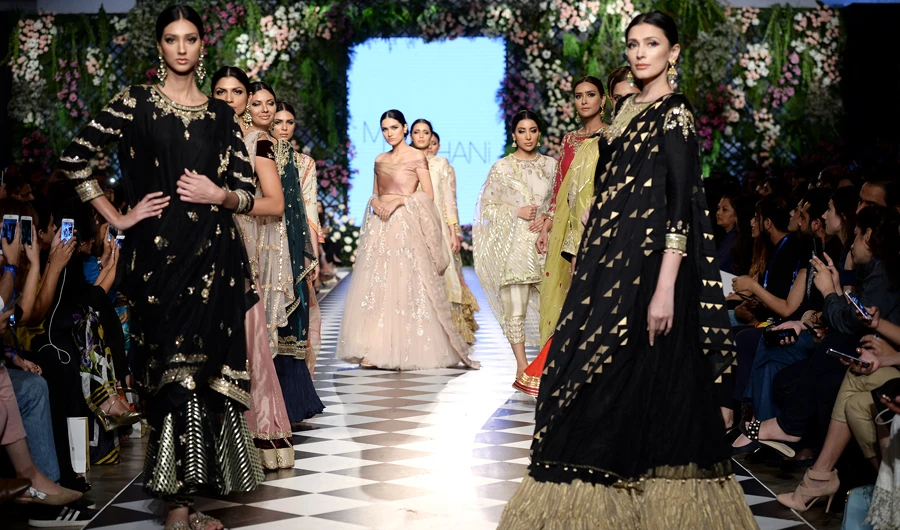
The evening’s group shows were kicked off by ‘Ab-e-Rawan’ from Misha Lakhani. The Karachi-based designer presented what she does best: marrying her ‘It-girl’ bohemian aesthetic with a bridal culture refined over centuries.
Known for her easy-on-the-eye silhouettes (off-shoulder blouses, jodhpurs, angarkhas, and pre-draped dupattas) and playful use of velvets, nets, organza and tissues, Lakhani’s collection was inspired by “the poetic name given to the various flow-y muslins from 16th-century Mughal India,” and included ivories, blush pinks, bright yellows, and duck-egg blues, as well as darker hues like midnight blue and black.
Lakhani’s collection was a stand out for brides who want to invest in pieces that are clearly Pakistani but still allow space for personal style.
Following Misha was Bridal Week newcomer Zainab Salman with ‘Bazeecha-e-Ishq’ (The Game of Love). The game she presented included surprise appearances by musician Ali Noor and actress Iqra Aziz.
‘Bazeecha-e-Ishq’ was one of few collections so far this week to spread some fashion love to grooms — often left to fend for themselves sartorially — and comprised a number of classic elements including the use of mukesh, gota, mirror and thread work. The silhouettes and cuts were traditional but the fabric choices were unique in that they caught light to make for a glowing dulhan.
Salman said her collection was inspired by “the desire to raise the deep voice of love that resides within all of us. Love can be in the form of a person or it can be divine love for God: the unconditional, infinite and eternal love.”
Up next was Hamza Bokhari’s ‘Mizaaj by Jeem.’
A favorite among the stylista set, Bokhari also presented a collection for both men and women and the looks were truly refreshing. In a genre in which it is tricky to present truly new takes without butchering the history and grace behind it, Bokhari excels, particularly with his embroidery and thread detailing, which give life to classic silhouettes while adding authentic street-cred to more-modern looks.
Bokhari’s collection covered a wide spectrum of colors while retaining its overall vision, thanks to its creator’s keen attention to detail.
Following Bokhari was Farah Fatima’s ‘Dastaan’ (Story), a classically feminine collection using a palette of pale pinks, nudes, golds, and muted silvers with pops of color from embroidery and bold borders. The designer included romantic elements like organza and tissue fabrics, voluminous sleeves and ombre dye to create a cohesive collection that paid tribute to wedding traditions.
Closing out the group shows for the night was The House of Kamiar Rokni. Rokni is a true veteran of the fashion world and his presentations are always eagerly anticipated. Never one to shy away from color, layered separates, and surprises his ‘Moonrise’ collection paid homage to the moon, a classic symbol of femininity.
Typically, Rokni’s aesthetic combined multiple inspirations resulting in the kind of instant-heirloom ensembles that feel bespoke — gold bridal ensembles with shimmering intricate work, stand-out black looks with crisp tailored trousers and sleeves that won’t quit, effortlessly melded with more traditional looks, including red-and-pink long-shirted lehngas and wide-legged ghararas in a bevy of pastel colors.