HEBRON: Twenty years on, the massacre of 29 Muslims by a Jewish extremist as they prayed in a West Bank mosque still haunts Mohammed Abu Al-Halawa, a survivor who was left a paraplegic.
On Feb. 25, 1994, Israeli settler Baruch Goldstein used an assault rifle to gun down worshippers in the Ibrahimi Mosque — revered by Jews as the Cave of the Patriarchs — in the heart of the southern West Bank city of Hebron, before he was beaten to death by those who escaped his hail of bullets. Abu Al-Halawa, 53, resides a mere 400 meters from Goldstein’s grave in the Kiryat Abra settlement where he had lived, adjoining Hebron’s old city.
“I remember the massacre at every moment and am physically still affected by it — it paralyzed me for life, and I’m still in a lot of pain and need regular medical treatment,” he said from his wheelchair.
“It pains me whenever I see settlers dancing next to the grave of the criminal who left me disabled,” he added, bitter that his attacker was still honored by some extremists.
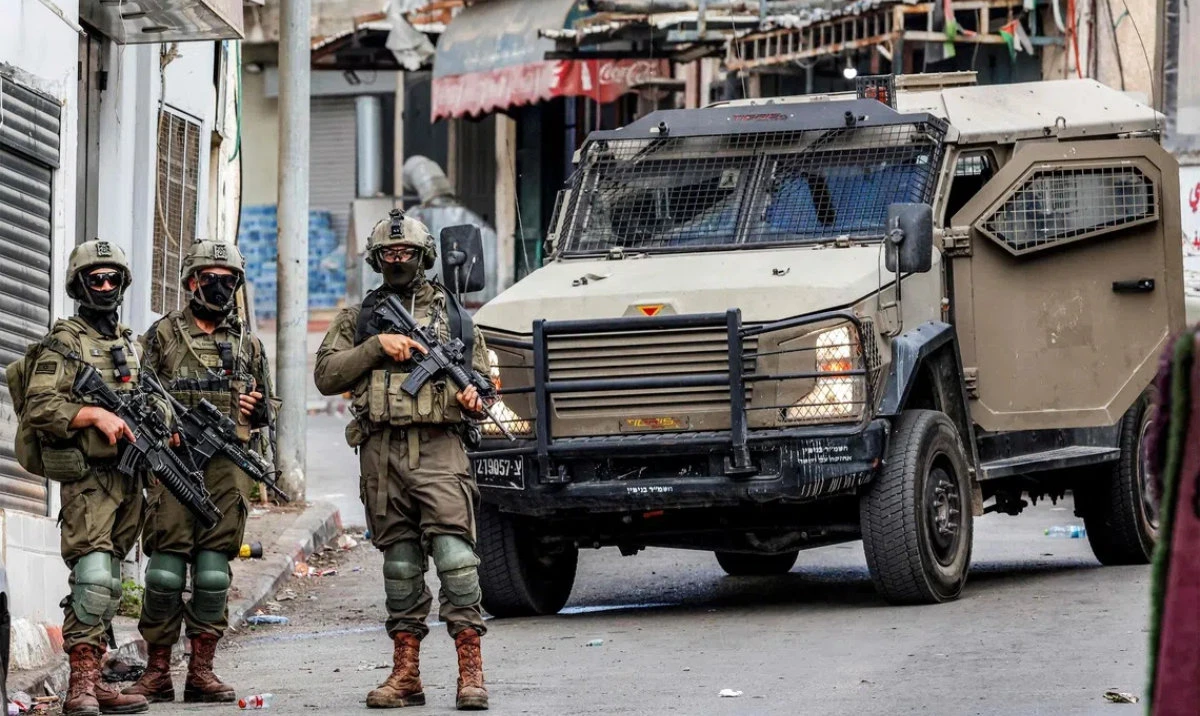
And with a physical disability, the draconian security measures and checkpoints imposed by the occupying Israeli army on Hebron following the massacre are all the more arduous for Abu Al-Halawa. Hebron’s main street was partially closed to Palestinians after the massacre, and six years later, at the outset of the second Palestinian intifada, or uprising, the army declared it a “closed military zone,” restricting Palestinian access to residents of the immediate area — and then on foot only.
Adel Idris, who was the mosque’s imam on the day of the massacre, remembers it vividly.
“I’ll never forget what happened. Every day that I enter the shrine to pray I get flashbacks of the scene — the criminal opening fire, the roar of the gun and screams of worshippers... that was an indescribably awful moment,” he said.
Arab News